For cosplay contest prop safety, you’ll want to prioritize three core practices. First, choose soft, foam-based materials with rounded edges and blunted points that meet convention guidelines. Second, inspect every joint, tip, and attachment before contest day, securing anything loose. Third, follow all on-site rules immediately—complete peace-bonding, never point props at attendees, and treat staff decisions as final. Each practice goes deeper than it first appears.
Key Takeaways
- Choose soft foam materials with rounded edges and blunted points to reduce injury risk and meet convention safety requirements.
- Inspect all prop joints, tips, and attachments before contest day, sanding rough spots and securing loose connections.
- Pack an emergency repair kit with adhesive, tape, and touch-up paint to address failures quickly on-site.
- Complete weapons checks immediately upon arrival and never point props at attendees during photos or movement.
- Communicate proactively with staff about prop requirements and follow their directives promptly to avoid disqualification.
Choose Safe, Convention-Approved Materials for Your Cosplay Prop
When building a cosplay prop for competition, your material choices directly determine whether it passes inspection or gets turned away at the door. Prioritize material safety by selecting soft foam over rigid alternatives. Hard props, including dull swords and solid staffs, face frequent prohibition at most events.
Incorporate strong visual cues into your design. Bright colors and visibly soft construction signal non-threatening intent to staff inspectors before they even handle your prop. Blunted edges and rounded points further reduce injury risk during crowded floor movement.
Avoid chasing realism at the expense of compliance. Convention rules consistently favor props that are clearly non-damaging over those that accurately replicate weapons. Choose materials that keep your entry onstage, not at the disqualification table.
Inspect and Secure Your Convention Prop Before Contest Day
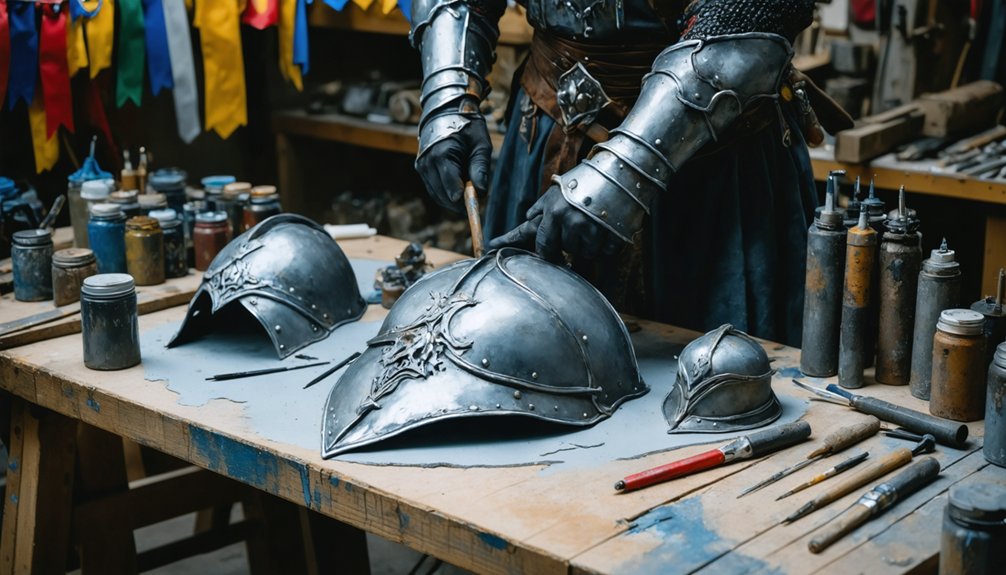
Before contest day arrives, inspect every joint, tip, handle, and decorative attachment on your prop. Prop maintenance isn’t optional — it’s what separates a polished entry from a disqualified one. Run your hands along every surface, checking for cracks, sharp edges, and loose connections. Sand down any rough spots immediately, then touch up the finish to keep everything contest-ready.
Secure all moving parts so nothing detaches during transport, stage movement, or crowded floor navigation. Test weight distribution and balance while walking, since poor handling creates collision risks that staff won’t overlook.
Pack an emergency repair kit — adhesive, tape, sandpaper, and touch-up paint — for quick fixes on-site. Catching small failures before they escalate keeps your prop competition-legal and your performance uninterrupted.
Follow On-Site Prop Rules and Staff Instructions
Once you arrive on-site, treat staff instructions as final — no exceptions. Communicating with staff early prevents conflicts and clarifies prop-specific requirements before you’re onstage.
Follow these four directives:
- Complete all weapons checks or peace-bonding steps immediately upon arrival — skipping them risks disqualification.
- Never point props at attendees, even during staged photos; unintended contact creates liability.
- Handle prop emergencies by notifying staff directly — don’t attempt unauthorized repairs in restricted areas.
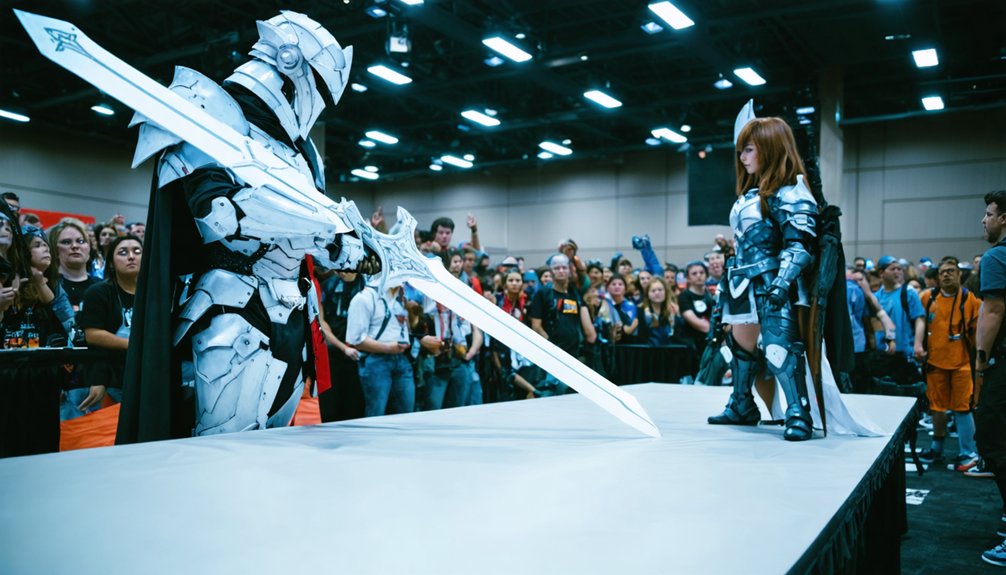
- Keep props elevated and controlled in crowded spaces to prevent trip hazards or collisions.
Staff decisions on prop removal are non-negotiable. If your prop violates on-site rules, cooperate immediately.
Proactive communicating with staff before issues escalate keeps your contest run intact and your presentation competitive.
Frequently Asked Questions
What Size Limits Apply to Cosplay Props at Most Conventions?
Most conventions cap props under six to eight feet. You’ll want to prioritize smart prop material selection and seamless costume integration, ensuring your build stays manageable, compliant, and innovatively crafted within each event’s specific size requirements.
How Should Oversized Cosplay Props Be Transported to Avoid Damage?
Transport oversized props in hard-shell cases with secure packaging and individual prop padding using bubble wrap or foam. You’ll want to label each piece clearly and avoid crowd-dense pathways to prevent accidental contact or structural damage during transit.
What Containers Best Protect Delicate Prop Components During Travel?
Pack your delicate prop material considerations into individual padded containers within a hard-shell case. You’ll find these travel container options protect electronics and fragile components effectively, preventing damage through secure, separated, cushioned compartments during transit.
How Should Props Be Labeled When Multiple Pieces Are Involved?
Like a map guiding explorers, clear labeling steers you through chaos. Following prop material guidelines and labeling best practices, you should mark each piece with numbers, names, and assembly order so nothing’s lost.
What Rules Apply to Realistic or Gun-Like Props at Conventions?
You’ll face strict limits on realistic or gun-like props, including orange-tip requirements or outright bans. Prioritize prop authenticity through costume integration using bright colors or soft materials to meet convention compliance effectively.
References
- https://apld.info/wp-apldnew/wp-content/uploads/2022/04/CosplayContestForms.pdf
- https://www.reddit.com/r/CosplayHelp/comments/1mdmugn/how_can_i_make_these_props_safe_for_a_convention/
- https://hohcomiccon.org/cosplay-contest-rules/
- https://www.punishedprops.com/safety/
- https://starstruckpanda.com/cosplay-contest-prop-safety-and-functionality/
- https://www.youtube.com/watch?v=yIC1z9ATrZg
- https://www.youtube.com/watch?v=lYN_fNKUh8I
- https://www.youtube.com/watch?v=-P5BUG72xF4