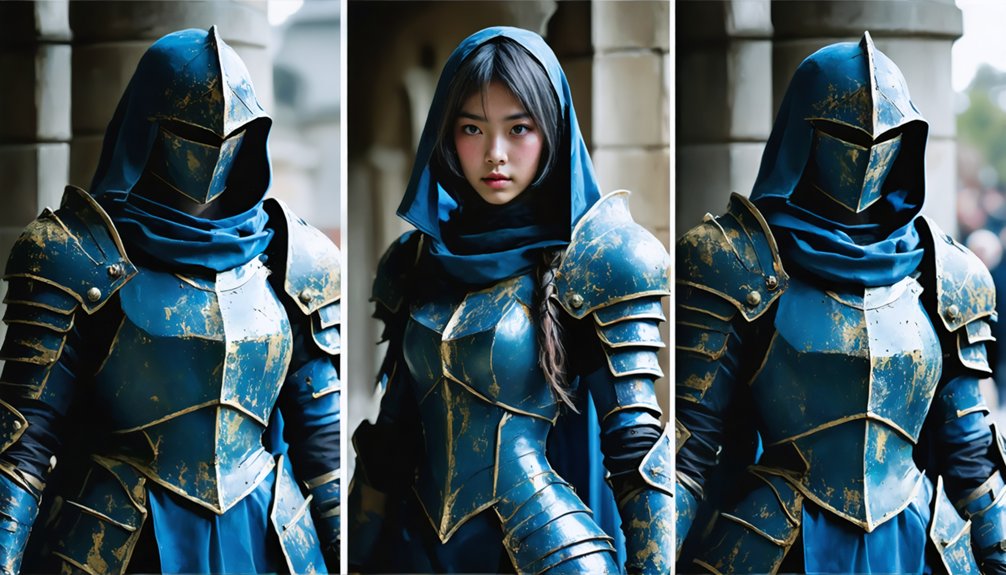
To enhance character performance in cosplay, you’ll need to study your character’s posture, gestures, and emotional range before stepping into costume. Use body language to communicate identity before you speak a single word. Build a repeatable gesture bank, rehearse shifts in full costume, and master vocal modulation for authentic delivery. Make deliberate eye contact with your audience to transform passive viewers into active participants. There’s much more to uncover ahead.
Key Takeaways
- Studying source material helps identify defining traits, gestures, and movements that authentically capture the character’s personality and physical expression.
- Practicing posture and body language communicates character identity instantly, using spine alignment, weight distribution, and deliberate gestures.
- Rehearsing in full costume reveals movement restrictions, allowing performers to adapt muscle memory and ensure smooth, natural transitions.
- Developing vocal techniques like diaphragm projection, modulation, and accent drills enhances character authenticity and stage confidence.
- Making deliberate eye contact with audience members transforms passive viewers into active participants, strengthening overall character immersion.
Study Your Character Before You Ever Put On the Costume
Before you ever step into costume, study the source material thoroughly so you understand who your character actually is. Watch every scene, read every panel, or complete every playthrough relevant to your character. Note their motivations, relationships, and emotional range.
From there, build a reference pack capturing poses, signature reactions, and key facial expressions. This directly supports costume accuracy by confirming details you might otherwise misremember or overlook, including cosplay makeup choices tied to specific emotional states or story moments.
Identify three defining personality traits and plan how you’ll physically express each one. Study their stride, weight distribution, and habitual gestures. These details transform a well-constructed costume into a convincing portrayal. Strong character research is your foundation, and everything performed on stage builds from it.
How Posture and Body Language Bring Your Character to Life
Your posture communicates character identity before you speak a single word, so align your spine, weight distribution, and shoulder tension to match how your character carries themselves through their world.
Layer in deliberate gestures—a clenched fist, a raised chin, a specific hand placement—to signal personality traits that reinforce what the costume already shows.
Together, these physical choices build a commanding stage presence that reads clearly across crowded convention halls and large performance venues.
Posture Shapes Character Identity
A single shift in posture can transform a costume into a character. The way you carry your spine, distribute your weight, and position your shoulders communicates personality before you speak a single word.
A warrior stands differently than a scholar, and a villain holds tension differently than a hero. Study your character’s physical attitude and build it into your body deliberately. Your costume design should reinforce this alignment, and accessory placement can either support or undermine the silhouette you’re projecting.
A misplaced prop or ill-fitted piece pulls focus and breaks the physical narrative. Practice holding your character’s posture for extended periods so it becomes automatic under pressure.
Strong, consistent posture elevates your entire presentation and makes your portrayal instantly readable across any performance space.
Deliberate Gestures Signal Personality
Once you’ve locked in your character’s posture, the next layer is what your hands, head, and limbs are doing moment to moment. Deliberate gestures transform costume accuracy into living performance by signaling personality without a single word spoken.
Build a gesture bank of three to five signature movements your character repeats across source material. A head tilt, a specific hand shape, or a weighted arm cross becomes instantly recognizable when executed with precision and commitment.
Tie each gesture to an emotional expression so your movements carry meaning rather than decoration. Avoid vague, floating hands since undefined movement reads as uncertainty on stage.
Practice flow between gestures until they feel natural, because hesitation breaks immersion and undermines the character identity you’ve worked to establish.
Body Language Builds Presence
Three seconds is all an audience needs to read your character before you’ve spoken a word or struck a pose, and posture determines what that read delivers.
Slouched shoulders undermine even the strongest costume design, while intentional tension, weight distribution, and spine alignment reinforce exactly who you’re embodying.
Match your character’s center of gravity, whether they carry weight forward like a predator or settle back like someone resigned to fate.
Shoulder placement, chest opening, and hip positioning all communicate emotional state before prop integration enters the picture.
When you raise a weapon or extend an object toward the crowd, your body must already be committed to the character’s energy.
Posture isn’t decoration; it’s infrastructure. Build it deliberately, rehearse it repeatedly, and let it carry your performance before anything else does.
Build a Gesture Bank That Defines Your Cosplay Performance
Start by identifying your character’s most recognizable gestures—a signature hand shape, a recurring head tilt, or a combat stance that audiences immediately associate with that role. Pull these movements directly from source material, then isolate three to five that carry the strongest visual impact in crowded or fast-moving spaces.
Once you’ve identified them, drill each gesture repeatedly until muscle memory replaces conscious thought, so execution stays sharp even when you’re managing costume restrictions, crowd interaction, and stage positioning simultaneously.
Identifying Signature Character Gestures
What separates a memorable cosplay performance from a forgettable one often comes down to the smallest repeated movements. Start by studying your character’s source material frame by frame, identifying recurring physical habits like head tilts, weight shifts, or hand placements. These micro-movements signal authenticity faster than any costume detail can.
Catalog your findings into distinct categories: signature poses that define iconic emotional states, accessory gestures tied to props or weapons, and idle behaviors that reveal personality between active moments. Write each gesture down with clear physical cues so rehearsal stays consistent.
Prioritize three to five gestures that read clearly from a distance. Practicing these repeatedly builds muscle memory, so execution feels natural rather than performed, giving your character real presence under convention-floor pressure.
Practicing Gestures Through Repetition
Once you’ve cataloged your character’s signature gestures, the real work begins: building those movements into reliable muscle memory through deliberate, repeated practice.
Run focused repetition drills daily, isolating each gesture before integrating it into full performance sequences. Start slowly, prioritizing accuracy over speed, then gradually increase tempo until each motion feels automatic.
Record every session and review footage critically to catch dropped details, inconsistent timing, or sloppy progressions. Mirror work reinforces spatial awareness, helping you identify when a pose reads clearly versus when it collapses under pressure.
Practice in costume periodically, since fabric weight and prop handling change how gestures feel and look. Consistent repetition transforms rehearsed movements into instinctive responses, letting you stay present with the audience rather than mentally cueing your next move.
Rehearse Movements and Transitions Until They Feel Natural in Costume

Rehearsing in full costume before the event separates polished performances from improvised ones. Wearing the complete costume during rehearsal reveals movement restrictions, costume durability concerns, and balance challenges that casual practice never exposes. You’ll quickly discover which shifts strain seams, shift headpieces, or smear makeup techniques you’ve carefully applied.
Run your full routine multiple times in costume so your muscle memory adapts to the added weight, layering, and restricted visibility. Record each session and review footage critically, identifying where progressions look hesitant or unnatural. Correct those moments deliberately rather than hoping they’ll resolve on stage.
Prioritize smooth pose-to-pose changes over individual poses alone, since audiences read movement quality as much as static appearance.
Consistency built through repetition transforms rehearsed sequences into confident, character-driven performance.
Master Voice, Timing, and Dialogue for Stronger Cosplay Performance
Voice carries your character into the room before your costume does, so developing strong vocal technique gives your performance an immediate layer of authenticity that posture and props alone can’t deliver. Project from your diaphragm, not your throat, to sustain volume across longer performances without straining.
Practice vocal modulation deliberately, shifting pitch, pace, and intensity to match your character’s emotional expression during key scene beats. If your character uses a specific accent, cadence, or catchphrase, drill it until delivery feels effortless rather than performed.
Keep skit timing tight by memorizing scripted dialogue well before the event, since fumbled lines break immersion instantly. Record your rehearsals and review them critically to catch rushed pacing, dropped character-specific speech patterns, and inconsistent tonal choices that weaken overall stage presence.
Use Stage Space and Eye Contact to Command Your Cosplay Performance

Strong vocal delivery fills the room, but how you move through it determines whether that energy lands or dissolves. Treat stage positioning as a deliberate tool, not an afterthought. Plan your crossings, pauses, and spatial reactions before you step on stage so every movement serves the character’s intent.
Hold poses longer than feels natural. Audiences need time to read both your costume and your emotional expression. Rushing through shifts kills audience engagement before it builds.
Use the full stage width and depth, avoiding the tendency to cluster at center. Move to edges intentionally, then anchor yourself with stillness.
Make direct eye contact with specific audience members. That targeted connection transforms passive viewers into active participants, amplifying your stage presence beyond what costume alone can achieve.
Frequently Asked Questions
How Do You Stay in Character When Something Goes Wrong on Stage?
When something goes wrong, don’t break—use facial expressions to react as your character would. Adjust voice modulation to mask panic, breathe deeply, and improvise within your character’s personality. You’ll transform mistakes into memorable, authentic moments.
Can Beginners Compete in Cosplay Performance Contests Without Prior Acting Experience?
You can absolutely compete without acting experience. Focus on costume durability so nothing distracts you mid-stage, and practice basic improvisation techniques to handle unexpected moments. Your confidence and preparation will carry you further than formal training ever could.
How Do You Manage Anxiety or Stage Fright Before a Cosplay Performance?
Use breathing exercises backstage to calm your nervous system before you walk on. Mental preparation through visualization helps you embody your character confidently, so you’re performing intentionally rather than reacting nervously to the audience’s energy.
What Should You Do if Your Costume Restricts Movement During a Performance?
Adapt your movement techniques to work within your costume’s limitations. You’ll want to prioritize costume flexibility during fittings, modify restricted gestures intentionally, and reframe constraints as character-specific mannerisms that actually strengthen your overall performance authenticity.
How Do Group Cosplay Teams Divide Stage Roles Fairly Among Performers?
Like a well-oiled machine, you’ll divide roles by matching each performer’s strengths to character dynamics. Prioritize group coordination during rehearsals, assign leads and supports clearly, and handle costume logistics so everyone moves confidently without overlap.
References
- https://www.instagram.com/reel/DUeHpxLiIXU/
- https://www.reddit.com/r/CosplayHelp/comments/1m5mr79/how_can_i_get_better/
- https://www.reddit.com/r/CosplayHelp/comments/1ea8dfx/what_should_i_do_for_the_stage_performance_at_a/
- https://starstruckpanda.com/unleashing-character-potential-cosplay-performance-guide/
- https://starstruckpanda.com/infusing-creativity-into-character-performance/
- https://starstruckpanda.com/mastering-character-portrayal-in-cosplay/
- https://www.pointpress.site/cosplay-confidence-tips-to-bring-characters-to-life-1
- https://thecelebportal.com/mastering-character-portrayal-a-guide-to-immersive-cosplay/