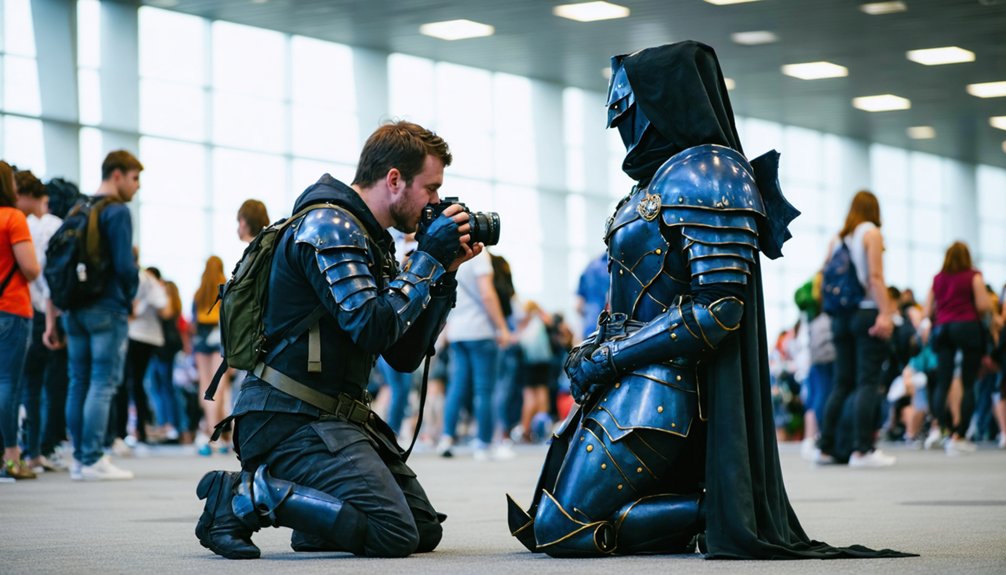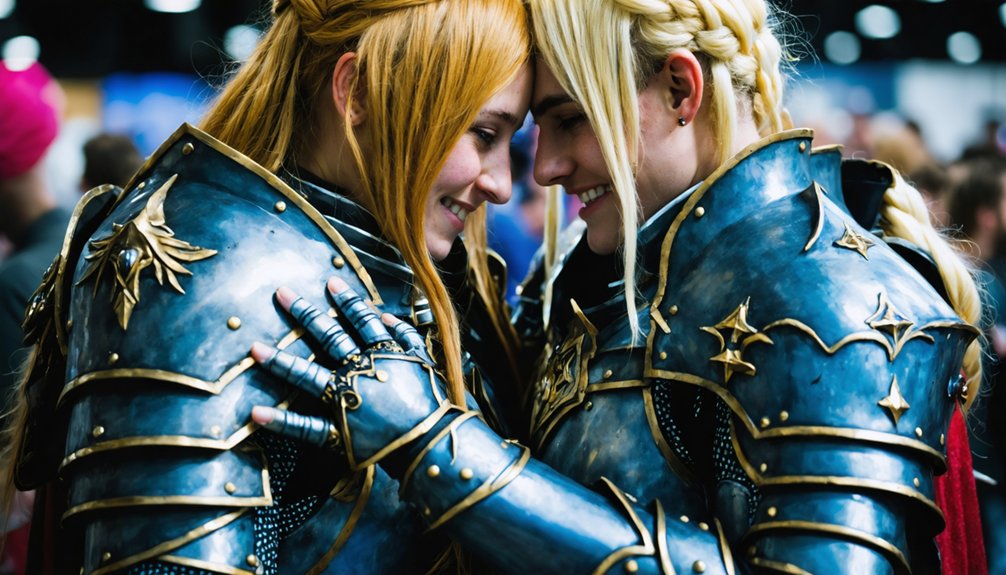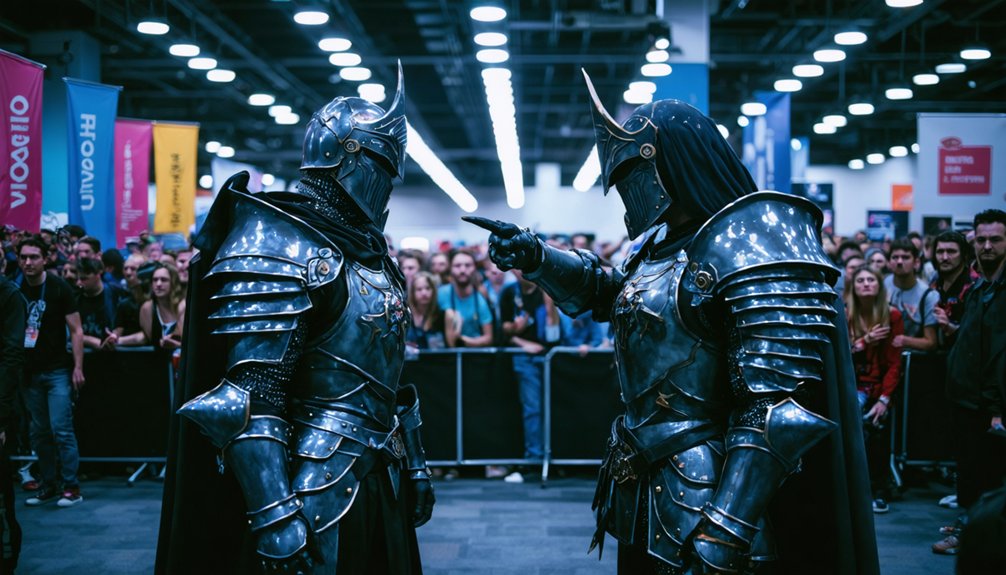
Cosplay communities are structurally predisposed to conflict because you’re dealing with intersecting fault lines—personality volatility, cultural incompatibilities, systemic gatekeeping, and maladaptive social hierarchies all operating simultaneously. Low agreeableness amplifies interpersonal friction, while divergent normative frameworks destabilize group cohesion. Add unaddressed mental health deficits and punitive call-out mechanisms, and you’ve got a perpetually combustible environment. Understanding these layered dynamics requires unpacking each conflict vector individually—and that’s exactly where this analysis takes you.
Key Takeaways
- Personality clashes, low agreeableness, and poor emotional regulation among members frequently escalate minor disputes into destabilizing community conflicts.
- Lack of formal governance structures creates systemic breakdowns, leaving interpersonal tensions without structured resolution pathways.
- Cultural differences produce clashing normative frameworks, incompatible boundaries, and divergent social scripts that generate persistent interpersonal friction.
- Gatekeeping behaviors, including credential policing and clique formation, create exclusionary hierarchies that breed resentment among community members.
- Call-out culture has shifted accountability toward punitive frameworks, eroding psychological safety and amplifying rather than resolving conflicts.
What Makes Cosplay Communities a Hotbed for Conflict?
Cosplay communities, though ostensibly unified by shared creative passion, function as microcosms of broader societal tensions—making conflict not an anomaly but a structural inevitability.
You’re entering spaces where identity expression intersects with volatile community dynamics, amplifying miscommunication patterns across diverse personality traits. Divergent emotional regulation capacities destabilize group cohesion, while inconsistent emotional intelligence fractures conflict resolution pathways before they’re established.
Group identity becomes weaponized under social pressure, transforming creative environments into contested ideological territories. Cultural stratification, undiagnosed mental health challenges, and systemic discrimination compound these fault lines exponentially.
You’re not witnessing isolated incidents—you’re observing predictable systemic breakdowns embedded within communities that lack formalized governance structures. Understanding these intersecting variables repositions conflict from interpersonal grievance to analytically mappable phenomenon requiring structural, not merely interpersonal, intervention.
How Personality Clashes Fuel Cosplay Drama
Within cosplay communities, personality-driven conflicts operate as a primary destabilizing mechanism, triggering chain reactions that fracture group cohesion at the interpersonal level.
You’ll observe that divergent personality dynamics—particularly low agreeableness intersecting with heightened emotionality—accelerate interpersonal deterioration rapidly.
These trait configurations don’t merely produce isolated disputes; they systematically undermine collective trust architectures.
When participants with incompatible dispositional frameworks interact, emotional reactions amplify beyond proportional responses, generating cascading tensions that reshape community behavioral norms.
Critically, most participants remain unaware of personality-driven conflict causation, misattributing structural incompatibilities to circumstantial triggers.
This diagnostic blind spot perpetuates cyclical confrontations without resolution pathways.
Understanding these underlying personality dynamics equips you with analytical frameworks to identify, anticipate, and potentially neutralize conflict escalation before irreversible community fragmentation occurs.
The Role of Mental Health in Cosplay Community Disputes
Beyond personality architecture, you’ll find that mental health variables introduce a distinct conflict-generation mechanism within cosplay communities. Undiagnosed mental illness fundamentally compromises emotional regulation, triggering disproportionate behavioral responses during interpersonal exchanges.
You’re fundamentally traversing environments where clinical deficits remain invisible yet operationally significant.
Community awareness becomes your critical intervention point. When participants lack structured support systems, maladaptive coping strategies proliferate, intensifying dispute frequency and severity.
You’ll observe that stigma reduction directly correlates with members’ willingness to seek professional assessment, subsequently de-escalating potential conflict scenarios.
Implementing empathetic listening protocols transforms conflict resolution dynamics considerably. Rather than reactively pathologizing difficult participants, you’re better positioned analyzing behavioral patterns through a mental health framework—recognizing that large community gatherings statistically guarantee encounters with individuals managing undisclosed psychological challenges.
Why Cultural Differences Cause So Much Friction in Cosplay
When you examine cosplay communities through a sociocultural lens, you’ll find that clashing normative frameworks—rooted in disparate cultural conditioning—function as primary catalysts for interpersonal friction.
You’re fundamentally witnessing a collision of divergent social scripts, where behavioral expectations that one cultural group treats as axiomatic strike another as transgressive or disrespectful.
These cross-cultural misalignments don’t just produce isolated disputes; they systematically destabilize community cohesion by reinforcing in-group/out-group stratification along cultural fault lines.
Clashing Social Norms
Cultural heterogeneity within cosplay communities creates a volatile matrix of conflicting behavioral scripts, where divergent socialization patterns—shaped by ethnicity, nationality, and subcultural affiliation—collide against shared convention spaces.
You’ll encounter incompatible social expectations that destabilize community dynamics, producing friction where none was anticipated.
Three primary normative fault lines emerge:
- Interpersonal boundary calibration — cultures encode physical proximity and touch differently, generating perceived violations.
- Hierarchical recognition protocols — some participants expect deference structures others don’t acknowledge.
- Creative appropriation thresholds — subcultural affiliations establish conflicting ownership frameworks around character portrayals.
These systemic incompatibilities aren’t resolvable through goodwill alone.
Without deliberate normative scaffolding—explicit community agreements that bridge divergent behavioral frameworks—you’re maneuvering through structurally engineered conflict, not isolated interpersonal failure.
Cultural Misunderstandings Spark Disputes
Misreading another participant’s behavior as deliberately transgressive—when it’s actually culturally normative—activates conflict cascades that neither party can easily de-escalate once initiated.
Your diverse backgrounds create inherent communication barriers, where social cues you’ve internalized don’t universally translate across cultural contexts. When misunderstanding intentions becomes systematic rather than situational, community values fracture along fault lines you didn’t engineer but still inhabit.
Identity expression operates differently across cultural frameworks—what reads as authentic representation in one tradition registers as appropriative transgression in another.
You’re traversing overlapping normative systems simultaneously without adequate metacognitive tools. Shared experiences don’t automatically generate shared interpretive schemas, meaning your community’s conflict architecture isn’t accidental—it’s structurally embedded.
Recognizing cultural misalignment as a systemic variable, rather than individual moral failure, enables more precise conflict-resolution frameworks.
Racism and Discrimination Black Cosplayers Face Online
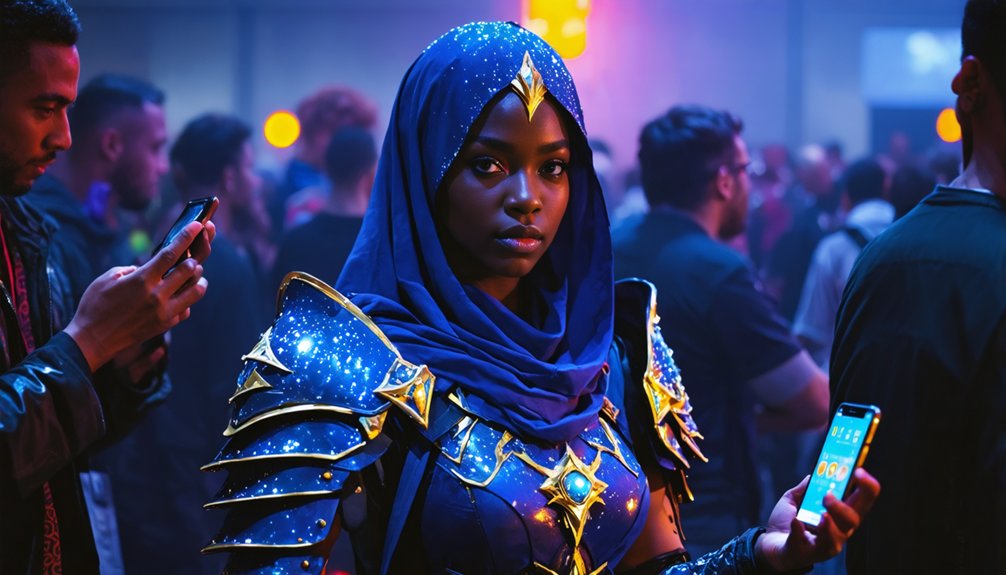
Racism and discrimination represent some of the most corrosive forces operating within cosplay communities, particularly for Black cosplayers traversing online spaces.
You’ll encounter systemic barriers rooted in underrepresentation, where limited Black representation in mainstream media constrains identity validation opportunities.
Online backlash intensifies when Black cosplayers portray non-Black characters, exposing embedded racial stereotypes within community response frameworks.
Black females disproportionately absorb hostility, signaling deeper visibility issues requiring structural intervention.
Effective allyship strategies must address:
- Cultural appropriation boundaries — distinguishing misunderstood intentions from deliberate harm
- Support systems infrastructure — building networks countering algorithmic amplification of racist content
- Community response protocols — establishing accountability mechanisms targeting discriminatory behavior
You must recognize that online racism functions as the community’s most destabilizing variable, demanding innovative, analytically-grounded solutions prioritizing equity-centered participation frameworks.
How External Harassment Infiltrates Cosplay Spaces
When you examine the threat matrix facing cosplay communities, you’ll find that a significant vector of harassment originates externally—from non-participants who infiltrate convention spaces with predatory intent.
You can observe how these actors operationalize a consent-attribution fallacy, misreading cosplay attire as implicit signaling of sexual availability, effectively collapsing the semiotic distinction between performative costuming and personal solicitation.
As you analyze these dynamics, you’ll recognize that larger convention ecosystems amplify this vulnerability by creating structural deficits in behavioral policing, enabling external antagonists to exploit the community’s open-access framework with reduced accountability.
Non-Participant Harassment Sources
Harassment vectors penetrating cosplay spaces frequently originate from non-participant actors—individuals operating outside the community’s socio-cultural framework yet gaining access through convention infrastructure and digital platforms.
You’ll encounter these intrusions manifesting through three primary channels:
- Sexual and racial harassment exploiting attire-based consent misperceptions, undermining community safety.
- Digital platform infiltration circumventing harassment prevention protocols through anonymous engagement mechanisms.
- Large-scale convention environments structurally limiting inclusive practices and intervention training effectiveness.
Allyship strategies and robust reporting mechanisms remain critical countermeasures.
You must recognize that safe spaces deteriorate when boundary setting lacks institutional enforcement.
Awareness campaigns targeting non-participant behavioral patterns strengthen support networks against external threats.
Without systematically addressing these infiltration vectors, cosplay communities’ socio-cultural integrity remains perpetually vulnerable to externally-sourced destabilization forces.
Attire Misinterpreted As Consent
Entitlement frameworks operating within convention spaces frequently miscodify cosplay attire as implicit sexual consent, transforming costume selection into an involuntary vulnerability signal.
You’re traversing an environment where attire misconceptions systematically conflate aesthetic expression with behavioral permission, creating consent confusion that external harassers exploit deliberately.
These misinterpretations aren’t accidental—they’re rooted in patriarchal interpretive structures that weaponize visibility against cosplayers.
When you’re wearing elaborate, revealing, or character-accurate costumes, predatory participants externally decode your choices through distorted consent frameworks rather than recognizing autonomous creative expression.
This cognitive misalignment produces tangible harassment incidents that convention infrastructure struggles containing effectively.
Understanding these entitlement-driven interpretive mechanisms positions you to advocate for structural interventions—explicit consent education protocols, enforcement accountability systems, and community-wide normative recalibration that decouples costume aesthetics from assumed behavioral accessibility.
How Status and Gatekeeping Create Toxic Cosplay Cliques
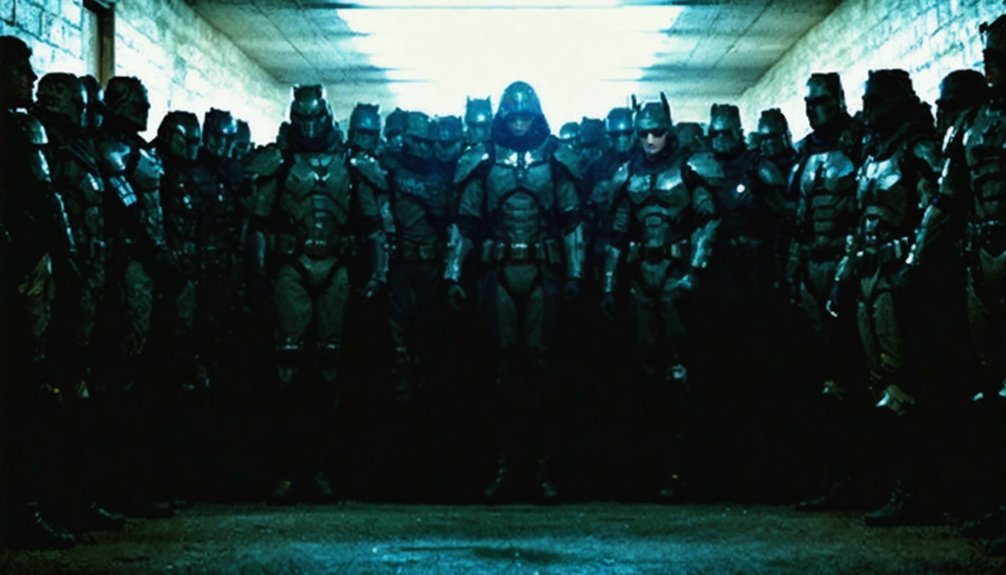
Social hierarchies within cosplay communities don’t emerge in a vacuum—they’re constructed through deliberate acts of gatekeeping that stratify members into in-groups and out-groups based on perceived legitimacy.
Status Dynamics operate through exclusionary Power Struggles, where established members weaponize credibility to enforce Toxic Exclusivity.
Gatekeeping Behaviors manifest through three core mechanisms:
- Credential gatekeeping — dismissing newcomers lacking technical craftsmanship benchmarks
- Identity policing — challenging members’ authenticity based on fandom knowledge depth
- Clique Formation — consolidating Social Hierarchies through selective networking and alliance-building
You’ll encounter these dynamics accelerating conflict cycles, fracturing communities along perceived status lines.
Recognizing these patterns dismantles their operational logic, enabling more equitable participation structures that prioritize innovation over entrenched hierarchical preservation.
How Social Media Call-Out Culture Broke Cosplay Since 2020
Since 2020, call-out culture has functionally restructured cosplay’s social architecture, converting platforms like Twitter and TikTok into adversarial accountability theaters where public denunciation supersedes private conflict resolution.
You’re now traversing ecosystems where community accountability mechanisms operate less as rehabilitative frameworks and more as punitive spectacles.
Call out consequences have metastasized beyond individual correction, systematically eroding psychological safety and suppressing authentic creative expression across cosplay networks.
The post-2020 landscape reveals a critical paradox: tools designed to enforce ethical standards simultaneously weaponize social capital, incentivizing performative outrage over substantive dialogue.
Argumentative listening has replaced genuine conflict mediation, transforming fandom spaces into ideological battlegrounds.
This structural deterioration signals an urgent need for communities to redesign accountability systems prioritizing restorative justice over reputational decimation.
Frequently Asked Questions
Can Cosplay Conflicts Lead to Lasting Mental Health Trauma for Participants?
Yes, cosplay conflicts can inflict lasting mental health trauma on you. The emotional impact of harassment, discrimination, and toxicity you experience triggers chronic psychological distress, amplifying pre-existing vulnerabilities and fundamentally disrupting your socio-emotional equilibrium within these communities.
Are There Legal Protections for Cosplayers Experiencing Harassment at Conventions?
Yes, you’ve got legal recourse through harassment policies and community guidelines. You can activate reporting procedures, access victim support networks, and leverage convention safety frameworks—transforming systemic vulnerabilities into actionable protections against documented harassment incidents.
How Do Convention Organizers Typically Handle Reports of Discriminatory Behavior?
With 70% of conventions lacking clear protocols, you’ll find organizers typically enforce community guidelines through structured reporting procedures, investigating discriminatory behavior via tiered response frameworks—though systemic gaps in implementation frequently undermine equitable accountability mechanisms across larger, high-attendance events.
Does Cosplay Conflict Frequency Differ Between Online Communities and Live Events?
Yes, you’ll find conflict frequency diverges markedly: online dynamics amplify harassment through anonymity, while event interactions enforce community norms via role expectations, creating distinct conflict modalities that you must strategically navigate within each environment’s unique socio-behavioral framework.
Can Professional Mediation Services Help Resolve Ongoing Cosplay Community Disputes?
Like a bridge spanning turbulent waters, professional mediation techniques can help you restore harmony. You’ll find community engagement thrives when structured dialogue addresses personality clashes, mental health factors, and cultural disparities driving cosplay disputes effectively.
References
- https://ccc101blog.wordpress.com/2020/03/08/conflict-and-the-wide-variety-of-personality-types-in-costuming-cosplay-fursuiting/
- https://universitytimes.ie/2019/11/does-cosplay-have-a-dark-side/
- https://www.csustan.edu/sites/default/files/2023-11/borjonashley_article-the-social-phenomenon-surrounding-b_ashley-borjon.pdf
- https://www.youtube.com/watch?v=RLrOaXOvQa0