The Umbrella Academy’s costumes are iconic because they do more than dress characters — they *define* them. Designer Christopher Hargadon treats each outfit as a psychological profile, so you’re reading personality before anyone speaks a line. Five’s frozen-in-time suit, Klaus’s chaotic layers, Diego’s tactical edge — each look is a visual shorthand that’s instantly recognizable. The carefully chosen color palette and mid-century influences make every costume feel intentional. Stick around, because there’s so much more underneath the surface.
Key Takeaways
- Each costume acts as a psychological profile, visually communicating individual character traits and backstories without relying on dialogue.
- Christopher Hargadon blended mid-century tailoring with modern edge, creating a distinctive visual language that feels both nostalgic and fresh.
- The blue, gray, and burgundy color palette was carefully chosen to support narrative depth and complement cinematic lighting.
- Five’s unchanging suit symbolizes his fractured relationship with time, making him an instantly recognizable visual mascot of the series.
- The unique, archetype-driven designs fuel cosplay culture, fostering fan creativity and community engagement across conventions and social media platforms.
How Christopher Hargadon Built a Visual Identity for the Umbrella Academy
When Netflix handed Christopher Hargadon the costume design reins for *The Umbrella Academy*, he didn’t just dress characters — he built an entire visual language. Every wardrobe choice becomes a tool for visual storytelling, connecting psychological depth to external identity in ways dialogue alone can’t achieve.
Hargadon understood that these weren’t generic heroes — they’re eccentric, fractured individuals. So he leaned into that. Diego gets the only traditional superhero silhouette. Klaus channels grungy peacocking energy. Vanya mirrors understated minimalism. Five never changes his suit, cementing his mascot status through sheer consistency.
You can track character evolution simply by watching what someone wears. Hargadon’s genius lies in treating clothing as narrative architecture — blending vintage mid-century tailoring with contemporary edge to create something that feels timeless yet distinctly *Umbrella Academy*.
Why the Costumes Shifted From Black-and-White to Blue and Burgundy
Hargadon’s character-driven wardrobe philosophy didn’t stop at personality — it also reshaped the show’s foundational color palette in ways that quietly rewrite comic book adaptation rules. The comics’ stark black-and-white uniforms looked bold on paper but dominated scenes during screen testing, pulling focus rather than supporting visual storytelling.
That’s when the costume evolution truly began.
Hargadon pivoted to blue, gray, and burgundy — tones that hold their own under cinematic lighting without overpowering the narrative environment. You can feel the intentionality: each hue maintains the Academy’s collective identity while breathing naturally alongside the show’s atmospheric settings.
It’s a masterclass in translating graphic aesthetics into live-action without losing the source material’s soul. The shift didn’t dilute the comics — it upgraded them for a screen-first audience.
How Each Sibling’s Umbrella Academy Costume Reflects Their Personality?
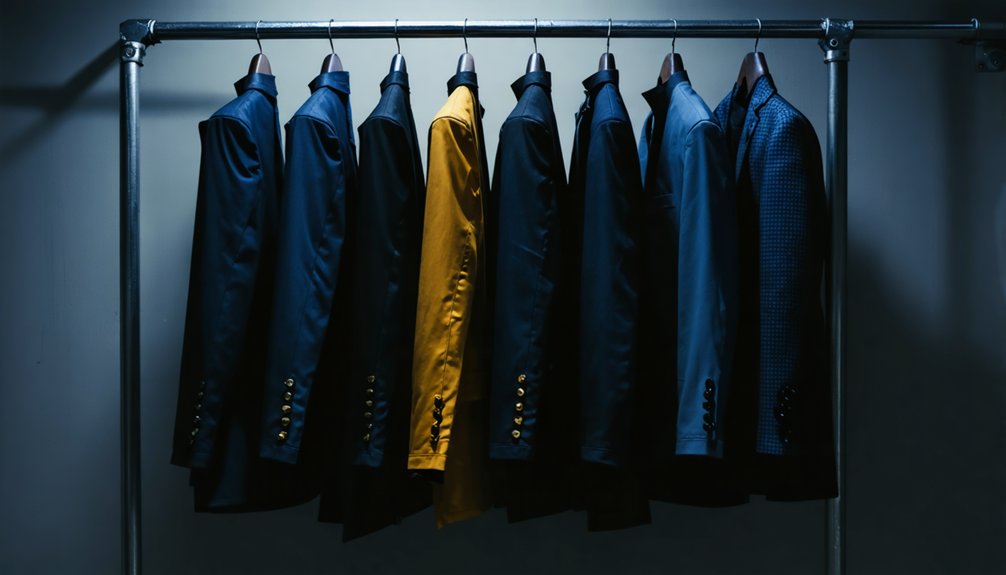
Diego’s tactical, leather-heavy look screams traditional superhero archetype — structured, aggressive, compensating.
Diego’s leather silhouette doesn’t just dress a hero — it performs one, loudly, on purpose.
Klaus layers bold textures and chaotic color because his character individuality thrives in controlled disorder.
Vanya dresses like she’s disappearing on purpose — simple, muted, invisible by design.
Five never changes his academy suit, and that’s the entire point. He’s frozen, loyal to a version of himself that trauma locked in place.
You’re not just watching characters — you’re reading them.
Hargadon fundamentally wrote psychological profiles through fabric, and that’s what separates *Umbrella Academy’s* costuming from standard superhero dressing.
The Mid-Century Influences Woven Into Every Umbrella Academy Costume
When you look closely at the Umbrella Academy’s wardrobe, you’ll notice Christopher Hargadon pulls heavily from mid-20th-century fashion—think sharp tailored suits and high-waisted silhouettes—then cuts them with just enough contemporary edge to feel fresh rather than costume-y.
You can see this fusion working overtime in Grace’s look, where her wiring skirts and exaggerated doll-like details use vintage structure to quietly signal that she’s artificial, not human.
It’s smart, layered storytelling through fabric, proving that the right hemline can carry as much narrative weight as a line of dialogue.
Tailored Suits Meet Modernity
Blending mid-century tailoring with contemporary edge, Christopher Hargadon’s costume work on *The Umbrella Academy* doesn’t just dress characters — it codes them.
You’re watching tailored aesthetics collide with modern sensibilities in real time, and the result hits differently than standard superhero fare. High-waisted skirts, structured suits, and vintage-inspired accessories don’t feel dated — they feel intentional.
That’s the power of contemporary fusion done right. Hargadon pulls from mid-20th-century silhouettes and sharpens them against today’s visual language, creating looks that feel both nostalgic and fresh.
Each costume carries psychological weight, telling you who these characters are before they speak. You’re not just seeing clothes — you’re reading identity.
That tension between old-world structure and modern chaos mirrors the show’s entire emotional core.
Grace’s Doll-Like Wiring Skirts
Grace’s aesthetics pull from doll-like symbolism intentionally. The structured skirts, the pristine presentation, the uncanny perfection — Hargadon constructs her look to sit just inside the uncomfortable edge of human.
She’s dressed like someone performing femininity rather than living it.
That distinction matters. For an audience that reads subtext through style, Grace’s costuming confirms her artificial nature without exposition.
It’s fashion functioning as character revelation — precise, unsettling, and genuinely innovative within the superhero genre.
What the Masks and Uniforms Actually Represent
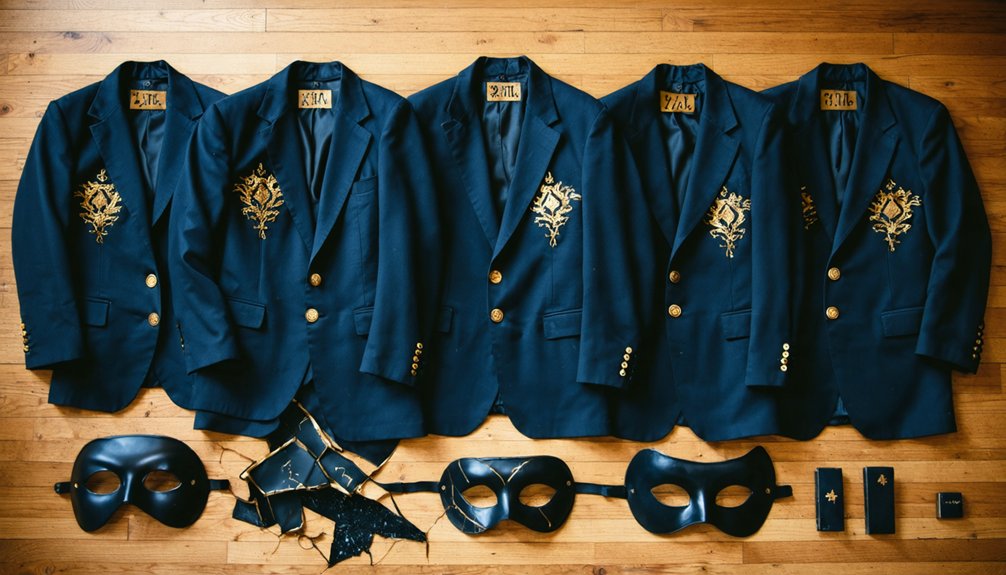
When you spot those domino masks in the flashback sequences, you’re seeing more than retro aesthetic flair — you’re reading a visual shorthand for the Academy’s shared origin and fractured legacy.
The blue-gray-burgundy uniforms function the same way, instantly signaling that these wildly different people were once the same institution’s product.
Christopher Hargadon designed these recurring symbols to stitch the show’s past and present timelines together, giving you a visual anchor every time the narrative jumps.
Shared Origin Visual Symbols
The domino masks and blue-gray-burgundy academy uniforms in *The Umbrella Academy* aren’t just aesthetic choices — they’re loaded symbols tying the siblings to a shared origin they can’t escape.
Every time you spot these shared symbols in a flashback, you’re watching the show build visual coherence between its fractured past and chaotic present. The masks don’t just evoke classic superhero nostalgia — they remind you these kids were trained, branded, and shaped by Hargreeves before they ever had agency.
Five’s unchanging suit operates the same way, anchoring his identity across timelines. These recurring visual elements create an unspoken language that connects every sibling’s story without dialogue.
You don’t need exposition when the costume *is* the narrative thread.
Connecting Past And Present
Masks and uniforms do more than signal superhero identity — they collapse time. Every flashback featuring those domino masks and blue-gray-burgundy uniforms instantly reconnects you to the siblings’ shared origin, making the Academy’s 1960s heyday feel present rather than distant.
That’s intentional visual storytelling at its sharpest.
You’re watching costume evolution work in real time. The academy uniform hasn’t disappeared — it resurfaces strategically, anchoring emotional moments and reminding you that these adults were once children shaped by the same traumatic system.
Five’s unchanging suit operates the same way, freezing him between past and present simultaneously.
Christopher Hargadon understood that clothing carries memory. When you see those uniforms reappear, you’re not just recognizing fabric — you’re feeling the weight of everything the siblings survived together.
How Five’s Unchanging Suit Became the Show’s Most Iconic Umbrella Academy Costume
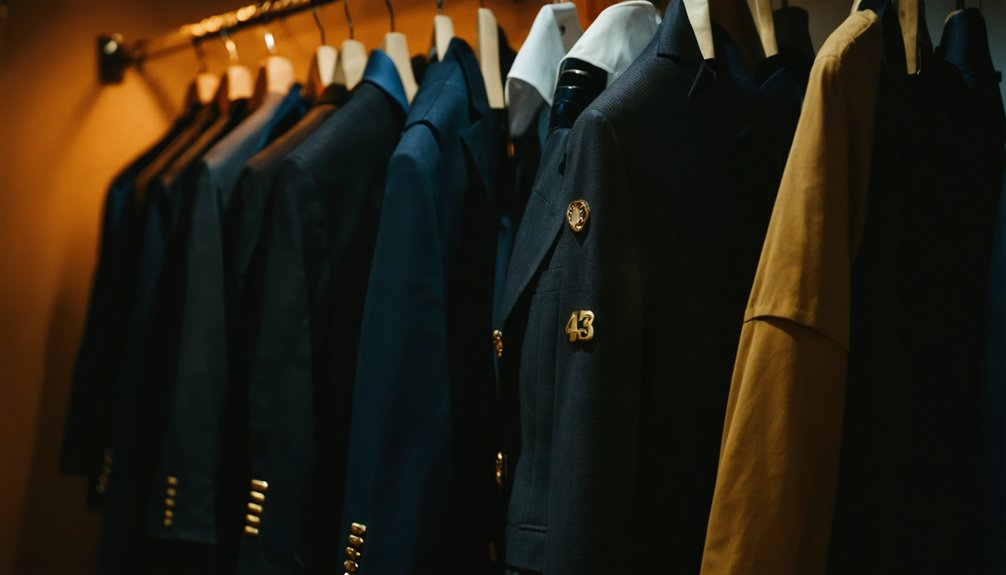
Among all the bold, eccentric looks in *The Umbrella Academy*, Five’s navy school uniform stands out precisely because it never changes. While his siblings evolve their wardrobes to reflect personal growth and shifting identities, Five’s symbolism lives entirely in that stubborn consistency.
He’s frozen—literally—and his outfit broadcasts that truth without a single line of dialogue.
That’s the power of timeless design. Costume designer Christopher Hargadon understood that Five’s unchanging academy suit would function as a visual anchor, instantly signaling his fractured relationship with time. You recognize him immediately, regardless of the scene’s era or context.
In a show packed with eccentric personalities and layered aesthetics, Five’s uniform cuts through the noise. Its repetition isn’t laziness—it’s intentional, psychological branding that makes him the series’ undisputed visual mascot.
Why Umbrella Academy Costumes Dominate Cosplay Culture?
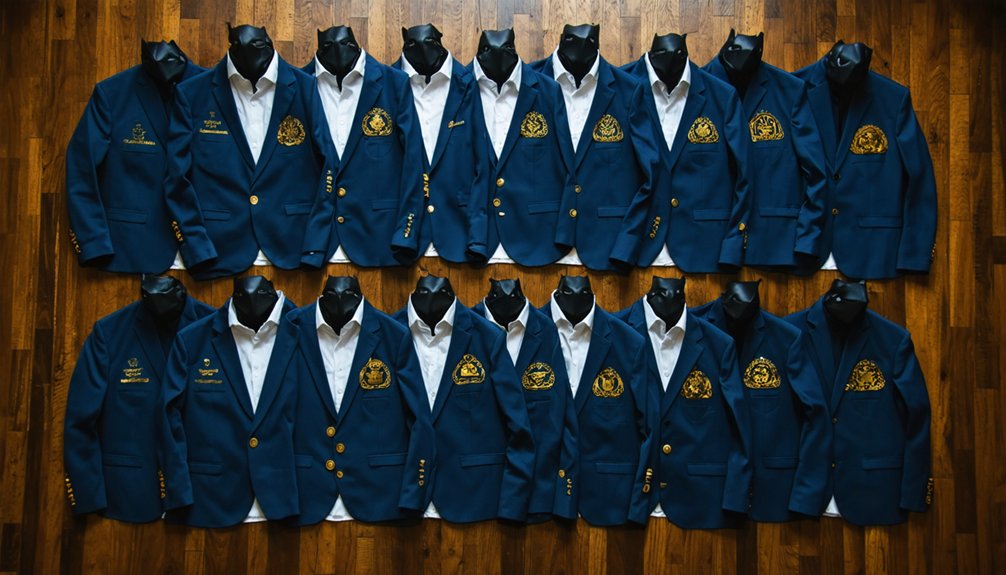
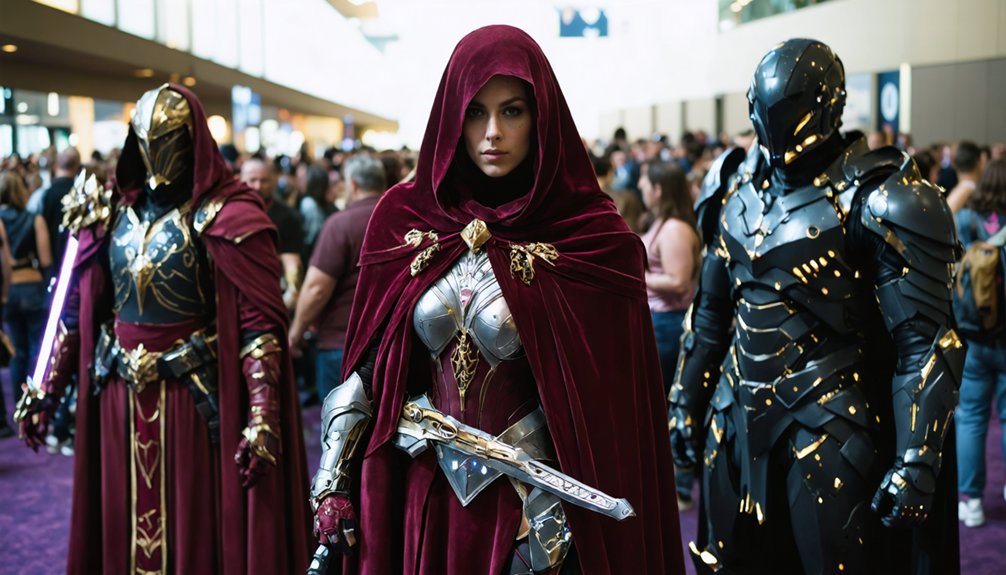
Few fandoms translate from screen to cosplay floor as effortlessly as *The Umbrella Academy*—and that’s no accident. Each sibling’s look functions as symbolic representation of distinct personality archetypes, making character identification immediate and intuitive. You’re not just wearing a costume—you’re embodying a psychological profile.
That’s exactly why cosplay creativity thrives here. Diego’s combat-ready silhouette, Klaus’s chaotic layering, and Five’s iconic academy suit each offer visually distinct entry points for fans. You can interpret these looks minimally or elaborately without losing character recognition.
Diego’s combat-ready silhouette or Klaus’s chaotic layers—each character offers a distinct, unmistakable visual identity ready to wear.
The series also draws aesthetic comparisons to *A Series of Unfortunate Events* and *Chilling Adventures of Sabrina*, positioning it within a broader, fashion-forward cult universe.
That cultural alignment amplifies cosplay visibility at conventions and across social platforms globally.
Frequently Asked Questions
How Much Did the Umbrella Academy Costume Budget Cost per Season?
Drawing a blank here — the available knowledge doesn’t spill the tea on exact costume design budget allocation per season. You’d need to dig into official production reports for those specific financial figures.
Did the Actors Influence or Personally Request Changes to Their Costumes?
The available knowledge doesn’t confirm actor preferences directly shaping designs, but you’ll notice Hargadon’s character alignment mirrors real-life personalities — Klaus reflects Robert Sheehan’s bold style, and Vanya echoes Ellen Page’s casual aesthetic organically.
Which Umbrella Academy Costume Took the Longest Time to Physically Create?
“Good things take time” — and Grace’s costume design proves it! Her wiring skirts and exaggerated details, packed with character symbolism, demanded the most intricate construction work, making you appreciate how innovation truly transforms fabric into storytelling.
Are the Umbrella Academy Costumes Preserved or Archived After Filming Ends?
The knowledge doesn’t confirm specifics on costume preservation or archival methods post-filming, but you’d expect iconic pieces like Five’s suit to undergo careful archival processes — studios typically preserve standout costumes for exhibitions, fan events, and cross-media legacy purposes.
Did Gerard Way Approve Hargadon’s Costume Changes From the Original Comics?
Can innovation thrive without honoring its roots? The knowledge doesn’t confirm Gerard Way’s vision explicitly approved Hargadon’s design choices, but both preserved the comic’s identity while boldly evolving it for Netflix’s dynamic, screen-ready aesthetic.
References
- https://screenrant.com/umbrella-academy-best-outfits-ranked/
- https://www.seventeen.com/celebrity/movies-tv/a40682560/umbrella-academy-costumes/
- https://www.motionpictures.org/2019/03/dressing-misfits-robots-superheroes-with-the-umbrella-academys-costume-designer/
- https://editorial.rottentomatoes.com/article/umbrella-academys-biggest-book-to-screen-changes-explained/
- https://theartofcostume.com/2021/08/18/the-umbrella-academy-modern-superheroes-adapting-to-the-1960s/
- https://christopherhargadon.com/the-umbrella-academy/
- https://www.dailydot.com/unclick/umbrella-academy-costumes-christopher-hargadon-netflix/
- https://deadline.com/2019/05/the-umbrella-academy-costume-designer-christopher-hargadon-emmys-1202622899/
- https://www.reddit.com/r/UmbrellaAcademy/comments/1evhhwh/alright_the_writers_royally_messed_up_but_we_can/
- https://costumedesignersguild.com/the-umbrella-academy/