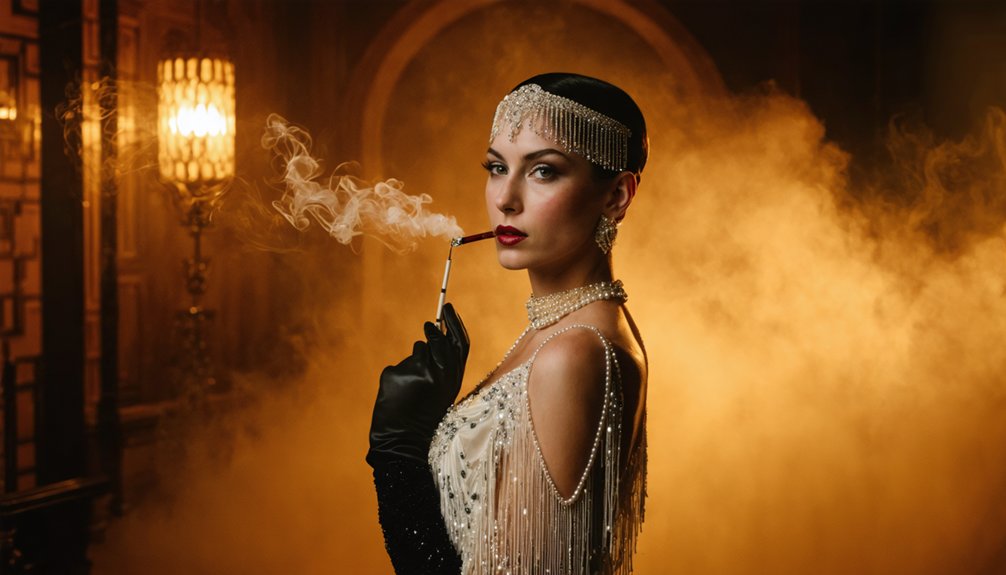
Embracing the flapper girl look connects you to one of history’s most deliberate acts of feminine self-reinvention. Post-World War I women used drop-waist silhouettes, bobbed hair, and beaded accessories to physically reject Victorian constraints and claim visible autonomy. You’re not simply wearing a costume — you’re referencing a cultural revolution that redefined womanhood. Every fringe hem and pearl strand carries inherited meaning. There’s far more to this aesthetic than meets the eye, and its layers reward closer examination.
Key Takeaways
- The flapper aesthetic represents a bold fashion revolution that symbolizes women’s liberation, autonomy, and rejection of restrictive Victorian-era social norms.
- Drop-waist silhouettes, fringe, and beading create visually dynamic, elegant looks that remain striking and architecturally distinctive decades later.
- Wearing flapper-inspired fashion connects you to a culturally significant movement embodying confidence, independence, and the “New Woman” identity.
- The style translates seamlessly into modern contexts, with metallic fabrics and vintage accessories offering both period authenticity and contemporary adaptability.
- Iconic elements like cloche hats, pearl strands, and T-strap shoes communicate Jazz Age sophistication while remaining wearable and stylistically cohesive today.
The History Behind the Flapper Girl Look
The flapper look didn’t emerge in a vacuum—it grew directly out of the social upheaval that followed World War I. When you examine this fashion evolution closely, you recognize it as a calculated rejection of Victorian-era constraints. Shorter hemlines, looser silhouettes, and bobbed hair weren’t aesthetic accidents—they were deliberate declarations of modernity.
These societal shifts gave women expanding public roles, and fashion responded accordingly. You can trace how each design choice—dropped waists, unstructured fabrics—directly countered the corseted silhouettes that once confined women physically and symbolically.
Every design choice was a rebuttal—dropped waists and unstructured fabrics dismantling the corset’s physical and symbolic grip.
The flapper look aligned style with agency, signaling a break from domesticity and prescribed modesty.
Understanding this context transforms the aesthetic from costume to cultural artifact. When you wear it, you’re engaging with one of fashion history’s most consequential turning points.
Defining Elements of the Flapper Girl Aesthetic
What made the flapper aesthetic immediately recognizable wasn’t any single garment but a precise combination of elements working together. Each component carried deliberate visual weight, signaling modernity and movement simultaneously.
When you study the look analytically, four defining elements emerge:
- Drop-waist dresses creating a straight, boyish silhouette that deliberately rejected corseted structures
- Beaded accessories layered as long pearl strands, embellished handbags, and ornamental headbands that caught light dynamically
- Art Deco motifs woven into fabric patterns, jewelry geometry, and embroidery, grounding the look in broader cultural modernism
- T-strap shoes and cloche hats completing a unified profile optimized for nightlife and dancing
Together, these elements didn’t simply dress a body — they constructed an unmistakable identity communicating autonomy, elegance, and deliberate nonconformity.
What the Flapper Girl Look Represented Culturally
Beyond its visual components, the flapper girl look functioned as a cultural argument — one that women wore publicly and deliberately. It wasn’t mere aesthetic preference; it was a fashion revolution encoded in hemlines, beads, and bobbed hair. Each element signaled social liberation from Victorian constraints that had long equated modesty with femininity.
When you examine the flapper’s cultural weight, you recognize it as a structured rejection of domesticity. Women claimed urban spaces, nightlife, and visible autonomy through deliberate style choices.
The flapper became synonymous with the “New Woman” — confident, mobile, and publicly present in ways previous generations weren’t permitted.
That symbolic power still resonates. Embracing this look today connects you to a pivotal moment when fashion and freedom became inseparable expressions of the same identity.
Why the Flapper Girl Look Still Resonates Today
Decades after its emergence, the flapper girl look retains a cultural grip that few early 20th-century styles can match. Its vintage revival isn’t nostalgia alone—it’s an analytical recognition of a silhouette that merged rebellion with elegance. Modern reinterpretation keeps the aesthetic functional and forward-thinking.
Consider what makes it visually enduring:
- Fringe and sequins catch light dynamically, creating movement that photographs with striking immediacy.
- The drop-waist silhouette reads as both historic and architecturally clean, signaling deliberate style choice.
- Cloche hats and pearl strands layer meaning, referencing autonomy and Jazz Age sophistication simultaneously.
- Metallic fabrics bridge period authenticity with contemporary evening wear, making the look adaptable.
You’re not costuming—you’re engaging a visual language that connects freedom, modernity, and self-expression across a century.
How to Wear the Flapper Girl Look Now
Recognizing why the look endures is only half the work—wearing it with intention requires understanding which elements carry the aesthetic’s structural logic. You’ll want to anchor your interpretation in the drop-waist silhouette, which defines the look’s departure from structured, corseted dress.
Modern reinterpretations work best when they preserve this foundational line while updating fabric weight or hemline proportion. From there, vintage accessories—long pearl strands, cloche hats, T-strap shoes—function as precise cultural signifiers rather than decorative afterthoughts. Select them deliberately, letting each piece reinforce the overall visual argument.
Layering fringe or beading introduces movement that activates the aesthetic during wear, particularly in social settings. The goal isn’t costume; it’s informed stylistic translation that honors the original framework while remaining contextually relevant to contemporary occasions.
Frequently Asked Questions
What Fabrics Are Most Authentic for a Flapper Girl Costume?
For authentic flapper costuming, you’ll want silk, chiffon, and beaded metallic fabrics. They capture the era’s glamour brilliantly. Incorporate Art Deco patterns into your design, and you’ll elevate authenticity further with feather accessories completing your innovative ensemble.
Are There Flapper Girl Styles Suited for Plus-Size Body Types?
“One size never fits all” — you’ll find plus size fashion thrives in flapper silhouettes. Drop-waist dresses flatter curves beautifully, while bold flapper accessories like long pearls and fringe amplify movement, elegance, and your distinctive personal expression innovatively.
Which Celebrities Have Famously Worn Flapper Girl Looks Recently?
You’ll find Beyoncé, Taylor Swift, and Blake Lively have donned modern reinterpretations of flapper aesthetics at galas, incorporating vintage accessories that analytically bridge Jazz Age symbolism with contemporary innovation, demonstrating how celebrity influence continuously reshapes historical fashion narratives.
How Much Does a Quality Flapper Girl Outfit Typically Cost?
Streaming quality flapper outfits, you’ll spend $80–$300, depending on detail. Vintage accessories elevate authenticity, while makeup tips refine your look. You’re investing in wearable history that merges cultural rebellion with enduring, innovation-forward elegance.
Can Men Incorporate Flapper Era Fashion Into Their Own Style?
You can absolutely incorporate flapper-era fashion through tailored wide-leg trousers, Art Deco-patterned waistcoats, and vintage accessories like pocket watches. Modern adaptations let you channel 1920s masculine elegance while expressing bold, historically informed sartorial innovation.