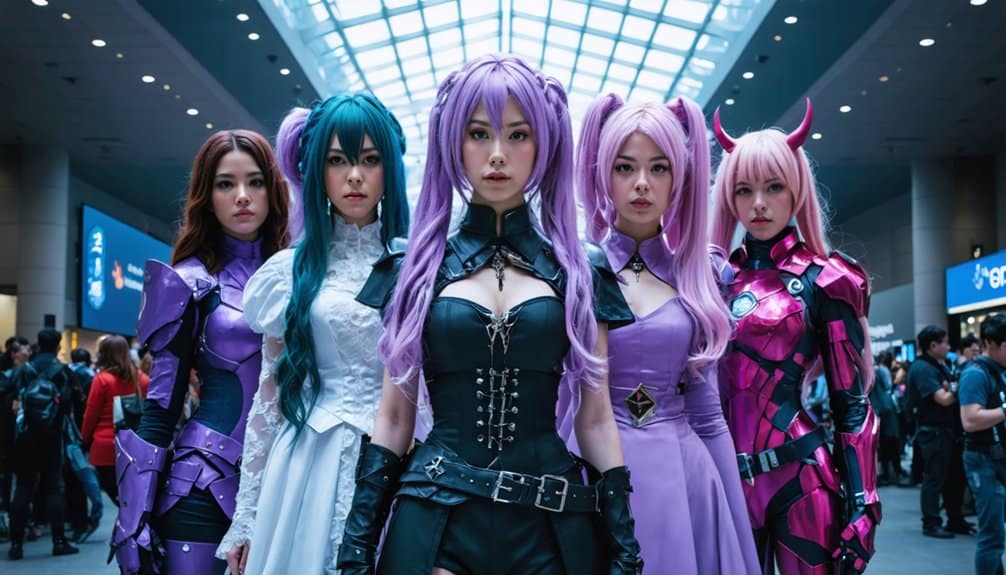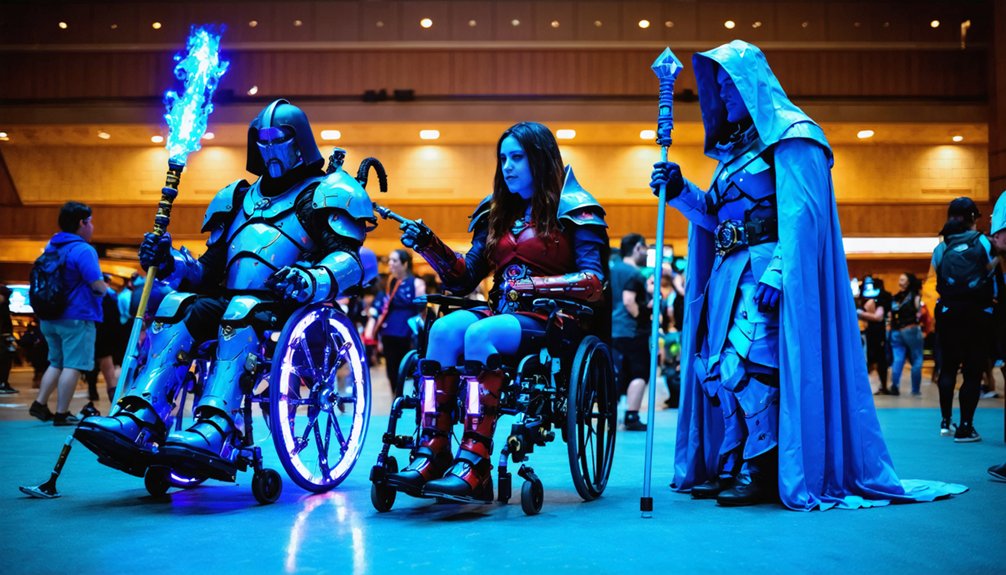
When you cosplay a character rooted in a specific culture, you’re engaging with a living system of identity and meaning — not just an aesthetic. Cultural heritage shapes how garments, symbols, and archetypes carry historical weight within real communities. Getting these details right determines whether your portrayal reads as respectful appreciation or hollow appropriation. Understanding the difference transforms your performance into genuine embodiment. There’s far more to unpack about what that distinction actually looks like in practice.
Key Takeaways
- Cultural heritage in cosplay fosters authentic representation by connecting costumes to their historical, social, and symbolic meanings beyond surface aesthetics.
- Researching a character’s cultural background transforms cosplay from mere performance into a respectful embodiment of identity and tradition.
- Understanding cultural significance helps cosplayers distinguish between appreciation and appropriation, ensuring garments are treated as living cultural symbols.
- Community consultation and feedback prevent cultural blind spots, promoting sensitivity and informed engagement within cosplay communities.
- Respectful cultural portrayal enriches shared narratives, deepens community connections, and amplifies voices from the cultures being represented.
What Cultural Heritage Actually Means in Cosplay?
Cultural heritage in cosplay isn’t just about wearing a kimono or recreating an anime character’s outfit—it’s a layered negotiation between representation, identity, and cultural literacy.
When you engage with a character’s cultural significance, you’re entering a space where identity expression, community engagement, and cultural dialogue intersect.
Cosplay transforms into immersive experiences that carry educational opportunities beyond surface aesthetics. You’re not simply wearing a costume; you’re interpreting a cultural artifact that demands contextual understanding.
Character authenticity requires researching the garment’s origins, mythological references, and social meaning within its source culture. Respectful portrayal separates thoughtful representation from caricature.
Ethnographically, cosplayers who study cultural frameworks before embodying characters demonstrate how fandom can function as a legitimate site of cross-cultural literacy and meaningful exchange.
The Real Difference Between Appreciation and Appropriation
When you step into a costume rooted in another culture’s heritage, the line between appreciation and appropriation hinges on whether you’ve done the work to understand what you’re wearing and why it matters.
You honor cultural roots by treating garments not as costumes but as living symbols of identity, mythology, and history — a distinction anime cosplayers often navigate when embodying characters tied to specific Japanese traditions.
Learning before wearing isn’t optional courtesy; it’s the analytical difference between respectful representation and a caricature that strips meaning from its source.
Honoring Cultural Roots
Distinguishing appreciation from appropriation in cosplay requires more than good intentions—it demands informed engagement with the cultural roots behind the costumes you wear. When you honor cultural significance through research, you transform your portrayal into genuine identity expression rather than surface-level mimicry.
Understanding historical context reveals garment symbolism embedded in traditions, ceremonies, and lived experiences. You’re not just wearing a costume—you’re engaging with someone’s heritage.
Effective community engagement means consulting authentic voices, maintaining respectful dialogue, and practicing ethical sourcing when acquiring traditional garments. These deliberate choices create immersive experiences that enrich narrative depth across cosplay communities.
Character authenticity emerges when you connect costume choices to real cultural frameworks rather than stereotypes. The difference between honoring and exploiting cultural roots ultimately lives in your commitment to understanding before embodying.
Respectful Representation Matters
Respectful representation in cosplay hinges on a distinction that’s often misunderstood: appreciation actively engages with cultural meaning, while appropriation extracts aesthetic elements without acknowledging their origins.
When you approach cosplay ethics thoughtfully, you’re committing to understanding garment significance, historical context, and identity expression simultaneously. You’re not just wearing a costume — you’re embodying someone’s cultural narrative.
Character authenticity demands that you research origins, consult community members, and recognize what symbols mean beyond their visual appeal. Cultural sensitivity isn’t performative; it’s demonstrated through genuine community engagement and informed decision-making.
Comparative analysis between cultures reveals that respectful homage requires intentionality — understanding *why* a garment exists, not merely *how* it looks. This analytical approach transforms cosplay from surface-level mimicry into meaningful cross-cultural dialogue that honors living heritage.
Learning Before Wearing
Cosplay also functions as genuine identity exploration—but only when you approach source cultures comparatively rather than superficially.
Examine how garment significance connects to living communities, not archived artifacts. That distinction separates thoughtful portrayal from reductive caricature.
Why Getting Cultural Details Right Affects How Communities Receive You?
When you get cultural details right in cosplay, communities notice—and it shapes how they receive you. Cultural nuances signal whether you’ve done the work or simply borrowed aesthetics. Respectful engagement transforms character authenticity from surface performance into genuine heritage appreciation.
Communities respond differently based on how accurately you’ve absorbed cultural context:
- Accurate traditional garments signal identity respect, earning trust from cultural insiders who recognize your immersive experiences.
- Correct symbolic details communicate that you understand mythology and meaning, not just visual appeal.
- Informed character portrayals shift community reactions from skepticism toward celebration and cross-cultural dialogue.
- Thoughtful language incorporation demonstrates deeper cultural immersion beyond costume alone.
Getting details right isn’t perfectionism—it’s the difference between appreciation and appropriation, between connection and caricature.
How to Research a Character’s Cultural Background Before You Build?

Getting cultural details right demands a research foundation built before a single stitch is sewn.
Start your character analysis by identifying the character’s cultural context—nationality, historical period, and mythological roots. Cross-reference primary sources like folklore archives, museum collections, and academic texts to understand historical significance and traditional techniques embedded in the costume’s design.
You’ll want to examine character evolution across different media adaptations, noting how costume accuracy shifts with each iteration.
Decode cultural symbolism in fabric patterns, colors, and accessories—these aren’t decorative choices but identity markers carrying real meaning.
Don’t finalize your build without seeking community feedback from people connected to that culture. Their lived perspectives expose blind spots that secondary research misses, transforming your cosplay from surface-level imitation into genuinely informed cultural engagement.
How Traditional Garments Define an Authentic Cultural Portrayal?
Traditional garments function as cultural texts, encoding history, social status, and communal identity into every stitch, dye, and silhouette. When you approach cosplay with ethnographic precision, garment symbolism transforms your portrayal from costume into cultural dialogue.
Consider these defining elements:
- Fabric weight and texture signal regional climate adaptations and craftsmanship traditions.
- Color patterns communicate traditional significance, representing spiritual beliefs or ancestral lineage.
- Structural silhouettes reflect historical gender roles and ceremonial functions.
- Embroidery motifs encode mythological narratives specific to origin communities.
You’re not simply wearing clothing—you’re activating layered meaning systems.
Every garment carries encoded meaning—wear it with intention, and you become a living archive of culture.
Comparative analysis between source garments and cosplay interpretations reveals where authenticity holds and where caricature creeps in. Precision here distinguishes respectful cultural immersion from superficial appropriation, elevating your craft considerably.
Why Cultural Missteps Turn Costumes Into Caricatures?

Cultural missteps don’t happen in a vacuum—they emerge from a specific failure: detaching visual signifiers from their embedded meaning systems. When you strip cultural symbolism from its origin context, costume authenticity collapses into caricature.
You’re no longer practicing identity exploration—you’re flattening complex heritage into aesthetic shorthand.
Respectful engagement requires more than visual accuracy. Heritage education bridges the gap between surface representation and meaningful portrayal. Without it, character integrity erodes, reducing nuanced cultural narratives into stereotypes.
Community feedback functions as your corrective mechanism here. Cosplay communities actively signal when portrayals misread cultural sensitivity thresholds.
Treat that feedback ethnographically—as primary data revealing where your interpretation diverged from cultural reality. Integrating these corrections transforms your cosplay from shallow imitation into an informed, analytically grounded cultural tribute.
How Cultural Heritage Cosplay Opens Doors to Real-World Learning?
- Researching garment construction — You’re handling textile histories, understanding regional craftsmanship embedded within each stitch.
- Learning ceremonial context — You’re decoding when specific attire appears, developing cultural sensitivity toward sacred versus secular distinctions.
- Engaging multilingual communities — You’re practicing phrases, creating authentic connections with native speakers through community engagement.
- Initiating respectful dialogue — You’re sparking conversations that bridge misconceptions, replacing stereotypes with nuanced comparative understanding.
These aren’t peripheral benefits—they’re central outcomes.
Respectful dialogue emerges organically when your portrayal demonstrates genuine curiosity rather than performative aesthetics.
How the Cosplay Community Holds Itself Accountable on Cultural Respect?
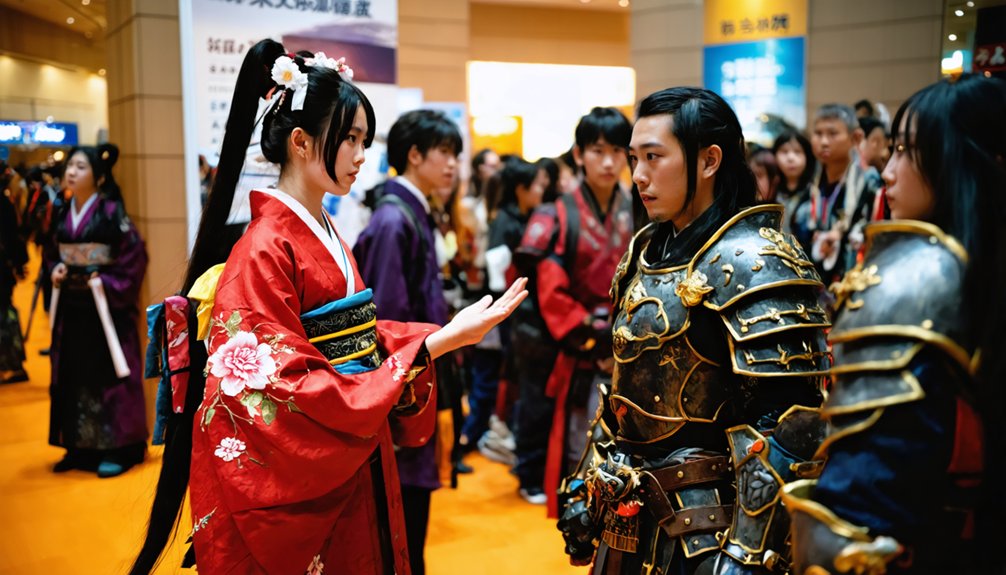
Learning about garments and ceremonial contexts only carries weight when the broader community reinforces those standards collectively.
You’ll notice that cosplay spaces increasingly adopt community guidelines that prioritize cultural sensitivity over viral aesthetics. Forums moderate content, veteran cosplayers mentor newcomers, and curated educational resources clarify context behind character authenticity. This collaborative learning model transforms individual enthusiasm into ethical representation.
Comparative analysis reveals that communities enforcing cultural accountability produce richer, more respectful engagement than those treating heritage as costume fodder.
You’re participating in a subculture that actively interrogates its own practices, flagging caricatures while amplifying voices from source cultures. When you consult cultural consultants or attend heritage panels at conventions, you’re not just improving your craft—you’re reinforcing a collective standard that innovation and respect aren’t mutually exclusive.
How Deep Cultural Research Changes the Way You Engage at Events?
When you invest time in deep cultural research before an event, your interactions shift from surface-level performance to informed engagement. Understanding cultural nuances, historical context, and symbolic meanings transforms how you carry yourself and connect authentically.
Deep research reshapes your event experience through:
- Informed conversations — you initiate cross-cultural dialogue, discussing a garment’s origins rather than its aesthetics alone.
- Ethical considerations — you distinguish appreciation from appropriation, honoring identity exploration without reducing traditions to costumes.
- Heightened community engagement — attendees recognize your authenticity, deepening shared connections.
- Elevated creative expression — your portrayal reflects layered understanding, not imitation.
Comparatively, cosplayers who skip research perform characters; those who research *embody* them. That distinction defines meaningful cultural heritage representation within innovative, forward-thinking cosplay communities.
Frequently Asked Questions
Can Children Participate in Cultural Heritage Cosplay Without Facing Criticism?
Yes, children can participate in cultural heritage cosplay respectfully. You’ll find that cultural sensitivity and age-appropriateness guide their portrayals, fostering genuine appreciation rather than criticism, while communities actively support their cross-cultural learning through imaginative, inclusive engagement.
Does Cosplaying a Cultural Character Require Fluency in That Language?
You don’t need fluency, but you’re expected to embrace language accessibility thoughtfully. Practicing key phrases demonstrates cultural sensitivity, bridging authentic connection without mastery. Learning contextual expressions enhances your portrayal, transforming cosplay into meaningful cross-cultural engagement rather than superficial imitation.
Are There Cultural Heritage Cosplay Competitions Specifically Celebrating Traditional Accuracy?
Yes, you’ll find cultural appreciation competitions spotlighting traditional attire accuracy, where judges evaluate authentic garment construction, historical fidelity, and respectful portrayal, blending innovative craftsmanship with ethnographic precision, connecting cosplayers across diverse cultural heritages meaningfully.
How Does Mental Health Benefit From Connecting Cosplay to Cultural Roots?
Like an anchor steadying a ship, connecting cosplay to cultural roots grounds your mental health through identity expression. You’ll find cultural appreciation builds belonging, reduces anxiety, and fosters psychological growth within accepting communities that celebrate heritage.
Can Cosplay Cultural Portrayals Ever Influence Official Academic Cultural Studies?
Yes, you’ll find that cosplay authenticity and cultural representation can absolutely influence academic cultural studies. Your immersive portrayals generate ethnographic data, challenge conventional frameworks, and offer comparative insights that researchers can’t ignore in evolving cultural scholarship.
References
- https://worldfootprints.com/cultural-heritage/cultural-immersion-and-pop-culture-costuming-and-cosplay-while-traveling/
- http://ijmrap.com/wp-content/uploads/2025/05/IJMRAP-V7N11P125Y25.pdf
- https://folklife.si.edu/magazine/cosplay-community
- https://etheses.whiterose.ac.uk/id/eprint/25835/1/AMB Final thesis PDF (1).pdf