Foam clay is your best option for cosplay props because it air-dries flexible, bonds directly to EVA foam without adhesives, and resists cracking under flex stress. It’s lightweight, non-toxic, and cures within 24 hours without heat. You can use it to fill seams, sculpt raised details, and cast textures with minimal shrinkage. It also accepts paint, sanding, and carving like a professional material — and there’s far more to uncover about what it can do.
Key Takeaways
- Foam clay bonds directly to EVA foam without adhesives, flexing with it to prevent cracking or peeling after drying.
- It fills seams and gaps with minimal shrinkage, preserving dimensional accuracy for clean, professional-looking cosplay props.
- The air-dry formula requires no oven or chemical mixing, simplifying the crafting process significantly.
- Once cured, it accepts sanding, carving, heat-shaping, and paint, enabling precise and detailed post-processing.
- Affordable at $5–$15 per container, it supports texturing, detailing, and gap-filling across diverse cosplay applications.
What Is Foam Clay and How Does It Work?
Foam clay is an air-dry modeling material made up of tiny foam beads suspended in a glue-like base, giving it a soft, malleable consistency that’s easy to shape by hand.
Its unique material composition sets it apart from traditional modeling clays — it’s lightweight, minimally shrinks during the drying process, and cures to a flexible, foam-like texture rather than a rigid, brittle finish.
You don’t need an oven or heat source; standard air exposure completes the curing within 24 hours.
Once dried, it retains flexibility similar to EVA foam, meaning it bends without cracking under stress.
This combination of accessible material composition and a straightforward drying process makes foam clay a technically efficient choice for cosplayers who prioritize precision, durability, and structural integrity in their builds.
Why Foam Clay Beats Other Sculpting Materials for Cosplay
When stacked against traditional sculpting materials like polymer clay, air-dry clay, or epoxy resin, foam clay delivers a combination of properties that competing materials simply can’t match for cosplay applications. Polymer clay requires oven curing, epoxy resin demands mixing ratios and ventilation, and air-dry clay cracks under flex stress. Foam clay eliminates these friction points entirely.
Its reduced environmental impact stems from non-toxic formulation and zero equipment energy consumption during curing. You’re not running ovens or mixing chemical hardeners. The material air-dries within 24 hours, bonds directly to EVA foam, and flexes without fracturing after curing.
For makers seeking creative inspiration, foam clay’s versatility across texturing, gap-filling, and mold-casting unlocks design possibilities that rigid, brittle alternatives actively restrict. It’s the technically superior choice for dynamic cosplay builds.
How Foam Clay Bonds to EVA Foam Without Glue
One of foam clay’s most practical advantages is its self-welding behavior, which lets it bond directly to EVA foam surfaces without contact cement or external adhesives. This foam clay compatibility stems from its glue-like base, which activates upon contact with the porous EVA surface, creating an immediate mechanical bond.
You don’t need to apply pressure or wait for a curing agent to set. Simply press the material onto your foam base, and it fuses instantly. This adhesive alternative eliminates messy application steps and reduces build time considerably.
Once dried, the clay layer resists peeling and flexes alongside the foam without delaminating. For cosplayers prioritizing clean workflows and structural reliability, this bonding mechanism is a measurable technical advantage over conventional surface-layering methods.
Foam Clay as a Seam Filler and Gap Smoother
Beyond its sculpting capabilities, foam clay serves as an effective seam filler and gap smoother for EVA foam builds. You can press it directly into joints and gaps, eliminating visible adhesive lines that compromise a prop’s finished appearance. Its minimal shrinkage during drying preserves dimensional accuracy, making it ideal for beginner techniques where precision control is still developing.
Key advantages for seam work include:
- Clean integration: Foam clay blends seamlessly into EVA foam surfaces without harsh visible gradual lines.
- Reduced material waste: Targeted gap-filling minimizes excess material use, lowering your environmental impact.
- No additional adhesives required: Self-welding properties allow instant bonding directly within seams.
Once cured, you can sand or carve the filled areas smooth, then proceed with standard priming and painting workflows.
Getting Fine Details and Raised Textures With Foam Clay
When building cosplay props, you can use foam clay to sculpt raised ornamental details—filigree, embossed emblems, and organic surface features—directly onto your EVA foam base.
You can also press 3D-printed stamps or textured objects into flattened clay to transfer intricate surface patterns with high accuracy and repeatability.
For fiber-like elements such as rope textures or hair strands, you simply stretch small amounts of the material to create thin, elongated forms that bond seamlessly to your prop.
Sculpting Raised Ornamental Details
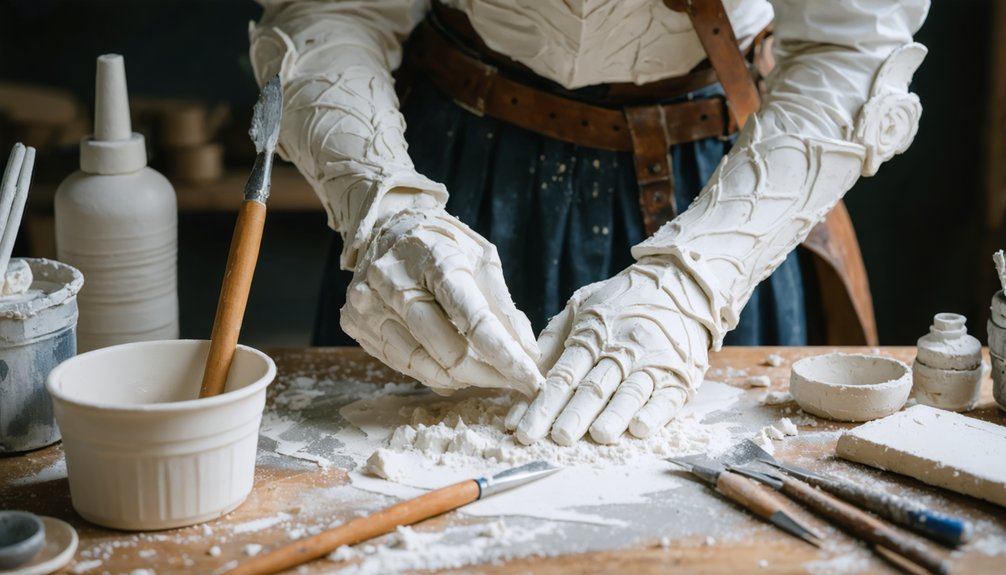
Foam clay’s soft, wet consistency makes it an ideal medium for sculpting raised ornamental details that would be difficult or time-consuming to cut from flat EVA foam sheets. You can apply it directly onto EVA foam bases for precise texture enhancement, building filigree, organic motifs, and dimensional embellishments efficiently.
Key techniques include:
- Surface stamping using 3D-printed stamps pressed into flattened clay to replicate intricate repeating patterns
- Sculpting freehand raised ornaments like scrollwork, sigils, or armor embossing directly onto prop surfaces
- Stretching small amounts to create fine fiber-like details or delicate structural accents
Once dried, these elements integrate seamlessly with the base foam, accepting sanding, carving, and standard acrylic paint workflows without delaminating or cracking under normal handling conditions.
Stamping Intricate Surface Patterns
Stamping takes the freehand approach further by letting you reproduce consistent, repeating patterns across large surface areas with minimal effort. Flatten your foam clay into an even sheet, then press 3D-printed stamps or textured objects directly into the surface before it cures. The soft consistency captures fine geometric or organic impressions cleanly, eliminating the inconsistencies of purely hand-sculpted repetition.
Tool compatibility extends naturally here—standard crafting tools, custom-fabricated stamps, or even found objects all transfer detail effectively. Once dried, the stamped panels integrate seamlessly into your EVA foam base.
From there, color blending with acrylics or spray paints amplifies the dimensional texture, using dry-brushing or wash techniques to emphasize recessed lines and raised edges, producing professional, high-contrast surface finishes across armor pieces and accessories.
Stretching Clay For Fibers
Beyond stamping and surface sculpting, stretching foam clay opens up an entirely different category of fine detail work. When you pull small amounts apart slowly, the material elongates into thin, thread-like strands ideal for replicating organic fibers, fur textures, or frayed fabric edges on your props.
Stretching releases practical applications that rigid techniques can’t match:
- Fiber simulation: Pull strands to consistent lengths for uniform texture enhancement across armor surfaces or costume embellishments.
- Color blending: Twist two differently colored portions together before stretching to create gradient fiber effects without painting.
- Layered detailing: Apply stretched strands directly onto EVA foam bases, where they self-weld instantly without adhesive.
You’re fundamentally sculpting with tension, giving your builds a level of organic realism that stamping alone simply can’t deliver.
How Durable and Flexible Is Cured Foam Clay?
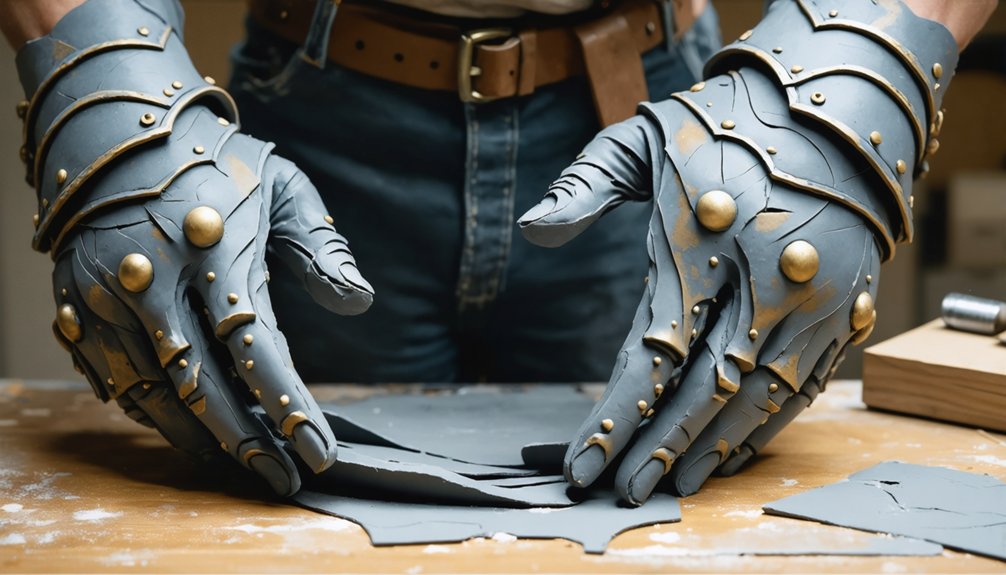
Once cured, foam clay delivers a surprisingly resilient and flexible finish that holds up well under the physical demands of cosplay wear. The dried material mimics EVA foam’s behavior, allowing it to bend without cracking under repeated stress.
You can sand, carve, or cut it using standard utility knives and Dremel tools, integrating it seamlessly into your existing workflow.
Its surface accepts acrylic paints efficiently, supporting color blending techniques that produce smooth gradients across armor panels. You can also exploit texture contrast by combining sanded sections with untouched sculpted areas, amplifying visual depth.
Heat-gun application remains viable post-cure, letting you re-shape specific sections for better fit. The material also bonds reliably with contact cement and Plasti-Dip, reinforcing structural integrity throughout convention wear.
How to Shape, Sand, and Cut Foam Clay Once It’s Dry
After foam clay cures fully, you’ll find it responds to standard fabrication tools much like EVA foam does. You can refine your pieces efficiently using techniques that integrate seamlessly into existing prop-making workflows.
Key post-cure fabrication methods include:
- Sanding: rough surfaces smooth using standard grit sandpaper, progressing from coarse to fine grades
- Cutting and carving: with utility knives, scissors, or Dremel tools to refine edges and add precise detail
- Heat-shaping: with a heat gun to achieve specific curves without cracking
Before finalizing your build, plan your color mixing strategy early, since acrylic and spray paints bond excellently to cured foam clay.
Additionally, proper storage techniques—sealing unused portions in airtight containers—prevent premature drying and preserve material integrity for future detailing work.
How to Paint and Seal Foam Clay Props

With your foam clay pieces shaped and refined, painting and sealing them follows a straightforward process that integrates cleanly into standard prop-finishing workflows.
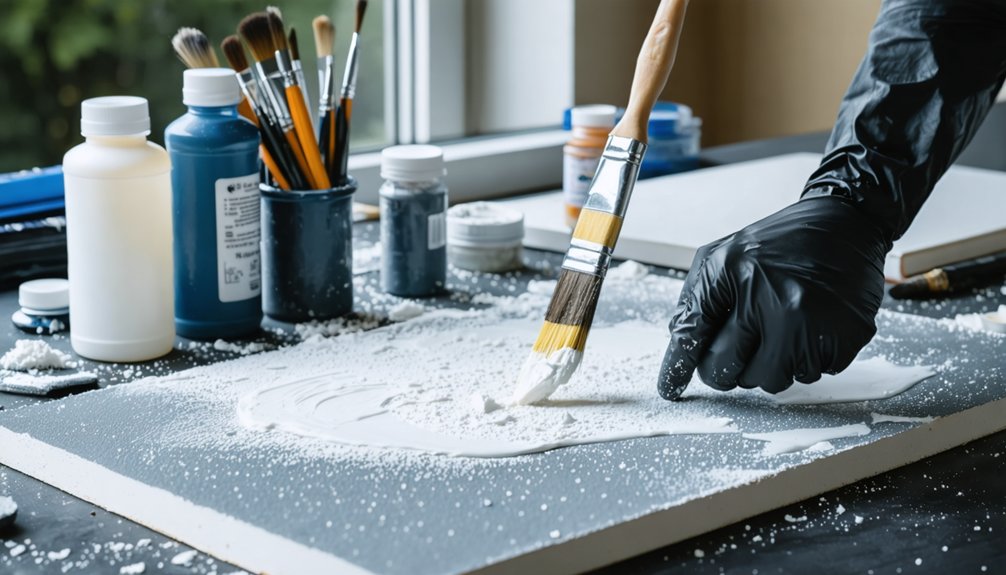
Foam clay accepts acrylic paints and spray paints directly, allowing you to apply color mixing techniques to achieve nuanced tonal variations across surface details. The material’s foam-like texture responds well to dry-brushing and layered washes, making texture techniques highly effective for highlighting raised ornamental elements.
Foam clay’s texture makes dry-brushing and layered washes ideal for bringing surface details to life.
Before painting, seal the surface with Plasti-Dip or Mod Podge to create a consistent base that prevents paint absorption inconsistencies.
Contact cement bonds cleanly to cured foam clay, supporting modular builds requiring additional attachments post-finishing.
Final clear coats lock pigmentation in place, delivering durable, vibrant results suited for both performance wear and display applications.
Where Foam Clay Outperforms Other Materials by Prop Type
When you’re building armor and structural pieces, foam clay lets you add raised details and organic shapes directly onto EVA foam bases without adding significant weight.
For jewelry and fine details, its soft consistency lets you stretch, mold, and stamp intricate patterns that rigid materials simply can’t replicate at the same scale.
You’ll also find it outperforms gap fillers and adhesives for seam work, bonding seamlessly to foam surfaces and drying flush without visible lines.
Armor and Structural Pieces
Foam clay outperforms most competing materials when building cosplay armor and structural pieces because it combines low weight with genuine surface durability. Its material compatibility with EVA foam bases means you can layer detailed textures directly onto structural substrates without adhesion failures or delamination.
Key performance advantages for armor builds include:
- Flexible curing: Dried foam clay bends without cracking, preserving structural integrity across curved pauldrons and breastplates.
- Seamless integration: It bonds directly to EVA foam, accepting contact cement, Plasti Dip, and acrylic paints within standard workflows.
- Environmental safety: The non-toxic formula lets you work extended sessions without ventilation concerns or chemical exposure risks.
You can sand, carve, and heat-shape cured foam clay using standard tools, making post-processing armor pieces precise and technically consistent.
Jewelry and Fine Details
Jewelry and fine detail work expose the limitations of rigid materials like Worbla and hard-set epoxy clays, and foam clay fills that gap precisely. When you’re sculpting filigree pendants, layered emblems, or raised surface ornaments, foam clay’s soft consistency lets you manipulate intricate forms without cracking or resistance.
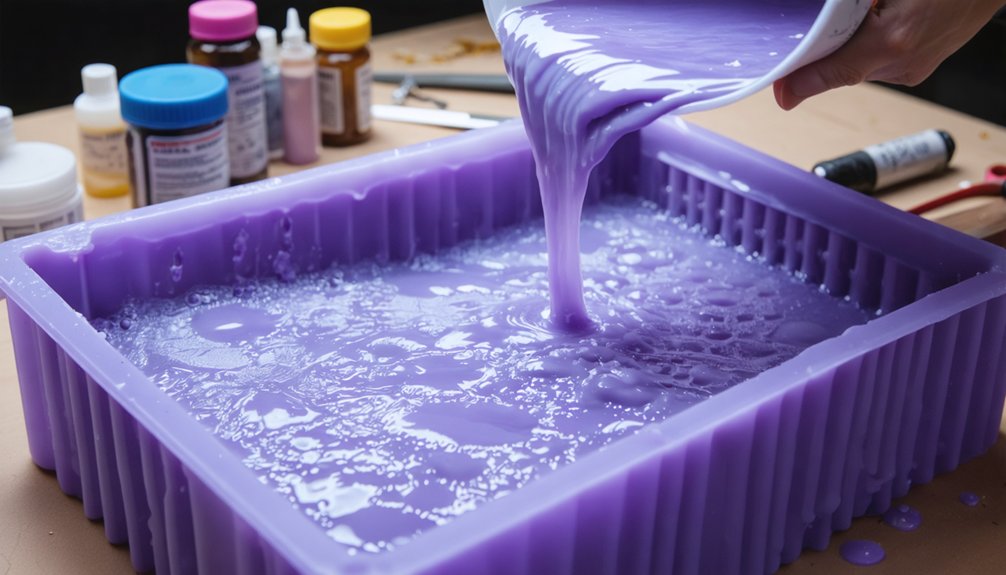
You can stretch it into fine fibers, press 3D-printed stamps into flattened sheets, or pack it into silicone molds for consistent repeated castings. Tool selection matters here—fine silicone shapers and dental tools outperform bulkier implements when refining small geometry.
Color mixing directly into uncured clay eliminates uneven paint absorption on porous surfaces, giving you predictable, saturated results. The lightweight cure means detailed jewelry pieces won’t stress attachment points on your costume, maintaining structural integrity throughout wear.
Seam Filling and Finishing
Beyond sculpting fine ornaments, foam clay pulls equal weight when it comes to cleaning up the structural imperfections that plague prop builds. When you’re working with EVA foam, seams and gaps are inevitable. Foam clay’s material compatibility with EVA makes it the superior filler choice over hot glue or epoxy putty.
Here’s where it outperforms:
- Seam concealment: Press foam clay directly into joints; it self-welds without adhesive, leaving zero visible lines.
- Texture enhancement: Once dried, sand or carve the filled area to match surrounding surface textures seamlessly.
- Gap bridging: Fill uneven cuts or misaligned edges without adding structural weight.
You get a finish that looks factory-intentional rather than patched — critical when your build demands professional-grade presentation.
How Much Foam Clay Costs and Where to Buy It
One of foam clay’s most appealing qualities is its affordability, making it accessible for hobbyists and professional cosplayers alike. You’ll typically find it priced between $5 and $15 per container, depending on brand and quantity.
Foam clay is budget-friendly, typically ranging from $5 to $15 per container, welcoming both hobbyists and seasoned cosplayers.
Bulk purchasing reduces costs further, which matters when you’re working on large-scale builds.
For sourcing, check retailers like Amazon, Michaels, or specialty cosplay suppliers such as TNT Cosplay Supply. Some makers prefer European brands like Efom or Makin’s for consistent quality.
For storage tips, keep unused foam clay sealed in an airtight container to prevent premature drying.
Regarding environmental impact, the non-toxic composition makes disposal safer than solvent-based materials.
Choosing brands with minimal plastic packaging further reduces your project’s ecological footprint without compromising material performance.
Frequently Asked Questions
Can Foam Clay Be Safely Used by Children During Cosplay Projects?
Yes, you can safely let children use foam clay in cosplay projects. It’s made with non-toxic ingredients, ensuring child safety throughout sculpting. It doesn’t stick to hands, making it a clean, innovative crafting experience.
How Long Does Foam Clay Last in Storage Before It Dries Out?
Like a sealed time capsule, foam clay’s longevity factors depend on airtight storage tips—keep it sealed in its original packaging. You’ll extend its shelf life considerably, preventing premature drying that compromises your innovative prop-making projects.
Can Foam Clay Be Pressed Into Silicone Molds for Casting?
Yes, you can press foam clay into silicone molds for precise casting techniques. Simply pack it firmly, freeze it overnight, and you’ll release cleanly detailed duplicates that retain intricate surface patterns with exceptional dimensional accuracy.
Does Foam Clay Release Toxic Fumes When a Heat Gun Is Applied?
Like a revitalizing gust, foam clay won’t release toxic fumes when you apply a heat gun. Its non-toxic formula keeps heat safety intact, letting you shape and curve your props confidently.
Can Foam Clay Pieces Be Repaired if They Break After Curing?
Yes, you can address durability concerns by applying fresh foam clay over breaks, as it bonds effectively with cured pieces. These repair techniques leverage contact cement or new foam clay to restore structural integrity seamlessly.
References
- https://cosplaystoregreece.com/journal/foam-clay-what-it-is-amp-why-cosplayers-love-it-for-props-and-creative-projects
- https://www.youtube.com/watch?v=6SLhpiNIkZ8
- https://claymoo.com/blogs/news/foam-clay-vs-polymer-clay-choosing-the-right-material-for-your-project
- https://www.crazecosplay.com/blogs/questions/what-kind-of-foam-should-i-use-for-cosplay
- https://www.youtube.com/watch?v=dbNKtbxWCvc
- https://www.youtube.com/watch?v=rjjgyY7FyYQ
- https://www.thepopverse.com/cosplay-best-prop-materials-crafting-foam-clay-worbla-sintra
- https://forum.scribblehub.com/threads/a-review-on-foam-clay.17214/
- https://cos-bond.com/2019/07/31/cosplaying-with-clay-material-guide/
- https://www.reddit.com/r/cosplayprops/comments/1ns8ilb/which_is_better_foam_clay_or_eva_foam/