Winning cosplay contests requires you to combine smart character selection, technical craftsmanship, and commanding stage presence. Choose a character that matches your skill level and showcases your strengths. Judges score you on construction quality, character accuracy, and performance confidence, so you’ll need to excel across all areas. Integrate advanced techniques like LEDs, engineered props, and mixed materials to maximize your competitive edge. Every strategy you’ll need to claim first place is waiting ahead.
Key Takeaways
- Select a character that balances personal connection, visual distinctiveness, and complexity aligned with your skill level and available build time.
- Study judge scoring criteria beforehand, focusing on craftsmanship, character accuracy, technical complexity, and stage presence requirements.
- Build with clean construction techniques, ensuring precise seam finishing, accurate detailing, and correctly scaled proportions throughout the costume.
- Rehearse performance in full costume, mastering signature poses, deliberate body language, and confident eye contact with judges.
- Elevate your entry using advanced techniques like LED integration, engineered prop mechanics, mixed material textures, and synchronized sound design.
Pick a Character That Plays to Your Cosplay Contest Strengths
Choosing the right character sets the foundation for your entire contest run, so treat this decision as strategically as any build step. Evaluate character popularity carefully — recognizable characters score faster with judges and audiences, but oversaturation can dilute your impact.
Balance visibility against uniqueness to find your competitive edge.
Your emotional connection to the character matters more than it might seem. Strong personal investment drives authenticity in performance, sharpens your research focus, and sustains motivation through difficult build phases.
Judges detect genuine enthusiasm, and it consistently separates mechanical presentations from compelling ones.
Also assess skill-level compatibility honestly. Select a character whose design challenges your current abilities without exceeding them recklessly.
Prioritize visual distinctiveness, research signature traits thoroughly, and align the character’s complexity with your available build timeline.
Understand What Cosplay Contest Judges Actually Score
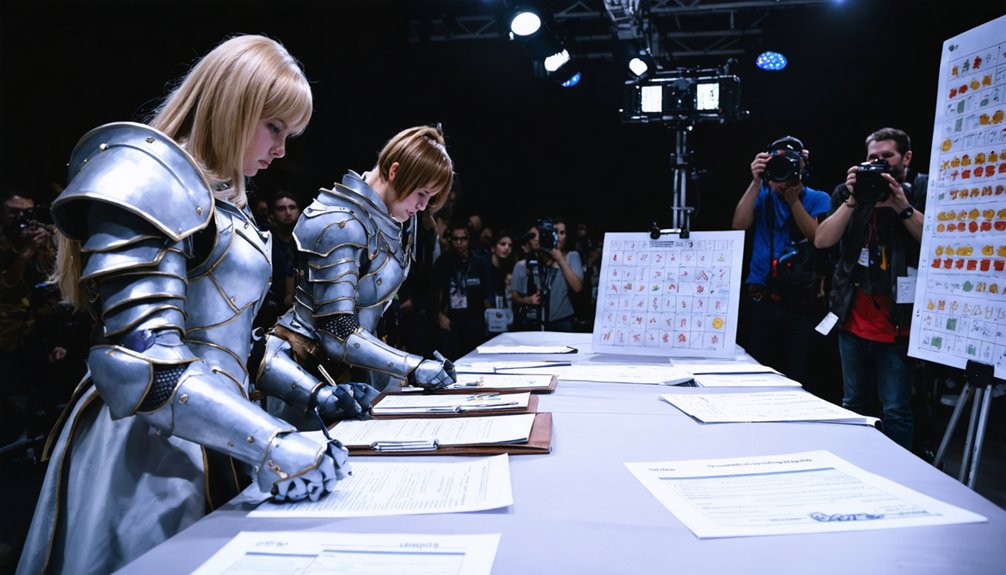
Before you build a single piece of your costume, understand exactly what judges are evaluating so your effort targets the right areas. Most contests use a defined scoring breakdown that weights craftsmanship heavily, often accounting for the majority of available points.
Judge criteria typically cover construction quality, material selection, finishing work, and technical complexity.
Judges evaluate what you built, what you built it from, how you finished it, and how hard it was to make.
Beyond the build, judges assess character accuracy, stage presence, and performance confidence. Pre-judging evaluations frequently examine seam quality, proportion, and detail consistency up close, while stage scoring measures how effectively you embody the character through movement and expression.
Review each contest’s specific judge criteria before committing to your design approach. Aligning your strongest skills with the highest-weighted scoring categories gives you a measurable competitive advantage rather than leaving results to chance.
Build a Cosplay Contest Costume That Scores on Craftsmanship
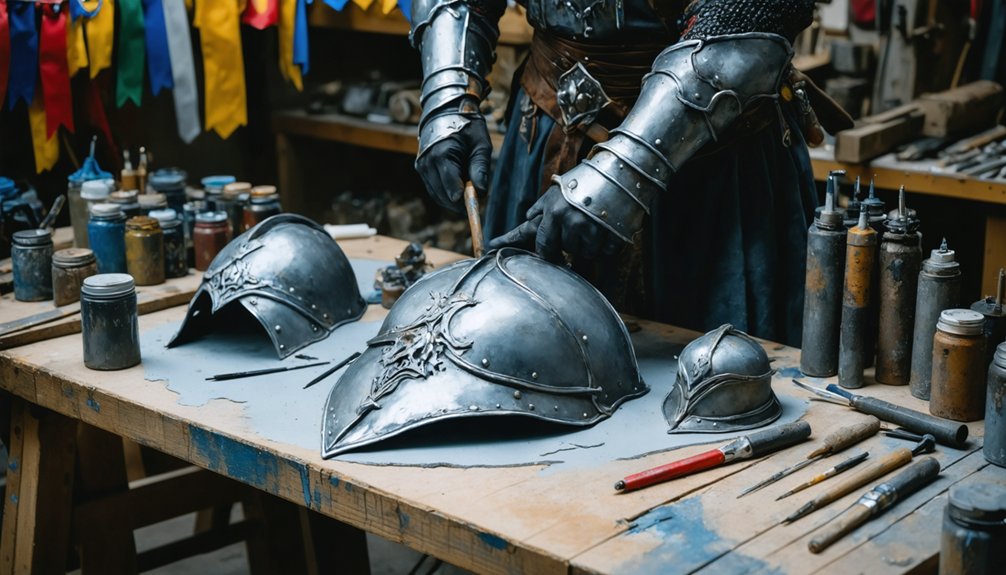
Craftsmanship typically carries the most scoring weight in cosplay contests, so how you build matters as much as what you build. Judges evaluate construction integrity closely, rewarding technical precision over surface-level aesthetics.
Prioritize these four craftsmanship pillars:
- Fabric selection — Match material weight, texture, and drape to your character’s visual profile.
- Clean construction — Press seams, finish edges, and eliminate visible jury-rigging throughout the build.
- Detail work — Execute stitching, weathering, painting, and embellishments with measurable accuracy.
- Proportion control — Calibrate every component’s scale against the full costume silhouette.
Combining multiple techniques—sewing, prop fabrication, and specialty makeup—strengthens your competitive position considerably.
Don’t rely on a single skill. Judges recognize builds that demonstrate technical range, so diversify your methods strategically and document your process for pre-judging discussions.
Own the Cosplay Contest Stage With Confident Performance
Even the most technically flawless costume loses competitive ground when stage presence is weak. You’ve invested hours in construction, so don’t surrender scoring potential by walking out unprepared.
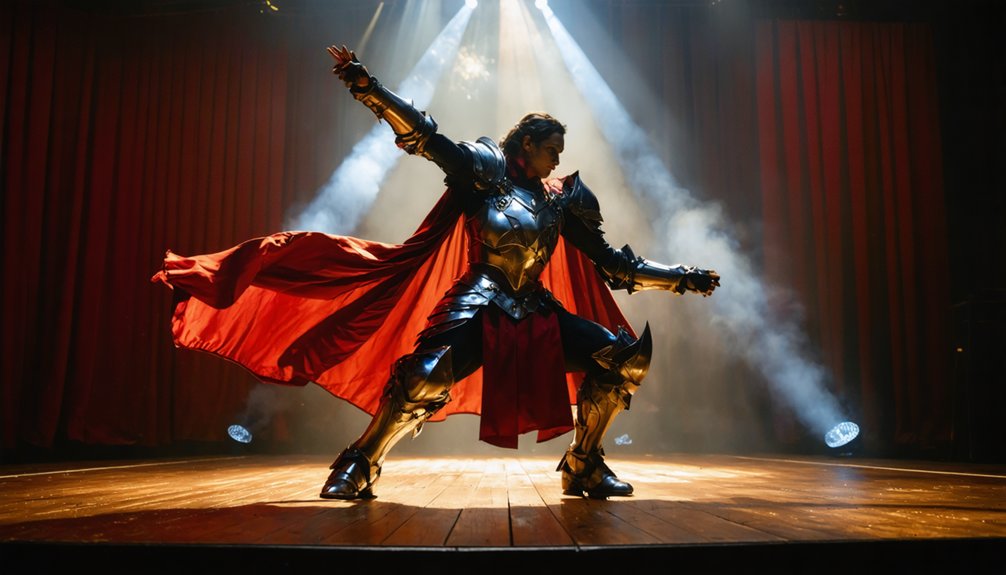
Study your character’s movement patterns, signature poses, and emotional tone before you step onto the stage. Judges evaluate character embodiment actively — they’re watching how convincingly you inhabit the role, not just what you’re wearing.
Deliberate body language, controlled facial expressions, and purposeful movement communicate mastery. If choreography fits your character’s personality, deploy it strategically.
Maintain eye contact with judges to signal confidence and intentionality. Rehearse under pressure by practicing in full costume beforehand. Every step, turn, and pause should feel calculated.
Strong stage presence transforms a well-built costume into a complete, competitive performance that judges remember.
Use Electronics and Techniques That Win Cosplay Contests
Elevating your build with electronics, mixed-media materials, and special effects techniques creates measurable competitive distance between your entry and single-technique costumes.
Judges consistently reward technical ambition backed by clean execution.
Prioritize these four competitive advantages:
- LED Integration — Wire reactive lighting into armor, weapons, or costume panels to amplify visual impact under stage lighting.
- Prop Mechanics — Engineer movable wings, retractable blades, or articulated components that demonstrate structural problem-solving.
- Sound Design — Synchronize audio triggers with movement or lighting sequences to deepen character immersion during performance.
- Texture Innovation — Combine foam, thermoplastics, silicone, and fabric strategically to produce surfaces that photographs and stage presence can’t replicate with single materials.
Honest presentation of your methods reinforces credibility when judges evaluate your construction claims directly.
Frequently Asked Questions
How Early Should I Arrive for Cosplay Contest Pre-Judging Registration?
You should arrive at least 30 minutes early for pre-judging registration. Apply these pre judging tips: confirm arrival time from contest rules in advance, since schedules vary and you’ll need to be fully costumed upon check-in.
What Should I Say When Explaining My Costume Construction to Judges?
Explain your fabric choices and sewing techniques clearly, walking judges from head to toe. Highlight innovative materials, construction decisions, and challenges you’ve overcome. You’ll demonstrate technical mastery and authenticity, building judge confidence in your craftsmanship efficiently.
How Do I Organize My Talking Points Effectively During Pre-Judging Evaluations?
Like a blueprint guiding a builder, organize your costume details from head to toe. You’ll streamline your presentation tips by rehearsing concise, confident points, ensuring judges efficiently evaluate every innovative construction technique you’ve masterfully incorporated throughout your build.
Should I Bring Reference Images to Show Judges During Pre-Judging?
Yes, you should bring reference material to pre-judging. Visual aids help judges quickly verify your accuracy and craftsmanship decisions. They’ll appreciate seeing how closely you’ve matched source details, strengthening your overall evaluation score considerably.
How Do Contest Schedules Typically Differ Between Large and Small Events?
At large events, you’ll encounter complex scheduling differences, including staggered participant expectations and extended preparation times. Smaller events typically run tighter, simpler timelines. Always verify event size protocols early so you’re never caught unprepared.
References
- https://snowicosplay.de/en/cosplay-en/cosplay-contests-strategies-for-winning-and-participating
- https://www.crazecosplay.com/blogs/questions/how-to-win-a-cosplay-contest
- https://www.reddit.com/r/CosplayHelp/comments/1fnah4y/what_does_it_take_to_win_a_cosplay_competition/
- https://geeknewsnetwork.net/teedees-tips-cosplay-competition/
- https://www.blackowlstudio.com/en/behind-the-scenes-of-cosplay-contests/
- https://whatsernamescosplay.wordpress.com/2022/06/28/tips-tricks-competitive-cosplay/
- https://www.youtube.com/watch?v=En-_syUbpek
- https://www.facebook.com/groups/CostumingTrack/posts/10162519458746229/
- https://www.youtube.com/watch?v=5XCVpcu30rU
- https://www.tiktok.com/@your.bad.karma/video/7614467797606829332