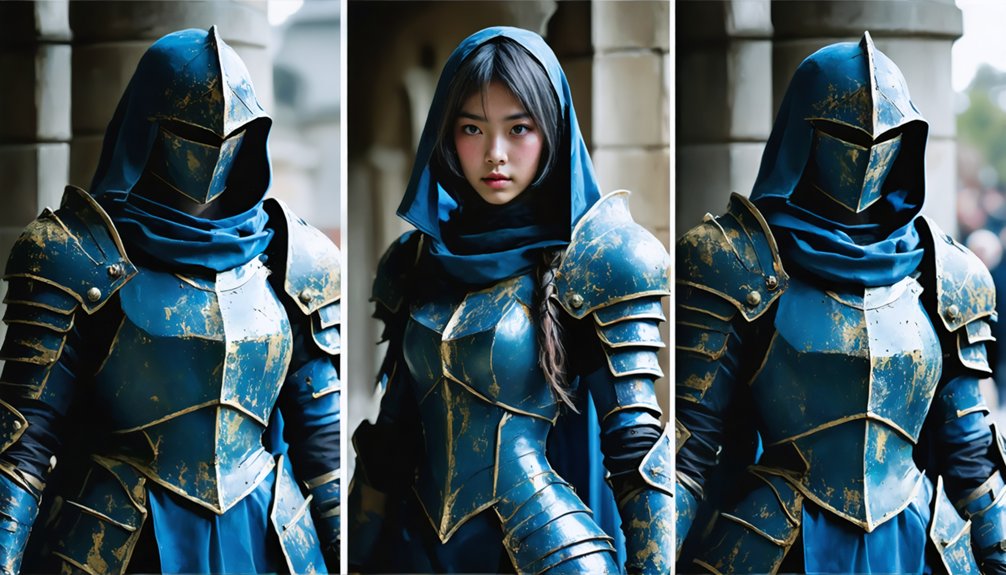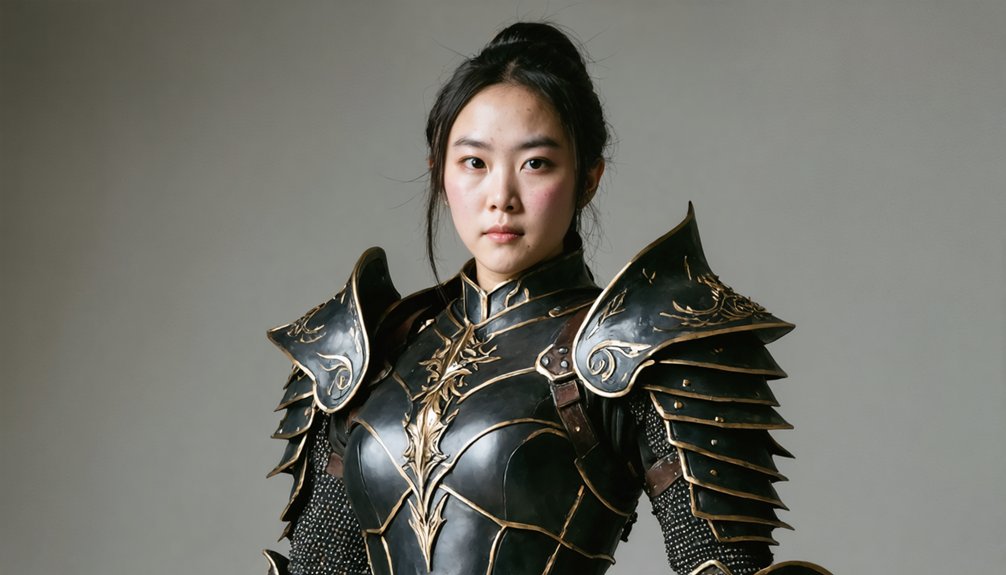
To nail cosplay character detail accuracy, you’ll want to master five core techniques. Build a thorough reference library using multi-angle images and exact color hex codes. Lock in your silhouette and proportions before cutting any fabric. Select materials that match the character’s visual texture and finish. Dial in your wig, makeup, and accessories using precise references. Finally, practice signature movements and poses. Each technique builds on the last, and there’s far more to unpack in each step.
Key Takeaways
- Build a reference library using multiple high-resolution images from various angles to capture accurate colors, proportions, and signature character details.
- Match silhouette and proportion first by comparing black-and-white shape outlines before committing to fabric cutting or detailing.
- Select fabrics matching the character’s visual texture, sheen, and exact color codes to ensure consistency across all costume components.
- Ensure wig, makeup, and accessory accuracy by styling, securing, and verifying symmetrical placement against multiple reference angles.
- Embody the character through practiced signature poses, studied movement patterns, and trained facial expressions for full recognition.
Build Your Cosplay Reference Library Before You Sew
Before cutting a single piece of fabric, you’ll need a solid reference library that covers every angle of your character. Collect 5–10 high-resolution images spanning front, back, side, and three-quarter views to eliminate proportional blind spots.
Before touching your fabric, build a complete visual reference library covering every angle of your character.
Pull official artwork, screenshots, and concept sketches to verify costume structure and material durability requirements before selecting fabrics. Game model viewers are particularly useful for inspecting seam placement, armor connections, and belt routing that standard promotional images obscure.
For precise color matching, sample exact hex codes directly from official art rather than estimating visually. Color variance across lighting conditions is significant, so digital sampling removes guesswork.
Identify non-negotiable signature elements first. Locking down those critical details early ensures your costume remains immediately recognizable before you address secondary components.
Match Silhouette and Proportion First
Once your reference library is complete, strip the character down to pure shape before adding any surface detail. Convert your design into a black-and-white silhouette and compare it directly against your references. Shape reads faster than texture at any distance, so silhouette refinement must come first.
Focus proportion adjustments at peripheral components—hemlines, sleeve lengths, and collar heights—rather than restructuring core signature shapes that define recognizability. If a skirt reads too long against your body ratio, shorten it slightly to balance leg proportion without breaking character identity.
Study how clothing volumes hang from different angles using side and rear references. A costume that looks accurate from the front but collapses in profile loses credibility. Lock in correct shape and proportion before committing to fabric cuts or surface detailing.
Pick Fabrics That Match the Character’s Look
With silhouette and proportion locked in, your next accuracy variable is material selection. Textile durability and color matching directly determine whether your costume reads as authentic or approximate.
- Choose silky fabrics for regal characters and structured canvas for armored warriors—wrong materials break immersion instantly.
- Sample exact hex codes from official art to achieve precise color matching across every costume component.
- Match sheen, weave, and surface finish to the character’s visual texture, not just their base color.
- Apply weathering and distressing to battle-worn characters so the costume reflects narrative context, not just surface appearance.
Build muslin prototypes before cutting final materials. This discipline protects your investment and surfaces fit problems early. Every fabric decision either reinforces or undermines the accuracy you’ve already built into your silhouette.
Get the Wig, Makeup, and Accessories Right
Three components—wig, makeup, and accessories—determine whether your costume reads as character-accurate or generically costumed at close range.
Prioritize wig styling by trimming bangs, heat-shaping volume, and teasing layers to match the character’s exact silhouette rather than leaving the base wig unmodified. Secure it with a wig cap, pins, and bobby pins to maintain structural integrity during wear.
For makeup, apply contouring to replicate the character’s facial geometry, match lip color to official references, and add defining marks like scars or freckles where applicable. Use contacts to match eye color precisely.
For accessory placement, reference symmetry across shoulders and hips to maintain visual balance. Cross-check positioning against multiple reference angles to confirm alignment matches the source material exactly.
Move and Pose Like Your Character
Nailing the visual components of your costume gets you most of the way there, but movement and pose accuracy close the gap between wearing a character and embodying one. Study your character’s posture, behavioral quirks, and authentic movement patterns from source material before your event.
- Mirror-practice signature poses until muscle memory replaces conscious effort
- Rewatch scenes specifically to isolate walking rhythm and idle gestures
- Train dynamic facial expressions that match the character’s emotional register
- Film rehearsal footage to catch movement restrictions your costume structure creates
Each technique compounds the others. A precisely styled wig loses impact if your posture contradicts the character entirely. Authentic movement transforms a well-built costume into a recognizable, emotionally resonant portrayal that audiences immediately connect with.
Frequently Asked Questions
How Much Should a Cosplay Budget Be for Beginner Costumers?
Like diving into deep water, start small—budget $100–$300 as a beginner. You’ll allocate funds toward cosplay makeup essentials and basic prop construction materials, ensuring you’re building foundational skills without financially overwhelming yourself early on.
What Conventions Are Best for Debuting a New Cosplay Costume?
Debut your costume at fan-driven events like Dragon Con or Anime Expo, where you’ll refine cosplay makeup presentation and prop customization feedback from engaged, detail-oriented communities that push creative innovation and reward technical accuracy.
How Do You Safely Store a Finished Cosplay Between Events?
Like a museum artifact, your cosplay deserves careful preservation. Store each piece in breathable garment bags, use acid-free tissue for structure, and follow strict costume maintenance routines to keep your cosplay storage system convention-ready.
Can Commissioned Cosplays Be Entered Into Competition Judging?
You can enter commissioned cosplays, but you’ll face stricter judging criteria. Most competitions assess cosplay authenticity and craftsmanship you personally executed, so disclose your commissioner upfront to guarantee eligibility under each event’s specific rules.
How Do You Handle Costume Malfunctions During a Convention Day?
Pack your emergency kit with adhesives, safety pins, and thread. You’ll fix tears by stitching seams, reattach pieces by applying glue, and stabilize breaks by pinning components. These cosplay repair tips keep your costume convention-ready throughout the day.
References
- https://eyecandys.com/blogs/news/elevate-your-cosplay-with-small-details
- https://www.reddit.com/r/CosplayHelp/comments/1m1tgws/what_are_some_cosplay_tips_you_wish_someone_told/
- https://www.momokarinyo.com/single-post/2018/12/05/cosplay-convos-accuracy
- https://geekgals.co/2019/02/05/cosplay101-character/
- https://starstruckpanda.com/perfecting-character-details-in-cosplay-expert-insights/
- https://starstruckpanda.com/what-are-the-key-secrets-to-perfecting-character-accuracy-in-cosplay/
- https://starstruckpanda.com/enhancing-character-accuracy-in-cosplay-tutorials/
- https://www.animepapa.com/article/how-to-cosplay-like-a-pro-at-anime-conventions-around-the-world/