Your scars are the most authentic costume detail you’ll ever wear. Choose characters whose scar placement mirrors your own, then engineer your costume around those natural lines rather than hiding them. Use makeup to amplify texture and depth instead of concealing it. Connect with inclusive communities on platforms like Instagram, Discord, and Reddit for support and technique-sharing. There’s a whole framework of creative strategies waiting to transform your visible differences into deliberate, powerful storytelling.
Key Takeaways
- Choose characters whose scars match your own in placement or origin, like Zoro or Anakin Skywalker, for authentic storytelling.
- Use makeup techniques to amplify natural scar texture with shadows, highlights, and tinted gloss instead of concealing them.
- Design costumes that frame scars using structural elements like embroidery, asymmetrical openings, or weathering effects along scar lines.
- Join body-positive cosplay communities on Reddit, Discord, and Instagram using hashtags like #ScarsOfCosplay for support and techniques.
- Build confidence incrementally by participating in inclusive photoshoots, scar-visibility panels, and body-positive convention events.
Choose Characters Whose Scars Match Your Own
One of the most empowering choices you can make as a cosplayer with scars is selecting characters whose markings mirror your own — because rather than concealing what makes you unique, you’re transforming it into an intentional artistic statement.
Intentional character selection elevates your cosplay beyond costume into lived storytelling. When your real scars align with a character’s scar narratives, authenticity replaces performance.
Research characters across anime, gaming, and comics whose markings share your scar’s placement, shape, or origin. Zoro’s chest scar, Anakin Skywalker’s facial marking, or Scar from *Fullmetal Alchemist* each carry rich narrative weight.
Your scars aren’t obstacles — they’re built-in character details that no prosthetic can replicate. Matching them deliberately signals creative precision and transforms personal history into compelling visual storytelling.
Style Your Costume Around Your Scar Placement
When styling your costume around your scar placement, you’ll want to start by selecting character designs whose existing aesthetic elements — armor plating, fabric cutouts, or decorative trim — naturally align with your scar’s location and shape.
Use your scar’s natural lines as a structural guide, accentuating ridges and contours with strategic costume detailing like embroidery, piping, or metallic accents that echo the scar’s visual texture.
If no off-the-shelf pattern quite fits, modify existing costume patterns by repositioning seams, adding panel breaks, or cutting asymmetrical openings that frame rather than obscure your scar.
Choose Complementary Character Designs
Choosing a character whose design naturally incorporates or highlights scars can transform what you might see as a limitation into your cosplay’s most compelling feature. Research characters whose canonical scars mirror your own in placement, shape, or scale.
Zoro’s chest scar, Kakashi’s covered eye wound, or Scar’s facial marking aren’t incidental details — they’re narrative architecture. When your real scar aligns with a character’s design, scar acceptance stops being a conscious effort and becomes structural.
You’re not adapting your body to fit the costume; the costume confirms what your body already carries. This alignment delivers unmatched character authenticity, since no prosthetic or makeup technique replicates genuine tissue variation.
Strategic character selection turns anatomical reality into an irreplaceable cosplay asset that manufactured replicas simply can’t achieve.
Accentuate Natural Scar Lines
Character selection sets your foundation, but costume engineering takes it further — you can actively style your build around your scar’s exact placement rather than dressing around it. Treat your scar’s location as a design anchor point, not an obstacle.
- Map your scar topology — photograph it under directional lighting to identify ridges, color gradients, and texture variations worth highlighting.
- Align costume openings strategically — cut lines, tears, or battle damage directly along your scar’s natural path for maximum character authenticity.
- Layer complementary effects — apply weathering, paint burns, or ink detailing that radiates outward from your scar, integrating it into the costume’s visual narrative.
This approach transforms scar acceptance from passive tolerance into active creative leverage, making your build technically precise and visually compelling.
Modify Existing Costume Patterns
Pattern modification gives you direct control over how your costume interacts with your scar’s placement — instead of forcing a premade design onto your body, you’re engineering the garment to treat your scar as a structural feature.
Study your scar’s topography first: its direction, elevation, and surrounding skin texture determine which costume alterations make structural sense.
Adjust seam lines so they either frame or deliberately avoid your scar, transforming it into a design axis rather than an afterthought.
Pattern adjustments like strategic dart relocation, panel splitting, or asymmetrical cutouts can redirect visual attention with surgical precision.
Use contrast fabrics, texture breaks, or topstitching along modified seams to reinforce the intentionality of each change.
You’re not hiding anything — you’re building architecture around what’s already there.
Use Makeup to Enhance Your Scars, Not Hide Them
Instead of concealing your scars beneath heavy foundation, you can strategically apply makeup to amplify their natural texture, making them a powerful visual element that commands attention.
Match your character’s scar tones precisely by using reference images to select pigments that mirror the raised, reddened, or silvered qualities already present in your skin.
Then layer translucent shadows and highlights over the scar’s natural topography to create dimensional depth that feels both authentic and character-accurate.
Highlight Natural Scar Texture
Scars tell a story, and your makeup kit can help amplify that narrative rather than silence it. Highlighting natural scar texture maximizes scar visibility while reinforcing self-acceptance through intentional, character-driven artistry.
- Layer translucent powder along raised scar edges to catch stage lighting, creating dimensional contrast that draws the eye naturally.
- Apply a sheer tinted gloss to hypertrophic scars, intensifying their organic sheen without masking the underlying texture that makes your portrayal authentic.
- Use stippling brushes with complementary skin-tone pigments around scar borders, seamlessly integrating your natural markings into your character’s visual identity.
These techniques transform your real features into deliberate design elements. Your scars aren’t flaws requiring correction — they’re structural details that elevate your cosplay’s authenticity beyond what prosthetics alone can achieve.
Match Character-Accurate Scar Tones
When your character sports a jagged battle wound or a weathered mark from their fictional past, matching that scar’s color palette to your own natural tissue turns your real features into living reference material.
Study the character’s backstory — battle-hardened warriors typically carry raised, hypopigmented tissue, while chemically burned characters show mottled pink-to-burgundy gradients.
Apply scar color theory by identifying whether your natural scar reads warm, cool, or neutral, then cross-reference official character art for undertone accuracy.
Layer translucent tinted balms over existing scar edges to shift your real tone toward the character’s depicted hue without obscuring organic texture.
A reddish theatrical wash pulls fresh wound energy; a desaturated beige-gray communicates aged, healed trauma.
Let the character’s history dictate your pigment choices precisely.
Layer Makeup For Depth
Layering makeup over your real scars reveals dimensional storytelling that flat concealment never achieves — your tissue’s natural topography becomes the foundation, not the obstacle.
Your scar’s raised edges and recessed centers already mimic battle-worn character inspiration authentically.
Apply these scar makeup techniques strategically:
- Shadow first — Press a deep burgundy or ash-gray tone into recessed scar tissue, anchoring the illusion of depth before building upward.
- Highlight raised edges — Drag a thin, pale highlight along elevated ridges, mimicking how light naturally strikes healed tissue.
- Seal with texture medium — Lock layers using a flexible setting spray that moves with your skin, preventing cracking during extended wear.
Each layer compounds realism, transforming your existing anatomy into deliberate, character-accurate artistry rather than something requiring erasure.
Connect With Cosplayers Who Embrace Visible Scars
Finding community makes all the difference when you’re maneuvering how to incorporate your real scars into cosplay. Seek out cosplayers who actively share their scar stories across platforms like Instagram, TikTok, and dedicated Discord servers.
These spaces offer genuine community support, connecting you with creators who’ve already solved the technical challenges you’re facing.
Search hashtags like #ScarsOfCosplay or #DisabledCosplayers to discover innovators redefining character portrayal. Engage directly — ask specific questions about fabric placement, makeup blending over textured skin, or prosthetic adhesion techniques.
Consider joining body-positive cosplay groups where members critique costumes constructively while celebrating visible differences.
These networks accelerate your creative problem-solving dramatically. When experienced cosplayers share what works on scarred skin specifically, you bypass years of costly trial-and-error experimentation.
Find Cosplay Communities That Celebrate Real Scars
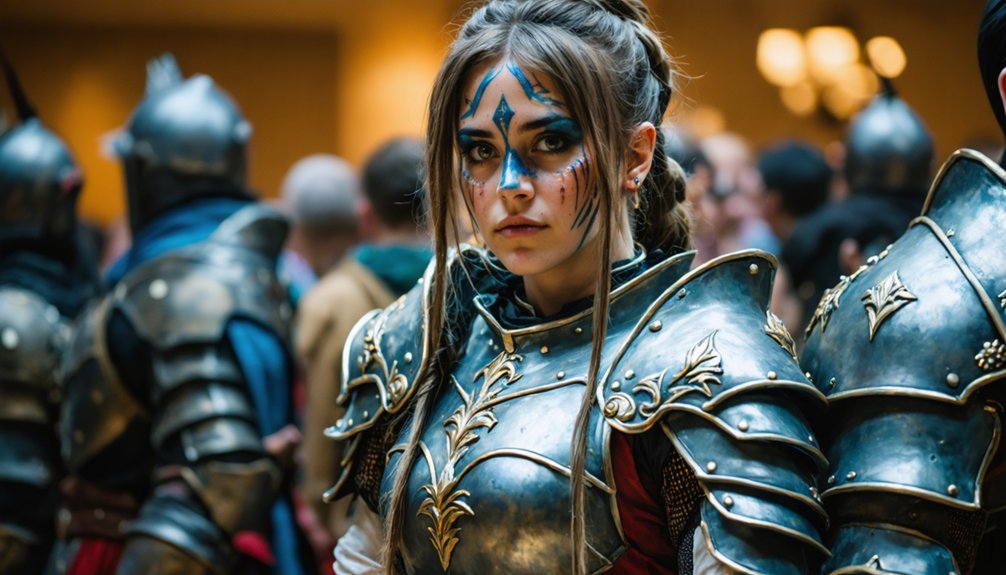
Seeking out cosplay groups that actively celebrate real scars transforms your experience from isolating to empowering, since you’ll find both online communities and local meetups where authenticity isn’t just tolerated — it’s championed.
Platforms like Reddit’s r/cosplay, Discord servers, and Facebook groups host thousands of cosplayers who share techniques for incorporating visible scars into character portrayals while fostering body-positive dialogue.
You can also scout local conventions for scar-inclusive meetups, where organizers deliberately create spaces that honor authentic representation over idealized aesthetics.
Finding Inclusive Cosplay Groups
Inclusive cosplay communities exist across multiple platforms, and knowing where to look can transform your experience as a cosplayer with visible scars. Seek out inclusive spaces where authenticity drives participation, not perfection.
Start your search strategically:
- Reddit communities like r/cosplay and r/adaptive_cosplay actively champion community support for cosplayers with visible differences, including scars.
- Discord servers dedicated to body-positive fandoms create structured environments where members share techniques, encouragement, and character recommendations.
- Convention-based groups often host diversity panels where scarred cosplayers connect directly with like-minded creators.
Prioritize communities that explicitly address representation in their guidelines.
Look for moderator-enforced policies against body-shaming and active spotlighting of diverse cosplayers. These structural signals indicate genuine commitment to inclusive spaces rather than performative acceptance.
Online Communities Supporting Scars
Online communities that celebrate real scars in cosplay aren’t just supportive spaces—they’re active ecosystems where visibility drives creative confidence. Platforms like Reddit’s r/cosplay, Discord servers, and Instagram networks have developed dedicated channels specifically for scar acceptance, where members showcase adaptive costume techniques alongside authentic body representation.
You’ll find community support embedded in structured critique threads, photo challenges featuring scarred cosplayers, and mentorship pipelines connecting newcomers with experienced practitioners. These environments treat scars as design elements rather than obstacles, fundamentally reshaping how cosplayers approach character selection.
Seek communities that enforce positive engagement policies and feature moderators with lived experience. Organizations like The Cosplay Community Alliance actively amplify scarred cosplayers, creating documented archives you can reference when developing your own character interpretations and presentation strategies.
Local Meetups Celebrating Authenticity
Local cosplay meetups operate as high-signal environments where authentic representation consistently outperforms polished performance—and finding the right one transforms how you carry both your costume and your scars.
Local support networks amplify confidence faster than solo effort ever could, turning your visible differences into conversation-starting assets.
Locate authenticity celebration hubs using these targeted strategies:
- Search Facebook Groups and Meetup.com for “body-positive cosplay” combined with your city name to surface curated communities.
- Attend conventions specifically hosting disability and scar-inclusive panels—these attract organizers who build local chapters afterward.
- Contact comic shop owners directly; they frequently coordinate monthly cosplay nights emphasizing character accuracy over physical perfection.
These environments reward genuine portrayal. Your scars become continuity details, not distractions—they signal commitment to authentic character embodiment that polished, scar-free interpretations simply can’t replicate.
Show Your Real Scars Instead of Covering Them Up

When you step into a convention hall wearing your scars openly, you transform a personal history into a powerful cosplay statement. Selecting characters whose physical narratives mirror your own creates authentic real life inspirations that resonate deeply with fellow fans. Zoro’s chest scar, Anakin’s burn marks, or Scar’s facial wound aren’t just aesthetic details — they’re character-defining moments you can embody literally.
Scar acceptance starts when you deliberately choose costumes that highlight rather than conceal your markings. Position your outfit’s design elements to frame your scars intentionally, treating them as built-in costume details.
Photograph angles that showcase this authenticity, and caption your posts with the character’s backstory paralleling your own. You’re not just cosplaying — you’re redefining representation through lived experience.
Make Your Real Scars Part of the Character’s Identity
Transforming your real scars into narrative anchors for a character deepens your portrayal beyond surface-level costume accuracy.
Scars acceptance becomes intentional storytelling when you align your actual scarring with a character’s documented history. Character representation gains authenticity that prosthetics can’t replicate.
Consider these integration techniques:
- Map your scar’s location against the character’s injury lore — if your scar matches a canonical wound site, highlight it deliberately through costume cutouts or strategic fabric removal.
- Build backstory alignment by researching how your character acquired their scars, then channel that history into your performance and body language.
- Photograph intentionally — angle your shots to feature your real scars prominently, reinforcing the character’s battle-worn narrative visually.
Your scars don’t contradict the character; they *complete* them.
Match Your Scar Placement to the Character’s Backstory

Matching your real scar’s anatomical position to a character’s documented wound history creates an immediate layer of authenticity that no prosthetic can manufacture.
Research your chosen character’s lore meticulously — identify whether wounds originated from blades, projectiles, or burns, then cross-reference that injury type against your scar’s texture and shape.
A jagged abdominal scar aligns naturally with characters surviving sword combat; a smooth, circular mark suits gunshot survivors. This strategic pairing transforms scar acceptance from passive tolerance into deliberate storytelling.
You’re not concealing — you’re contextualizing.
Study canonical reference art, official character sheets, and source material.
When your body’s actual history intersects with fictional biography, character authenticity reaches a dimension that manufactured props simply can’t replicate.
Your lived experience becomes irreplaceable costume architecture.
Build Confidence at Cosplay Events That Welcome Real Scars
Cosplay conventions increasingly carve out dedicated spaces — body-positive meetups, inclusive photoshoots, and scar-visibility campaigns — where you can test your comfort level before committing to a full public debut.
Confidence Building happens incrementally through strategic community engagement:
- Scout scar-positive Discord servers beforehand to identify allied cosplayers attending specific conventions.
- Join scheduled inclusive photoshoots where Community Support structures the environment around authentic representation rather than concealment.
- Volunteer for scar-visibility panels to transform personal experience into advocacy, accelerating your own confidence trajectory.
Each step compounds psychological momentum.
You’re not simply attending an event — you’re architecting a progressive exposure framework.
Communities that normalize real scars fundamentally rewire how you perceive your own body within cosplay spaces, shifting self-consciousness into purposeful, character-driven storytelling power.
Photograph Your Cosplay to Put Your Real Scars Front and Center
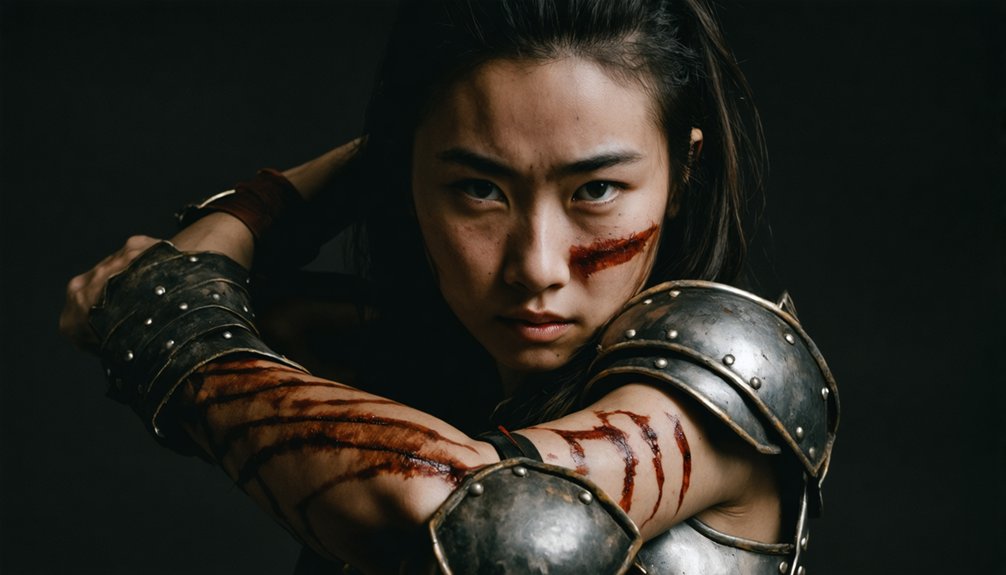
Once you’ve built that convention-floor confidence, the camera becomes your next strategic tool — one that locks your scars into the narrative permanently rather than leaving them to fleeting live encounters.
Intentional scar photography transforms authentic representation from a passive byproduct into a deliberate artistic statement.
Work with photographers who understand directional lighting — side lighting specifically sculpts scar texture, making raised tissue and discoloration visually dynamic rather than something to flatten.
Choose angles that position your scars within the character’s story context. A battle-worn cosplay demands proximity shots that celebrate every ridge.
Edit minimally. Heavy retouching undermines authentic representation and signals discomfort rather than ownership.
Post unfiltered final images across platforms with purposeful captions framing your scars as narrative elements, not footnotes. Your documentation becomes community-facing evidence that real scars belong in cosplay photography.
Frequently Asked Questions
Can Children With Scars Safely Participate in Cosplay Events?
Yes, your child can safely join cosplay events! Cosplay inclusivity welcomes scarred kids, fostering emotional acceptance through creative character portrayal. Choose scar-friendly costumes, communicate with event organizers, and let their unique story amplify their cosplay experience confidently.
Are There Online Platforms Specifically for Cosplayers With Visible Scars?
Like Tyrion Lannister owning his identity, you’ll find thriving online communities dedicated to scar representation in cosplay. Platforms like Reddit’s r/cosplay and Instagram’s adaptive cosplay hashtags actively celebrate your visible scars with innovative, empowering authenticity.
How Do You Handle Negative Comments About Real Scars at Conventions?
You’ve got to own your scar positivity by deflecting negativity with confidence — redirect convention experiences toward education, sharing your character’s lore, turning ignorant comments into meaningful dialogue that transforms your authentic scars into powerful cosplay storytelling tools.
What Legal Protections Exist for Cosplayers Facing Scar-Based Discrimination?
You’ve got a mountain of legal rights protecting you! Discrimination laws like the ADA shield cosplayers with visible scars from venue-based exclusion, ensuring conventions can’t legally bar or mistreat you over appearance-related differences.
Can Cosplaying With Real Scars Help With Post-Surgery Emotional Recovery?
Yes, cosplaying with real scars can fuel your healing journey by transforming vulnerability into artistic empowerment. You’ll actively build emotional resilience as you reclaim your body’s narrative, channeling post-surgery experiences into character portrayals that authentically celebrate your evolved physical identity.
References