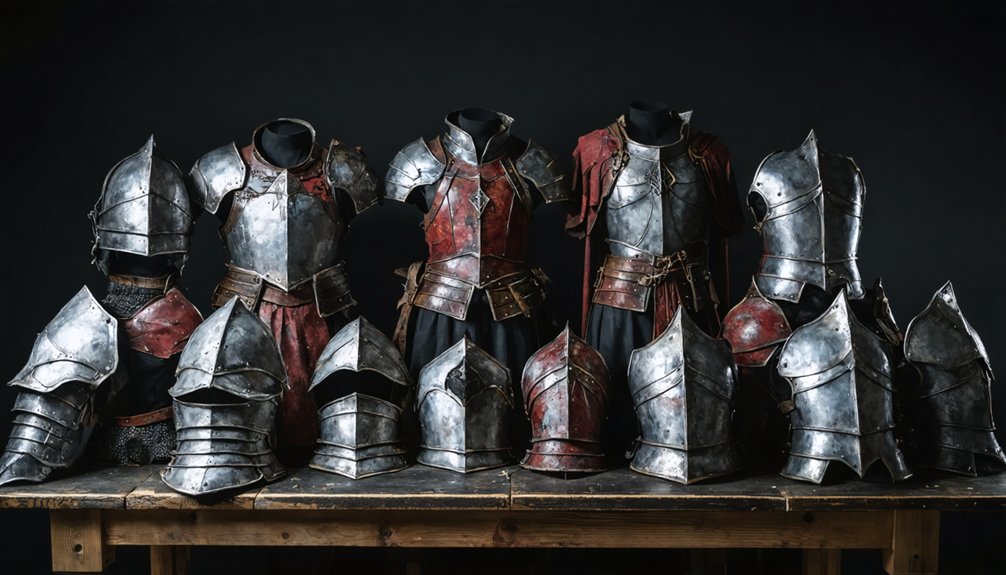
When it comes to custom cosplay armor replicas, you’ve got two primary paths: hand-forged steel or vacuum-formed plastic. Steel delivers structural authenticity, impact resistance, and a raw, credible aesthetic—perfect for display-grade builds. Plastic keeps things lightweight and wearable, accepting paint finishes that convincingly mimic metal. You can commission everything from single pauldrons to full costume sets, each precision-fitted to your dimensions. Stick around, and you’ll uncover exactly which option suits your build.
Key Takeaways
- Custom cosplay armor replicas are available in steel or plastic, each offering different balances of durability, weight, and visual authenticity.
- Options range from single components like pauldrons and gauntlets to complete full-costume armor sets.
- Hand-forged steel armor suits display or premium replicas, while vacuum-formed plastic suits extended convention wear.
- Reputable fabricators like Tilted Tombstone Studios produce both steel and plastic armor with full customization options.
- Custom fabrication ensures precise fit through tailored measurements, panel scaling, and integrated articulation points.
Steel vs. Plastic: Which Material Suits Your Custom Cosplay Armor?
When building custom cosplay armor, your material choice shapes everything from structural integrity to how long you’ll last on a convention floor. Steel, hand-forged on an anvil, delivers unmatched durability and a commanding presence—ideal for display-grade builds or premium replicas demanding authentic metal aesthetics.
Steel forged on an anvil doesn’t just build armor—it builds presence.
However, cost considerations climb sharply with metalwork, and the added weight becomes a real factor during extended wear.
Vacuum-formed plastic flips that equation. It’s lighter, more wearable, and opens broader color options since plastic accepts paint and finishes more readily than raw steel.
Cost considerations also favor plastic for larger costume builds requiring multiple components.
Your decision ultimately hinges on purpose: if you’re displaying the armor, steel wins. If you’re wearing it across a convention floor for hours, plastic delivers the smarter engineering choice.
Durability, Weight, and Realism: How to Balance All Three
Choosing between steel and plastic isn’t the final call—it’s the starting point for a harder balancing act. You’re engineering a wearable system where durability, weight, and realism pull against each other constantly.
Steel delivers structural presence and display-grade authenticity, but armor maintenance becomes a long-term commitment—polishing, rust prevention, and careful storage add up.
Plastic cuts the load dramatically, letting you wear full sets through extended convention hours without fatigue. Material sourcing shapes your ceiling; higher-grade vacuum-formed plastics hold sharper contours and resist warping better than budget alternatives.
Hand-forged steel, sourced and worked properly, produces one-off pieces with genuine artisan texture. Your ideal build identifies where you’re willing to trade off—then constructs around that priority rather than chasing all three equally.
The Hand-Forging Process for Steel Cosplay Armor
When you choose hand-forged steel for your cosplay armor, you’re committing to a process built around anvil work — striking, shaping, and refining heated metal into precise contours that match your target design.
You’ll find that skilled smiths use techniques like drawing out, fullering, and planishing to achieve complex curves and surface textures that vacuum-formed plastic simply can’t replicate.
The result is a steel piece with structural integrity that holds up under handling, display, and repeated wear without warping or cracking over time.
Anvil Work Techniques
Steel cosplay armor that holds up to scrutiny starts at the anvil, where a smith drives repeated hammer blows into heated metal to compress, stretch, and shape it into precise contours. Each strike repositions grain structure within the steel, building both strength and form simultaneously.
You’re not just bending metal—you’re coaxing it into curves, edges, and bevels that define whether a piece reads as authentic.
Whether you’re chasing medieval aesthetics or futuristic designs, anvil work delivers geometry that casting and cutting simply can’t replicate. The smith uses horn, heel, and face zones of the anvil strategically, switching positions to control directional flow.
That intentional technique is what separates a refined replica from a rough approximation—and it’s precisely why hand-forged builds command a higher level of visual credibility.
Steel Armor Durability
What the anvil shapes, the forging process hardens. When you choose hand-forged steel for your cosplay armor replica, you’re investing in a construction method carrying real historical accuracy — the same thermal and mechanical principles blacksmiths applied for centuries.
Each heating and hammering cycle refines the steel’s grain structure, producing a denser, more impact-resistant piece than cast or stamped alternatives.
That structural integrity isn’t purely functional — it carries cultural significance. You’re wearing fabrication heritage translated into character representation.
The resulting armor resists deformation under stress, maintains edge definition across detailed surface work, and ages with character rather than degradation.
For display-grade builds or premium wearable replicas, hand-forged steel delivers measurable durability that synthetic materials simply can’t replicate at the same structural depth.
How Vacuum Forming Shapes Plastic Cosplay Armor
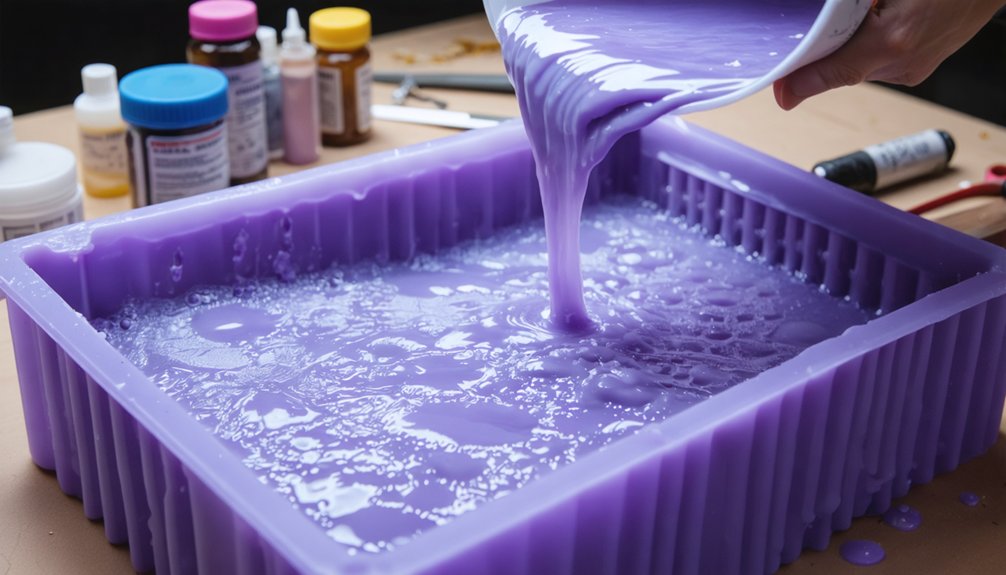
Vacuum forming gives plastic cosplay armor its contoured, shell-like structure by pulling heated thermoplastic sheets tightly over a custom mold. Once the sheet softens under controlled heat, a vacuum draws it flush against the mold’s surface, capturing every edge, curve, and recessed detail with precision.
Heated plastic meets precision engineering — vacuum forming locks every curve and edge into permanent, armor-ready form.
You get consistent wall thickness and clean geometric lines that hand-cutting simply can’t replicate at scale.
It’s worth myth busting the assumption that plastic armor looks cheap or flimsy. Modern thermoplastics deliver sharp definition and accept paint finishes that convincingly mimic metal textures.
Let that serve as creative inspiration when you’re selecting materials — vacuum-formed pieces can achieve striking visual realism while keeping your build lightweight enough for extended convention wear.
The technique balances fabrication efficiency with replica accuracy effectively.
Display, Events, or Performance: Matching Your Armor to Its Purpose
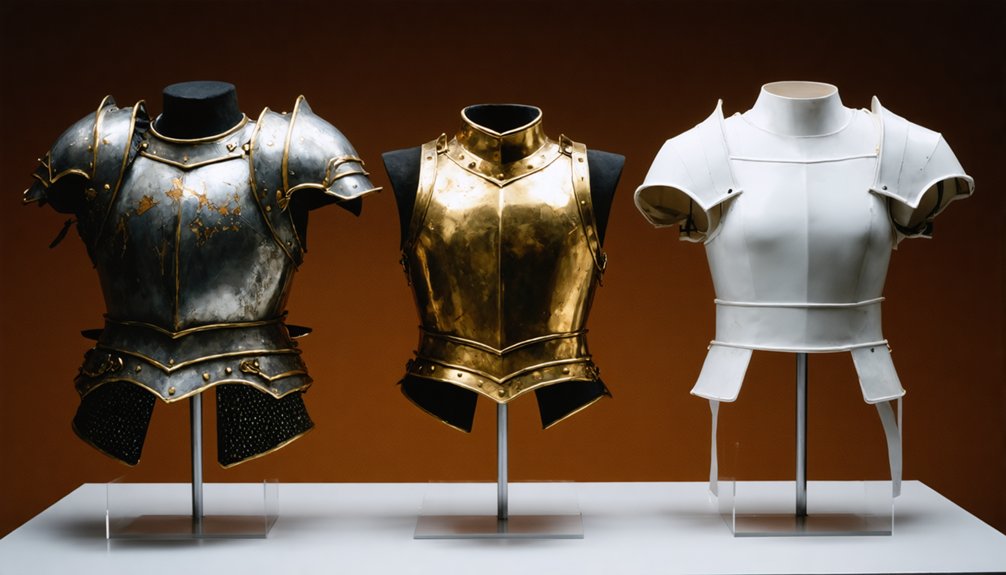
Whether you’re building armor for a glass case or a convention floor, your intended use case should drive every material and construction decision you make. Display builds prioritize historical accuracy, favoring hand-forged steel that captures authentic surface texture, weight, and structural presence.
Performance and event wear demand the opposite — vacuum-formed plastic keeps you mobile across long hours without fatigue.
Pattern customization plays a critical role in both contexts. For display-grade pieces, custom patterns support precise character replica geometry.
For wearable builds, those same patterns get adjusted for body mechanics and range of motion. You’re not choosing between quality and function — you’re calibrating both to purpose.
Define your end use first, then let material selection and fabrication method follow that decision precisely.
Full Costume Builds vs. Single Custom Armor Pieces
Choosing between a full costume build and a single custom armor piece changes the entire scope of your project — and that distinction shapes fabrication decisions at every level.
A complete cosplay costume demands integrated fit across every component — chest plates, pauldrons, gauntlets, and greaves must function cohesively as a unified system. Material consistency, proportional scaling, and structural compatibility all require coordinated planning from the start.
Single armor accessories, however, give you targeted precision. You’re supplementing an existing build, reinforcing a weak point in your replica’s accuracy, or elevating one focal element without rebuilding everything. That flexibility is operationally valuable.
Fabricators can apply the same hand-forging or vacuum-forming techniques to isolated pieces, matching your existing materials when needed. Your project scope determines which path delivers the sharper result.
Getting the Right Fit for Your Custom Cosplay Armor
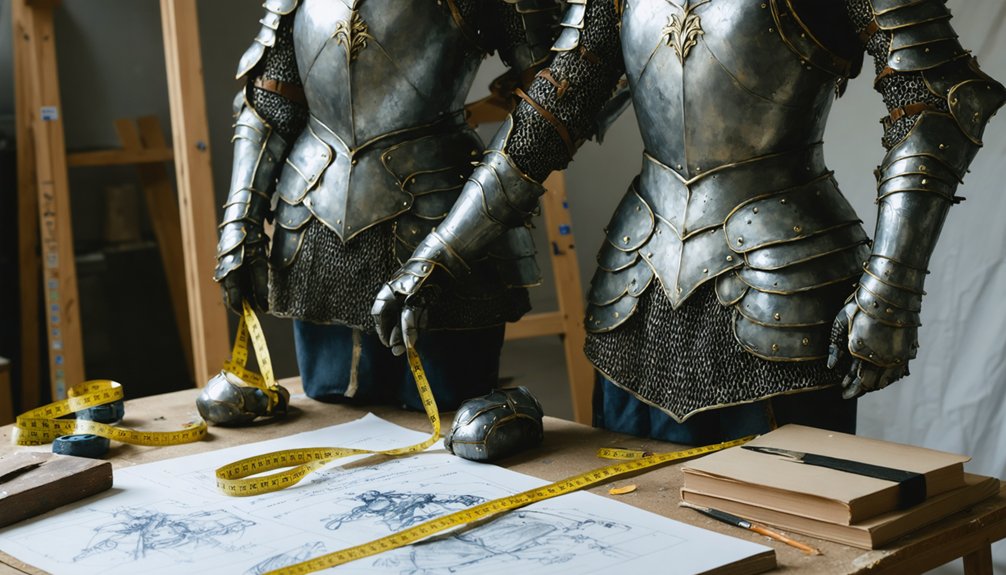
Once your scope is set — full build or single piece — fit becomes the next variable that either validates or undermines everything else. Custom fabrication lets you dial in measurements that off-the-shelf pieces simply can’t accommodate. You’re not adjusting to the armor — the armor adjusts to you.
For historical accuracy, precise sizing preserves proportional integrity, keeping replica geometry faithful to reference designs.
For costume coordination, each component needs to align with adjacent pieces — strapping, layering, and articulation points all depend on accurate body mapping.
Submit detailed measurements: chest, shoulder width, arm length, and torso height. A reputable fabricator will use these to engineer clearance, mobility range, and attachment systems.
Getting fit right means your armor performs as well as it looks.
What Makes a Cosplay Armor Replica Truly Custom?
When you commission a truly custom cosplay armor replica, you’re making targeted decisions about both material and construction method — choosing between hand-forged steel for structural authenticity or vacuum-formed plastic for practical wearability.
Your design scope can range from a single pauldron to a fully integrated costume set, each piece calibrated to your character’s specifications and your body’s dimensions.
These choices — material, method, and scope — are what separate a genuine custom build from an off-the-shelf approximation.
Material and Method Choices
What separates a generic costume piece from a truly custom armor replica often comes down to two decisions: material and method. You’re choosing between hand-forged steel and vacuum-formed plastic, and each path delivers a distinct result.
Steel offers structural weight, a genuine metallic presence, and display-grade durability. Hand forging through anvil work produces one-off pieces with artisan precision. Fabrication safety is central to this process, requiring controlled techniques to manage heat, edges, and structural integrity.
Vacuum-formed plastic takes a different route. It shapes consistent contours across lightweight shells, making extended event wear far more practical. Material sustainability is increasingly relevant here, as fabricators refine plastic sourcing to reduce waste.
Your choice directly determines how your armor performs, looks, and holds up over time.
Fit and Design Scope
True customization starts the moment a fabricator moves beyond stock templates and begins mapping armor geometry to your specific body dimensions and character reference. Whether you’re replicating a historically informed build rooted in cosplay armor history or engineering a fully original silhouette, scope determines everything.
You can commission a single pauldron to integrate with existing costume accessories, or commission a complete suit with interconnected components engineered for structural coherence and wearability. Fabricators adjust panel scaling, articulation points, and attachment systems to match your proportions precisely.
Design scope also governs complexity — layered relief work, surface texturing, and edge profiling all fall within what custom fabrication can address. The result isn’t just armor that fits; it’s armor built with intentional geometry that mirrors your character’s design at every contact point.
Where to Order Custom Cosplay Armor Replicas
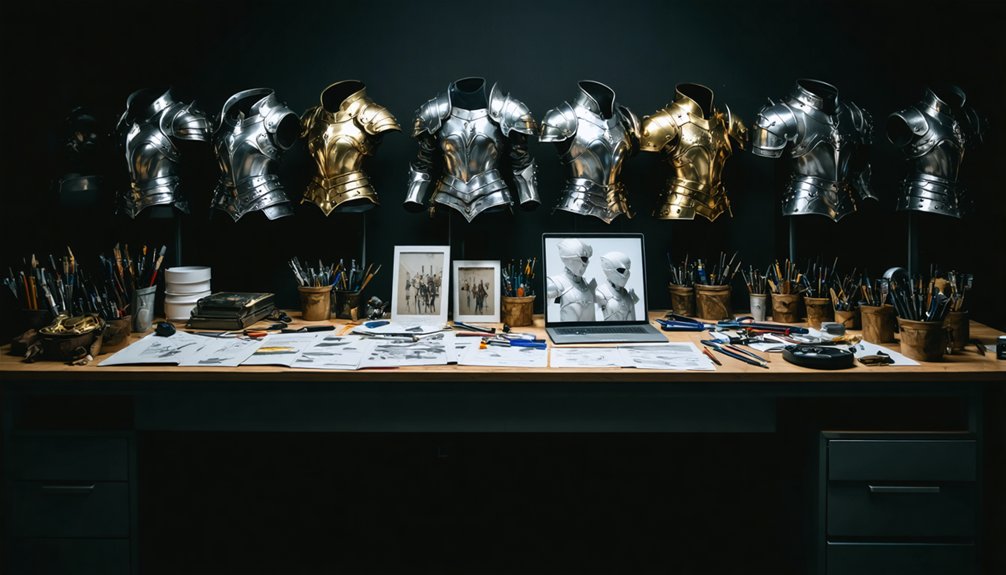
Finding a capable fabricator is half the battle, and Tilted Tombstone Studios stands out as a documented option that handles both hand-forged steel and vacuum-formed plastic armor.
Their scope covers single elements and full costume builds, giving you precise control over your project’s scale.
If historical authenticity drives your build, their anvil-worked steel delivers the structural integrity and visual credibility that vacuum-formed alternatives can’t replicate.
For convention wear, their plastic fabrication keeps cost considerations manageable without sacrificing contour accuracy.
You can commission pauldrons, chest plates, or complete integrated sets depending on your character’s demands.
Before ordering, clarify material preferences, body measurements, and reference imagery to ensure replica accuracy.
Choosing a studio with documented multi-material capability streamlines the process and reduces costly revision cycles.
Frequently Asked Questions
How Long Does It Typically Take to Complete a Custom Armor Order?
Timelines vary based on your chosen method—hand-forged steel demands longer crafting due to material durability requirements, while vacuum-formed plastic moves faster. You’ll also need to factor in shipping timelines, typically adding one to two weeks.
Can Custom Cosplay Armor Be Repaired or Modified After Delivery?
Got a dent or loose piece? You can repair or modify your custom cosplay armor post-delivery. Material durability determines repair techniques—steel’s reweldable, while vacuum-formed plastic’s reshapable, keeping your build evolving.
Are Custom Armor Replicas Safe to Wear at Convention Venues?
You’ll want to verify each venue’s costume regulations before wearing custom armor replicas. Lightweight plastic options typically clear cosplay safety checks easier than steel builds, so you’re choosing materials that match both comfort and compliance requirements.
What Is the Average Cost Range for Custom Cosplay Armor Replicas?
Like pricing tiers in a tech spec sheet, costs vary widely. You’ll find material durability and cost customization shape your final quote, with steel builds running higher than lightweight plastic alternatives.
Can Armor Replicas Be Made to Match Specific Color Schemes or Finishes?
Yes, you can match your armor to specific color schemes! Whether you’re working with steel or plastic, fabricators apply custom finishes that balance color customization with material durability, ensuring your replica stays visually accurate and structurally resilient.
References
* https://www.tiltedtombstonestudios.com/costumes-armor