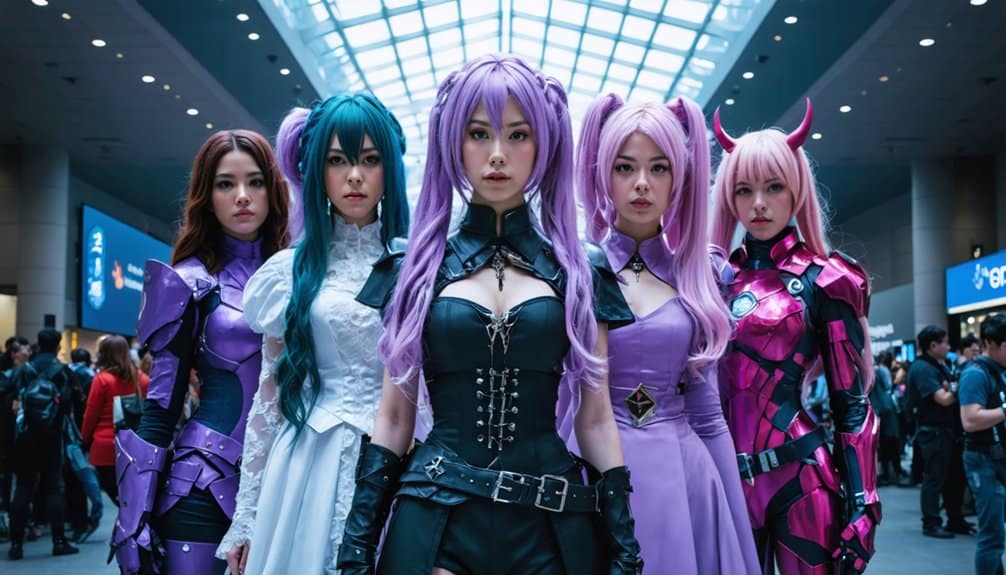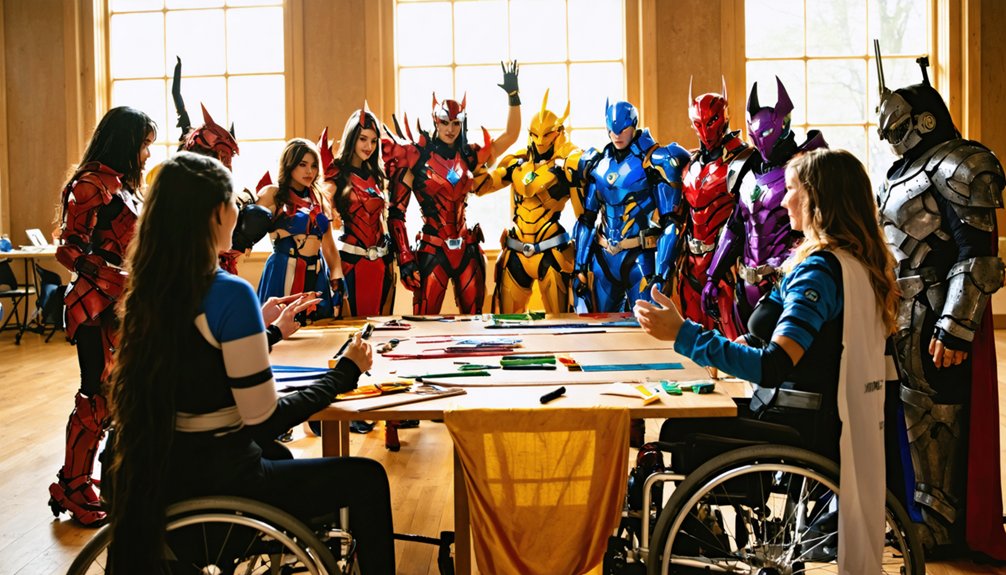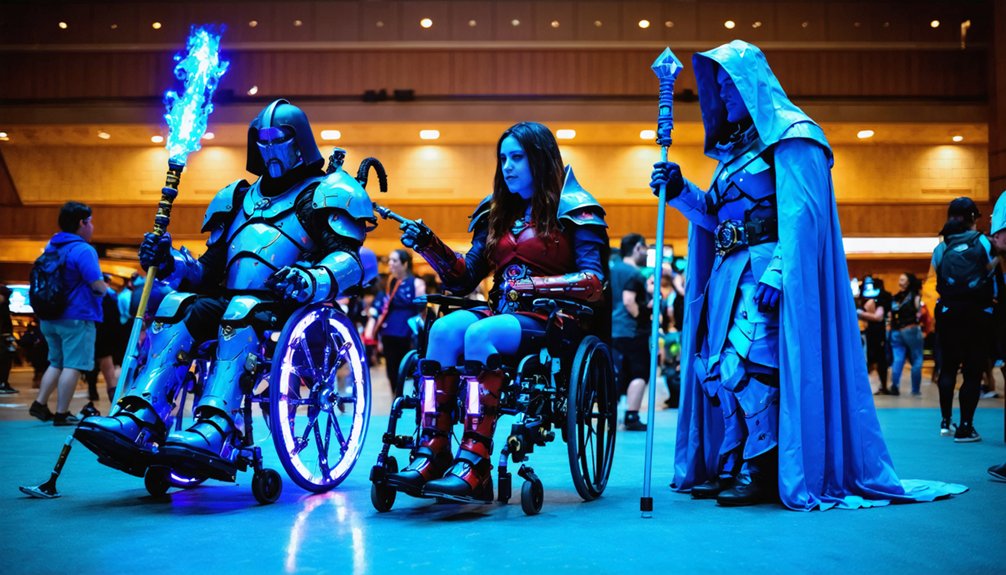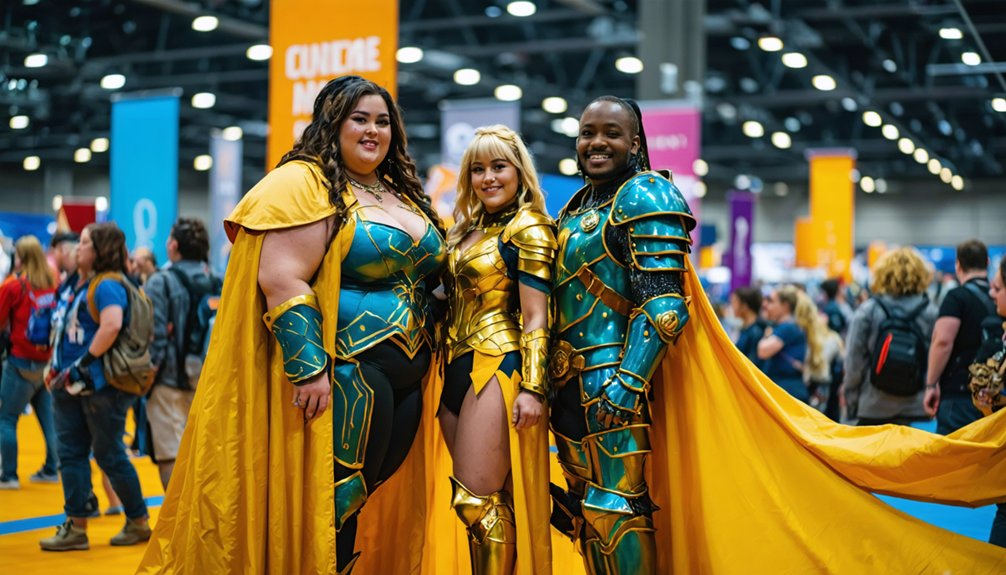
Your body is the right body for cosplay — no exceptions. You don’t need to match a character’s proportions to bring them to life authentically. Inclusive cosplay is about emotional connection, creative expression, and community, not rigid physical standards. Whether you’re working with a tight budget, managing accessibility needs, or exploring gender-bent interpretations, there’s a place for you here. Keep exploring, and you’ll discover everything you need to cosplay confidently and unapologetically.
Key Takeaways
- Choose characters based on emotional resonance, not body matching, focusing on signature colors, silhouettes, and accessories that reflect your personal style.
- Body positivity is a core principle of inclusive cosplay, prioritizing authentic character portrayal over matching idealized proportions.
- Reduce costume costs through thrift stores, community material swaps, tool lending, and skill-sharing networks within cosplay groups.
- Truly inclusive cosplay communities welcome all body types, enforce anti-harassment policies, and promote access through skill-sharing and accessible venues.
- Recognize harassment signs like unwanted touching or intrusive comments, and report incidents using designated staff or harassment reporting stations.
Inclusive Cosplay Belongs to Every Body Type
Cosplay has always been about bringing characters to life, and your body is already the right one to do it. Body positivity isn’t a trend in cosplay—it’s a foundation. You don’t need to match a character’s fictional proportions to portray them authentically. What matters is your creativity, construction, and performance.
Inclusive cosplay communities are rejecting appearance-based gatekeeping and replacing it with skill-sharing, mentorship, and celebration of diverse representation. When you see cosplayers of different shapes and sizes featured in showcases and panels, stigma shrinks.
Cultural sensitivity also shapes how you engage with characters beyond your own background. Research the source material, consult community voices, and approach every costume with intention. Your participation strengthens the community and expands what cosplay can look like for everyone.
How to Choose Characters That Match Your Vision
Choosing a character starts with what excites you, not what you think your body “should” look like. Your connection to a character — their story, their energy, their attitude — matters far more than matching their fictional proportions.
Cosplay begins with excitement, not self-doubt. Your emotional connection to a character will always outweigh fictional proportions.
Start your character research by exploring what resonates emotionally or aesthetically. Consider their personality, powers, or cultural significance.
Then think practically: which design elements translate well to your skill level, your budget, and your comfort?
Costume durability is worth factoring in early. A costume built for movement and repeated wear serves you better than one built purely for photos.
Choose materials and silhouettes that support your lifestyle.
You define the cosplay. The character becomes yours through how you inhabit them — not how closely you replicate a drawing.
How to Pull Off Gender-Bent Cosplay Confidently
When choosing a character for a gender-bent cosplay, you don’t have to limit yourself to characters who match your body type or assigned gender.
Pick someone whose story or style genuinely excites you.
Own your interpretation by leaning into the elements that feel most true to you, whether that’s a signature color palette, a weapon, or an iconic silhouette.
Your confidence in your presentation is what makes the cosplay land, not how closely you mirror the original.
Choosing Your Character Boldly
There are no rules saying you have to cosplay a character who shares your gender — and that freedom is exactly what makes gender-bent cosplay so exciting. You get to reimagine a character entirely through your own lens while honoring their core identity — that’s character authenticity at its best.
Start bold. Pick a character whose energy, story, or aesthetic genuinely resonates with you. Don’t shrink your vision to fit someone else’s expectations. Instead, focus on translating key design elements — color palettes, silhouettes, signature accessories — into a version that fits and flatters your body.
Invest in costume durability from the start. Quality materials mean your build lasts through multiple events and earns the wear it deserves. Your interpretation matters, and choosing confidently makes every detail land harder.
Owning Your Presentation
Build your confidence through preparation:
- Practice your poses in the mirror beforehand — embodying a character physically reinforces your connection to them.
- Lean into body positivity by recognizing that your interpretation adds something no screen-accurate replica can replicate.
- Communicate your vision — brief captions or casual conversation help others appreciate your creative angle rather than misread it.
Confidence building isn’t performative; it’s cumulative. Each event, photo, and interaction strengthens how naturally you inhabit your character.
Your body isn’t an obstacle to the costume — it’s the canvas that makes it distinctly powerful.
Cosplaying Outside Your Culture Without Causing Harm
Cosplaying a character from a culture different from your own doesn’t have to cause harm—but it does require intention and research. Start by learning the cultural, religious, or historical context behind your character.
Cross-cultural cosplay can be done respectfully—but only with genuine research, intention, and cultural awareness behind it.
Cultural sensitivity means going beyond the costume’s surface aesthetics to understand what symbols, clothing, or traditions actually represent.
Follow representation guidelines by consulting community voices, reading criticism from people within that culture, and adjusting your portrayal accordingly. Imitation without context risks reducing meaningful traditions to costumes.
You don’t have to avoid cross-cultural cosplay entirely—you do have to approach it with accountability. Engage with culturally informed resources, ask questions, and stay open to feedback.
Respectful portrayals strengthen community trust and make cosplay spaces more genuinely inclusive for everyone involved.
How Inclusive Cosplay Events Accommodate Disabled Attendees
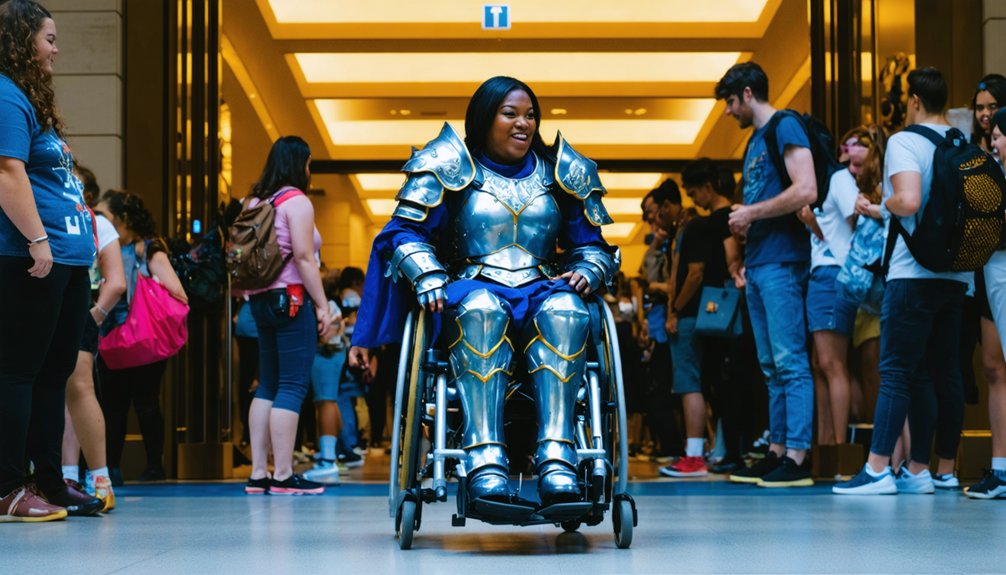
Inclusion in cosplay goes beyond who can wear a costume—it also shapes whether you can get through the door, navigate the venue, and participate fully once you’re there. Accessible venue design and sensory friendly spaces aren’t optional extras—they’re foundational.
When organizers prioritize these elements, you’re able to show up fully, not just survive the experience.
Look for events that actively build in:
- Mobility accommodations – ramps, elevators, and wide pathways that support wheelchairs and mobility aids
- Sensory friendly spaces – quieter rooms with reduced lighting and sound for neurodivergent attendees
- Flexible participation options – virtual showcases, seated panels, and support networks for varied physical needs
Disability inclusion strengthens the whole community. When you can move, rest, and engage comfortably, cosplay becomes genuinely yours.
How to Build a Costume on Any Budget
You don’t need a big budget to build a costume you’re proud of—thrift stores, secondhand shops, and your own closet are full of materials waiting to be transformed.
Repurposing what you already own or can find cheaply lets you focus on creativity rather than spending power.
Many cosplay communities also offer resource-sharing programs where you can borrow tools, swap fabrics, and learn skills from experienced makers at no cost.
Thrifting and Repurposing Materials
Building a stunning cosplay doesn’t require a huge budget — it requires creativity and a willingness to look beyond traditional craft stores. Thrift shops, garage sales, and your own closet hold untapped potential for every body type and skill level.
Try these approaches to stretch your resources:
- Fabric dyeing transforms plain thrifted garments into screen-accurate pieces without buying new yardage.
- Accessory crafting from repurposed jewelry, hardware, or household items adds character-specific detail affordably.
- Deconstructing and combining secondhand clothing creates layered, custom silhouettes tailored to your actual measurements.
You don’t need expensive materials to build something authentic. Repurposing prioritizes ingenuity over spending power, making cosplay genuinely accessible.
The most compelling costumes often come from unexpected sources — and that resourcefulness is worth celebrating.
Community Resource Sharing
What if the most valuable cosplay resource isn’t a product at all — it’s your community? Local cosplay groups and online forums regularly organize material swaps, tool lending, and pattern libraries that lower costs for everyone. You don’t need a large budget — you need connection.
Tap into skill-sharing networks where members trade sewing help for cosplay photography sessions or exchange character analysis breakdowns for armor-building guidance. These exchanges make expertise accessible regardless of your financial situation.
Many communities also host collaborative builds where cosplayers of all body types co-create costumes together, reinforcing that creativity matters more than spending power. When you contribute what you have — time, skills, or materials — you strengthen the entire community while building something authentically yours.
Where to Learn Inclusive Cosplay Skills for Free
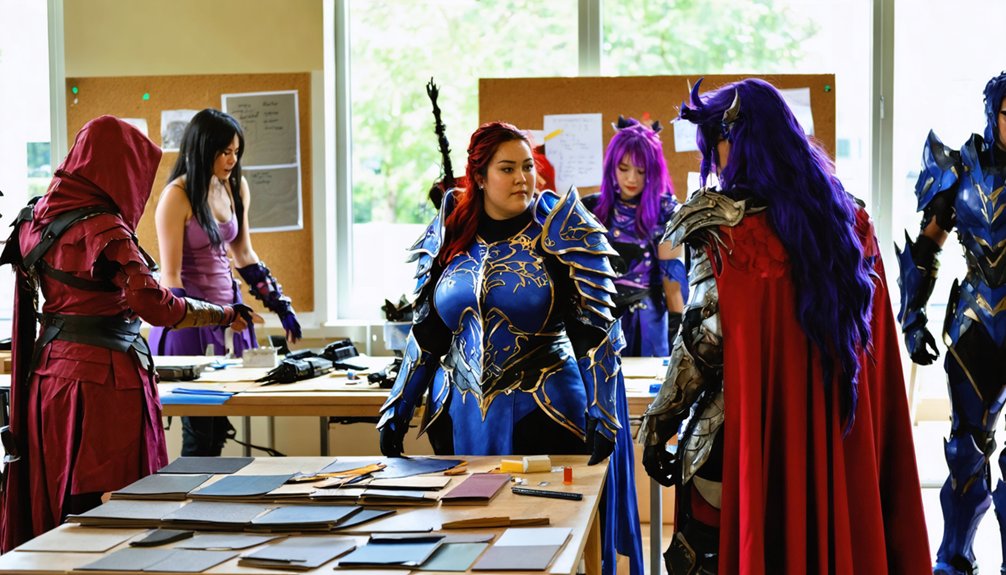
Learning cosplay skills doesn’t have to cost a thing. Free resources exist everywhere, and they’re built by communities that celebrate body positivity and cultural sensitivity at every level.
Start by exploring these high-value, zero-cost platforms:
- YouTube tutorials covering sewing, prop-building, and makeup for all body types and mobility levels
- Reddit communities like r/cosplay and r/PlusSizeCosplay, where members share adaptive techniques and encouragement
- Public library programs offering free workshops, sewing machines, and crafting materials
You don’t need an expensive setup to create something meaningful. Lean into skill-sharing spaces where creativity matters more than budget.
When you learn alongside others who value inclusion, your craft grows faster and your confidence follows.
What Makes a Cosplay Community Truly Inclusive?
A truly inclusive cosplay community welcomes you regardless of your body type, celebrating creativity and character connection over appearance.
You’ll also find that strong anti-harassment policies—with real enforcement and clear reporting options—make the difference between a space that feels safe and one that only claims to be.
When organizers expand access through skill-sharing, financial support, and accessible venues, they guarantee you can participate fully no matter your background or experience level.
Welcoming All Body Types
Cosplay has always been about embodying characters you love, and that means every body belongs in it**. Body acceptance** isn’t a trend—it’s a foundation.
Costume diversity thrives when communities stop measuring authenticity by size and start measuring it by passion, creativity, and craft.
You don’t need to match a character’s proportions to portray them powerfully. What matters is how you bring them to life.
Here’s how inclusive communities actively welcome all body types:
- Celebrate creative adaptation — encourage costume modifications that work *for* your body
- Reject appearance-based gatekeeping — challenge comments that police who can portray which characters
- Amplify diverse representation — feature cosplayers of varied sizes in events, panels, and promotions
Your body isn’t a limitation. It’s part of your cosplay story.
Enforcing Anti-Harassment Policies
Representation matters, but it means little if the people being represented don’t feel safe showing up. Enforce clear anti-harassment policies that protect every cosplayer — regardless of size, identity, or background. Make reporting options visible, accessible, and consequence-driven.
When someone’s costume craftsmanship earns admiration through cosplay photography without their consent, that’s a boundary violation, not a compliment.
You can push for accountability by supporting events that train staff, post conduct standards visibly, and follow through on violations. Communities that only celebrate creativity without protecting creators aren’t truly inclusive.
Speak up when you witness exclusion. Mentor newcomers on community standards alongside sewing techniques. Safety and self-expression aren’t separate — they’re interdependent.
A welcoming cosplay space is one where showing up feels worth it.
Expanding Access And Participation
Truly inclusive cosplay communities don’t stop at welcoming language — they build structures that let people actually participate. Financial and skill barriers can quietly exclude newcomers, so your community’s infrastructure needs to actively dismantle them.
Strengthen access through intentional design:
- Skill-sharing workshops — teach sewing, prop-building, and makeup regardless of budget or experience level
- Cosplay networking opportunities — connect newcomers with mentors who share tools, space, and guidance
- Costume documentation resources — create accessible archives showcasing diverse builds, techniques, and adaptive solutions for disabled cosplayers
You don’t need polished, competition-level work to belong. Celebrating creativity over spending power shifts the culture meaningfully.
When your community prioritizes participation over perfection, you make room for innovation that rigid, exclusionary spaces simply can’t generate.
How to Spot and Report Harassment at Cosplay Events
Even the most welcoming cosplay events can include moments of harassment, and knowing how to recognize and respond to them makes a real difference. Watch for unwanted touching, intrusive comments about someone’s body or costume, and persistent attention after someone’s clearly disengaged. Trust your instincts.
When you spot it, act. Many events have dedicated harassment reporting stations or staff wearing identifiable badges. Use them. Clear harassment reporting systems only work when attendees actively engage with them.
Community accountability doesn’t stop at reporting. Check in with the person targeted, offer to walk with them, or simply ask if they need support. Inclusive cosplay spaces thrive when everyone shares responsibility for safety—not just event organizers. Your response matters more than you might think.
How to Find and Join Inclusive Cosplay Communities
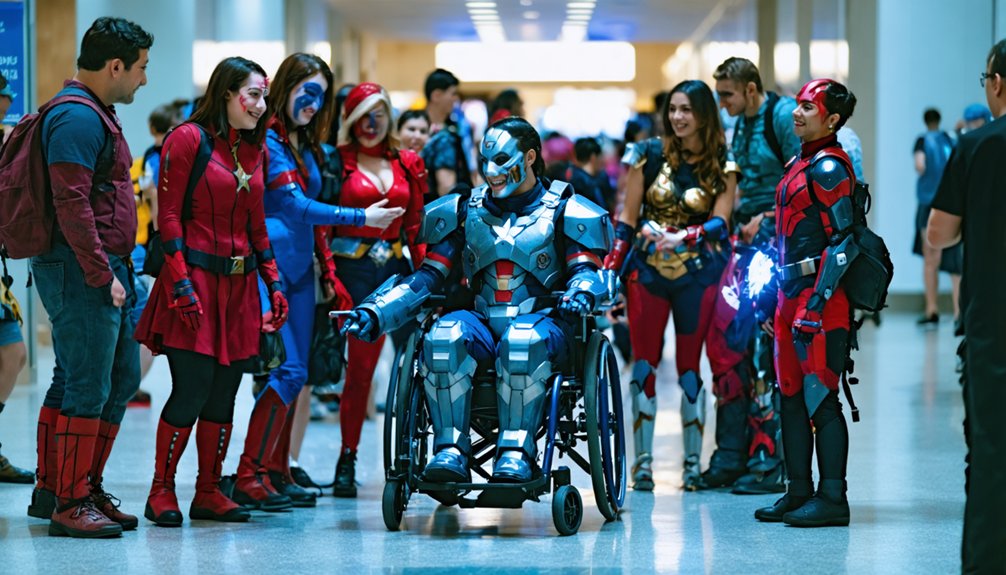
Finding the right cosplay community can feel overwhelming, but a few starting points make it manageable. Look for groups that actively celebrate creative expression across all body types, identities, and skill levels. Prioritize spaces that practice cultural sensitivity and enforce clear anti-harassment standards.
Finding your cosplay community starts with spaces that celebrate all bodies, identities, and skill levels without compromise.
When evaluating a community, check for these indicators:
- Visible diversity in member photos, panels, and event promotions
- Skill-sharing opportunities like workshops, budget-friendly tutorials, and collaborative builds
- Explicit inclusion policies covering accessibility, pronouns, and respectful cultural representation
Search social media platforms, local conventions, and Discord servers using terms like “inclusive cosplay” or “body-positive cosplay.”
Once you’ve found your space, introduce yourself, ask questions, and contribute your perspective. You’ll strengthen the community just by showing up authentically.
Frequently Asked Questions
Can Children Participate in Inclusive Cosplay Events With Parental Supervision?
Yes, children can absolutely join inclusive cosplay events with parental involvement! You’ll want to review safety guidelines beforehand, ensuring accessible, body-positive spaces where kids freely express creativity, celebrate diversity, and innovate their unique character portrayals confidently.
Are There Age Restrictions for Joining Inclusive Cosplay Online Communities?
Ever wondered about age limits? Most inclusive cosplay online communities don’t have strict restrictions, but you’ll find that age diversity thrives when accessibility standards guide participation, ensuring everyone engages safely and body-positively within platform-specific guidelines.
How Do I Photograph My Cosplay to Best Showcase My Creativity?
Use natural lighting techniques to highlight your costume’s details, and experiment with camera angles that celebrate your unique body. You’ll showcase creativity best by framing shots that emphasize craftsmanship, expression, and the authentic story you’re telling through your cosplay.
What Insurance Considerations Should Event Organizers Know About Cosplay Gatherings?
You’ll want to secure liability coverage that protects all attendees, including those with disabilities. Always review venue requirements early, ensuring your policy covers accessible accommodations, prop-related incidents, and diverse participation needs for every body attending your event.
Can Inclusive Cosplay Participation Positively Impact Mental Health and Self-Esteem?
Yes, inclusive cosplay can boost your mental health! You’ll experience a confidence boost through creative self-expression and community belonging. Embracing diverse portrayals fosters self-acceptance, helping you challenge stigma, celebrate your body, and connect with innovative, supportive cosplayers.
References
- https://folklife.si.edu/magazine/cosplay-community
- https://www.youtube.com/watch?v=ktOikXBtiTc
- https://starstruckpanda.com/embracing-diversity-in-cosplay-communities/
- https://www.thefandomentals.com/gender-identity-in-cosplay-challenging-stereotypes-and-embracing-authenticity/
- https://starstruckpanda.com/breaking-stereotypes-through-inclusive-cosplay/