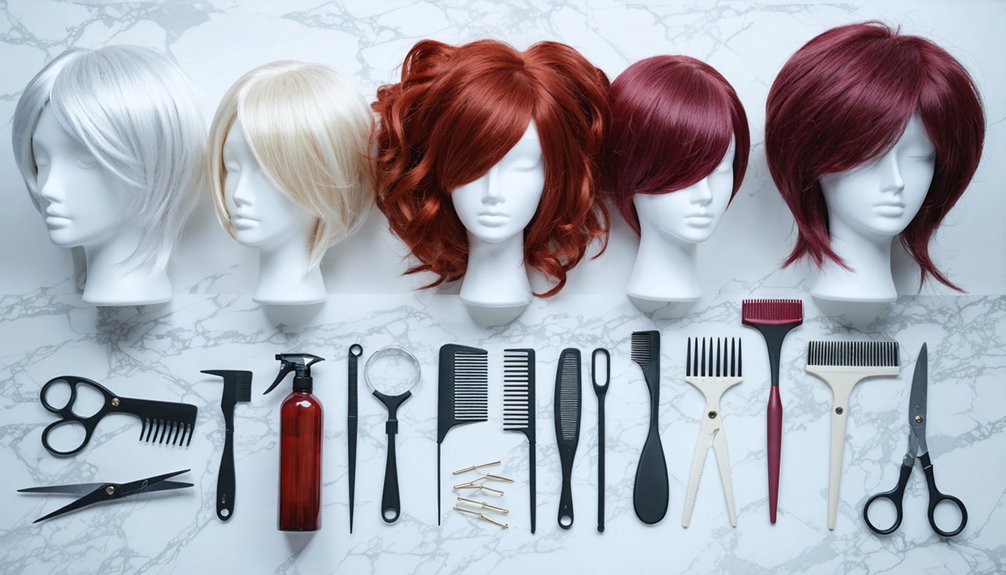
Styling a genderbent character wig starts with analyzing the silhouette before you touch a single strand. You’ll need to pick the right wig shape, prep your cap and fibers carefully, and cut without erasing what makes the character recognizable. Build volume and spikes using heat and teasing, then lock everything in with pins and products. Smooth the final shape for event-ready wear, and the seven tips ahead will show you exactly how.
Key Takeaways
- Analyze the character’s silhouette from multiple angles before selecting a wig, ensuring shape, volume, and length match the recognizable profile.
- Choose heat-safe fibers and match the wig cap color to the wig to avoid visible mismatches during wear.
- Adapt fringe angles and side pieces during cutting to support a genderbent presentation while preserving character recognition.
- Tease interior sections separately by color zone, then lock volume with light styling spray before adding accessories.
- Reinforce spikes, edges, and accessory attachment points with gel or hairspray to maintain durability throughout extended convention wear.
Read the Character’s Silhouette Before Touching the Wig
Before you pick up scissors or plug in a heat tool, study the character’s silhouette as a whole shape rather than a collection of individual features. That overall outline—volume distribution, length, and structural height—is what makes your genderbent interpretation instantly recognizable.
Pull reference images from multiple angles and identify where the design carries its visual weight.
Apply color theory early by confirming that your wig’s base tone supports the genderbent presentation without clashing against your planned costume palette. Bold characters often rely on high-contrast hues to read clearly, so don’t neutralize that energy accidentally.
Also consider accessory integration from the start. Headpieces, pins, or character-specific ornaments affect how much wig volume you’ll actually need. Planning around them now prevents structural conflicts later.
Pick the Right Wig for Your Genderbent Character
Once you’ve locked in your character’s silhouette, your wig selection becomes a structural decision, not just an aesthetic one. Match the wig’s length, volume, and shape to your character’s blueprint before cutting anything.
Wig selection is structural, not decorative — match length, volume, and shape to your character before cutting anything.
Prioritize these four selection criteria:
- Shape first — Choose a base silhouette that mirrors your character’s recognizable profile.
- Color matching — Select a shade that preserves character identity while supporting your genderbent interpretation.
- Fiber type — Synthetic holds structured styles better; confirm heat tolerance before committing.
- Accessory integration — Account for clips, pins, or props the character carries so the wig supports those elements structurally.
Pull reference images before purchasing. A wrong foundation means reworking everything downstream, which costs time, money, and fiber integrity.
Prep Your Hair, Cap, and Wig Fibers Before You Cut
Before you make a single cut, flatten your natural hair using braids or wrapping so the wig sits flush without awkward bumps underneath.
Pull on a snug-but-not-tight wig cap to lock everything in place and give your wig a stable, even foundation.
Finally, check your wig’s fiber type against heat-safe guidelines, because cutting into fibers you later plan to heat-style without knowing their limits can permanently damage the wig before you’ve even started shaping it.
Flatten Natural Hair First
Skipping hair prep is one of the fastest ways to ruin an otherwise well-styled wig. Unflattened natural hair creates uneven bumps that distort your silhouette and compromise wig durability over time. A smooth base isn’t optional — it’s structural.
Use one of these methods to get your hair flat before capping:
- Braid hair close to the scalp in flat, compact sections
- Wrap longer hair in overlapping layers around your head
- Pin flat any remaining loose sections with bobby pins
- Smooth the entire surface before pulling on your wig cap
A flush foundation keeps your color matching accurate by ensuring the wig sits at the correct height and angle. Any lift underneath shifts proportions and throws off your genderbent character’s recognizable silhouette entirely.
Secure Your Wig Cap
Your wig cap does more than contain your hair — it’s the structural layer that determines whether your finished wig sits flush, holds its angle, and survives a full convention day without shifting. Pull it snug but not constricting, eliminating any lumps or lifted edges that would distort your silhouette preservation efforts once the wig drops over it.
Match your cap color to your wig color whenever possible. A mismatched cap peeking through the hairline breaks the illusion, especially along the part line or temples where genderbent styles often feature exposed sections.
Secure the cap with bobby pins anchored into braided or wrapped hair beneath it. Test stability by tilting your head in multiple directions before you ever pick up a pair of shaping scissors.
Check Fiber Heat Safety
Heat is the most irreversible mistake you can make on a synthetic wig, so check the fiber type before anything else touches a hot tool. Standard synthetic fibers melt under direct heat, while heat-resistant fibers handle low-to-medium temperatures. Knowing the difference protects your investment before cutting or styling begins.
Run these four checks before applying any heat:
- Confirm the fiber label specifies “heat-resistant” or “heat-safe”
- Test a hidden strand at your target temperature before full styling
- Avoid heat exposure on wigs altered through fiber dyeing, since chemical processing weakens heat tolerance
- Store finished wigs properly during wig storage to prevent heat damage from environmental sources like direct sunlight
Cool fibers hold structure longer, so always let shaped sections set completely before moving forward.
Cut and Shape Without Losing What Makes the Character Recognizable
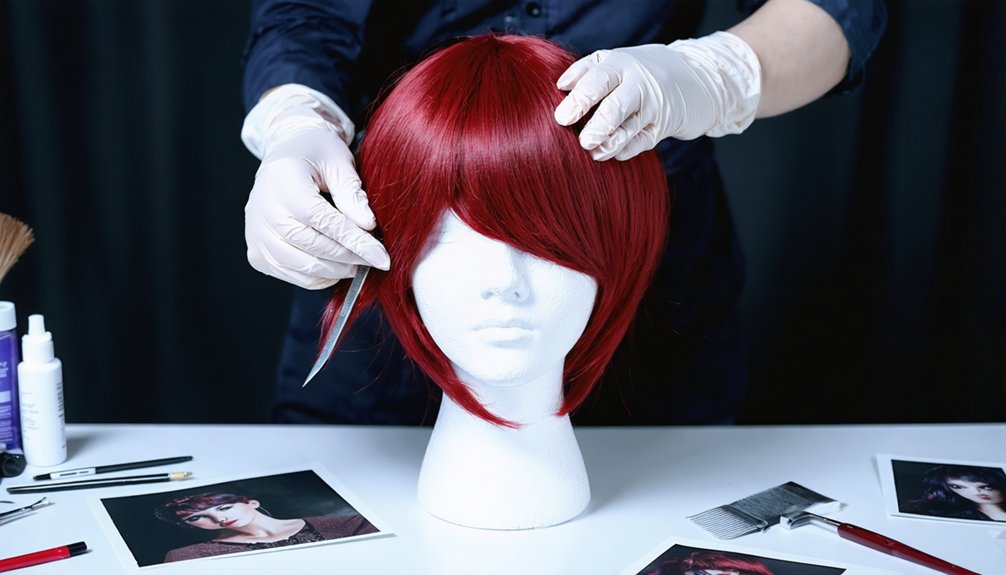
Before you make a single cut, study what makes the character instantly recognizable—their silhouette, signature fringe angle, volume placement, or a distinctive shape that reads from across a room. Silhouette preservation isn’t optional; it’s your anchor point throughout every shaping decision.
Work in small sections, trimming gradually rather than committing to large removals. Use point-cutting to soften edges while maintaining structural integrity.
Adapt the fringe direction and side pieces to support your genderbent presentation without erasing the character’s core identity.
Color matching reinforces recognition when the cut alone feels ambiguous—a precise shade keeps viewers connected to the source material even through stylistic reinterpretation.
Cross-reference your reference images constantly, checking proportions, part placement, and balance on both sides before finalizing any section.
Build Spikes, Volume, and Texture With Heat and Teasing
Once your wig’s shape is cut and framed, you can start building the three-dimensional structure that gives genderbent characters their visual punch.
Use low heat to warm synthetic fibers until they’re pliable, then hold each spike or lifted section in position until it cools and locks into shape.
For areas that need extra body without heat, backcomb small sections from underneath to push volume upward and outward before finishing the surface smooth.
Heat Shaping Spike Techniques
Spikes and lifted volume are the backbone of many dramatic character silhouettes, and getting them right on a synthetic wig means working with heat and structure in tandem. Before applying any heat, confirm your wig’s fiber durability to prevent melting or distortion.
Follow this heat-shaping sequence for clean, lasting spikes:
- Section and separate each spike individually before applying heat for precise control.
- Apply low, consistent heat while shaping the fiber upward or outward into position.
- Hold the spike firmly until fully cooled so the shape locks in permanently.
- Reinforce with styling glue or strong-hold spray after cooling for structural integrity.
When color blending across multiple spike sections, work symmetrically so transitions read clearly under event lighting and sharp photography angles.
Teasing For Added Volume
Teasing builds the internal foundation that heat alone can’t always create, giving your spikes and lifted sections the hidden bulk they need to hold their shape under event conditions. Work from underneath each section, backcombing in short, controlled strokes toward the root. Don’t disturb the outer layer — it’s your finished surface.
This technique matters especially in genderbent styles where exaggerated silhouettes must read clearly in photos and under cosplay lighting.
When your color blending involves multiple toned sections, tease each zone separately so the gradient stays visually clean and doesn’t muddy at transition points. After volume is locked, consider accessory placement carefully — headbands, clips, or decorative pins should anchor into structured sections, not compress them.
Finish with a light styling spray to seal the teased interior without flattening the lift you’ve built.
Lock In the Shape With Pins, Spray, and Styling Products
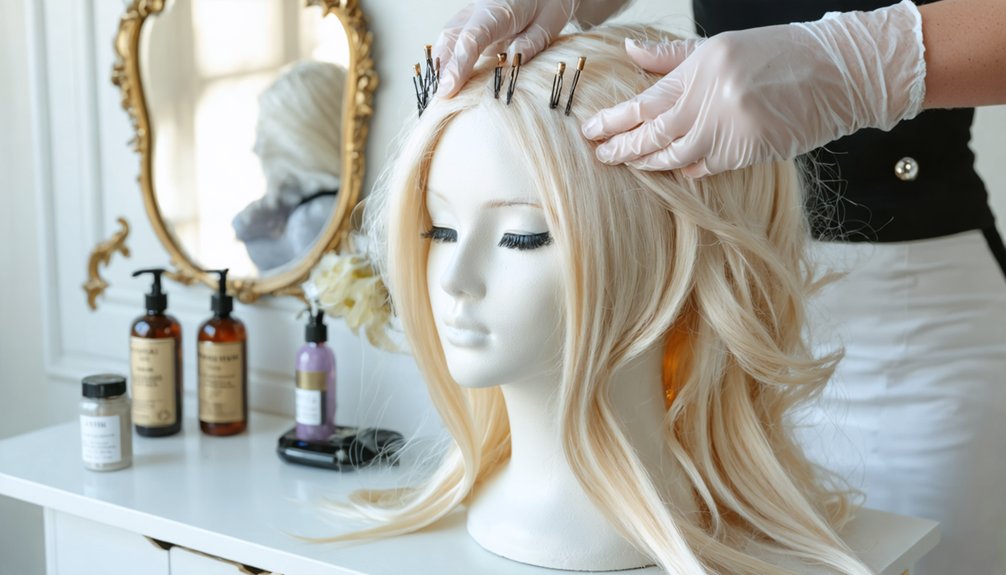
After you’ve shaped and cooled every section of your genderbent wig, locking the style in place is what separates a polished cosplay from one that collapses mid-event. Use these four targeted techniques to secure your work:
Locking in your style is what separates a polished genderbent cosplay from one that falls apart mid-event.
- Pin strategically — anchor lifted sections and color blending zones with bobby pins tucked beneath layers.
- Apply hairspray in thin passes — build hold gradually without saturating fibers or dulling your finish.
- Use gel or styling glue — target sharp structural edges and points that need rigid, long-lasting definition.
- Secure accessory integration points — reinforce areas where clips, props, or hair accessories attach so nothing shifts under event conditions.
Finish by smoothing flyaways and checking symmetry. Your wig should photograph cleanly and hold its silhouette through extended wear.
Smooth the Silhouette and Refine Details for Event Wear
Once your wig is locked and cooled, final refinement is where the character truly snaps into focus. Smooth flyaways using a fine-tooth comb or your fingertips, working along the grain to unify texture across the entire silhouette.
Examine color contrast between sections — if the genderbent adaptation uses highlighted panels or dual tones, clean up any blurred edges so each zone reads distinctly under event lighting. Trim micro-strands that break the outline and soften the profile.
Accessory placement comes next. Position clips, pins, or character-specific ornaments with intention, ensuring they reinforce the silhouette rather than disrupt it.
Step back periodically and assess the full shape from multiple angles. A refined edge reads crisply in photographs, holds up under convention lighting, and keeps your genderbent character immediately recognizable throughout extended wear.
Frequently Asked Questions
Can I Reuse a Styled Cosplay Wig for Multiple Different Characters?
You can reuse a styled cosplay wig by applying versatile styling techniques to reshape it between characters. Prioritize wig maintenance through gentle detangling and washing, then restyle fibers to match each new character’s signature silhouette creatively.
How Do I Store a Finished Genderbent Wig Between Events?
70% of wig damage happens in storage! For smart wig storage and wig maintenance, place your finished genderbent wig on a foam head, cover it loosely with a hairnet, and store it in a cool, dust-free space.
What Should I Do if My Wig Color Fades After Washing?
Refresh faded fibers using wig dyeing techniques with alcohol-based ink or fabric dye. You’ll restore vibrancy while boosting color preservation by sealing strands with cold water rinses and UV-protective sprays after every wash.
How Long Does a Fully Styled Cosplay Wig Typically Last?
With legendary care, your styled cosplay wig can last years. Prioritize wig maintenance by storing it properly and invigorating holds occasionally. Strong styling longevity depends on how gently you handle fibers between every single wear.
Can Two People Share One Wig at the Same Event?
Wig sharing’s possible, but hygiene concerns make it tricky. You’ll want to swap wig caps between wearers, sanitize the interior, and check the fit carefully so the style doesn’t shift or collapse mid-event.
References
- https://www.reddit.com/r/CosplayHelp/comments/1de0nw4/general_wig_styling_tips/
- https://www.youtube.com/watch?v=3FVxpNesJv0
- https://www.uniwigs.com/blog/7-cosplay-wig-styling-tips.html
- https://www.youtube.com/watch?v=lFi9MAznCEg
- https://starstruckpanda.com/iconic-pop-culture-hair-and-wig-styling-tips/
- https://starstruckpanda.com/enhancing-genderbent-cosplay-identity-with-costume/
- https://eyecandys.com/blogs/news/how-to-make-cosplay-wigs
- https://redohair.com/how-to-style-wigs-cosplay/