To create adaptive cosplay for physical disabilities, you build the costume around your actual body, mobility aid, and energy levels instead of forcing your body to fit the costume. Choose characters that suit seated or aided poses, use Velcro, magnets, and stretch fabrics for easy dressing, and integrate your wheelchair into the costume’s narrative. Test everything before the event and scout the venue ahead of time. There’s a lot more to explore once you’re ready to start building.
Key Takeaways
- Design costumes around the actual body, mobility aids, and energy levels, treating wheelchairs as essential costume elements rather than obstacles.
- Choose characters like royalty, mages, or pilots whose silhouettes naturally complement seated or aided positions.
- Replace complex closures with Velcro, magnets, or elastic bands to enable independent, one-handed, or seated dressing.
- Use lightweight, removable decorations on mobility aids, ensuring brakes, wheels, and controls remain fully accessible.
- Scout venue accessibility beforehand and pack a backup costume prepared for pain flares or fatigue.
What Is Adaptive Cosplay for Physical Disabilities?
Adaptive cosplay takes traditional costume-making and reshapes it to work with physical disabilities, mobility aids, and the real demands of a body that doesn’t fit standard patterns. It’s about building costumes that function across sitting, rolling, transferring, and moving through crowded convention spaces.
Adaptive cosplay doesn’t modify costumes as an afterthought. It rebuilds them around how you actually move.
You’re not modifying a costume as an afterthought. You’re designing it from the start around your actual body, your actual equipment, and your actual energy. That shift in approach changes everything.
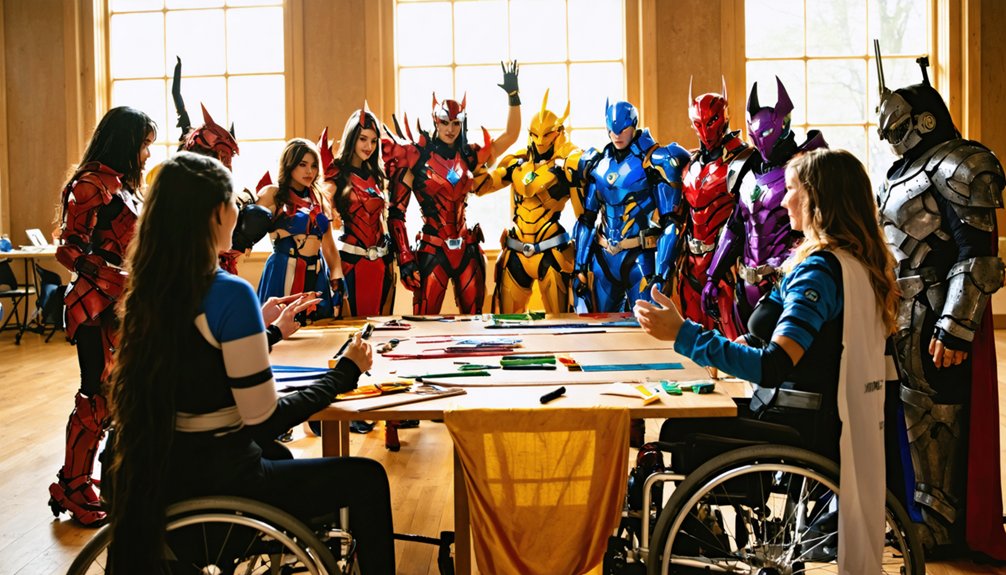
Adaptive cosplay also advances disability representation and inclusive storytelling by letting you show up as characters you love without hiding who you are. Your wheelchair, braces, or crutches aren’t obstacles. They’re part of the design.
The result is cosplay that’s authentic, functional, and entirely yours.
Represent Disability Authentically Before You Build
Before you cut a single piece of fabric, it’s worth thinking about what your cosplay is actually saying about disability. Disability representation matters, and authentic portrayal starts with intention, not just execution.
Ask yourself these three questions before building:
- Are you a disabled person cosplaying a character, or are you performing disability as a costume choice? Avoid “cripping up.”
- Does your chosen character reflect your actual identity, assistive devices, or lived experience in a meaningful way?
- Have you consulted disabled cosplayers or communities whose perspectives can sharpen both your design and your awareness?
Authentic portrayal isn’t about perfection. It’s about respect. When representation drives your build from the start, your costume communicates something real, not just something visual.
Choose Characters That Work With Seated or Aided Posing
When you’re choosing a character, look for silhouettes that naturally complement seated posing or work alongside mobility aids, so you’re building with your body rather than against it.
A wheelchair, cane, or other aid can actually inspire your character choice — think thrones, cockpits, mechs, or any figure whose power reads just as strongly while seated.
Once you’ve picked your character, adapt the design to fit how you actually move and exist in real life, not just how the character looks in a static reference image.
Silhouettes Suit Seated Posing
Choosing the right character from the start makes the entire build easier and more rewarding. Silhouette optimization for seated posing means picking designs that naturally shine from a seated or aided position, so you’re working with your body, not against it.
Consider these character types for strong seated silhouettes:
- Royalty and rulers — thrones and robes photograph powerfully from a seated position.
- Pilots and mech operators — cockpit-based characters already imply a seated form.
- Mages and scholars — flowing layers and dramatic accessories create visual impact without requiring standing poses.
When you prioritize silhouette optimization early, your costume reads as intentional and polished. Seated posing becomes a creative strength rather than a limitation, letting your character choice do the heavy lifting.
Mobility Aids Inspire Characters
Your mobility aid isn’t just part of your daily life — it can be the creative spark that drives your entire costume concept. Instead of working around your wheelchair or crutches, choose characters whose design naturally incorporates them. A throne-bound ruler, a mech pilot, or a vehicle-riding hero all feature character silhouettes that integrate seated or aided posing without compromise.
Look for roles where your aid becomes a storytelling element, then reinforce that narrative through creative fabric choices that drape, wrap, or attach cleanly to your equipment. Characters designed around power, command, or mechanical identity often translate beautifully.
When your aid feels like part of the character rather than a workaround, your costume gains authenticity, visual impact, and a representation that reflects your actual experience.
Adapt Designs For Reality
Picking the right character from the start saves you hours of reworking a design that was never built for your body or your equipment. Inclusive design begins at character selection, not after patterns are cut.
- Choose silhouettes that read clearly while seated — capes, dramatic shoulders, and bold color blocking translate powerfully without requiring a standing pose.
- Match creative fabric choices to your reality — stretchy, breathable materials accommodate braces, seated pressure points, and repositioning throughout a long convention day.
- Build for your actual mobility context — a costume worn with a wheelchair at a convention may need different closures and proportions than one worn with crutches at home.
Your disability doesn’t limit your character options. It sharpens your design thinking from the beginning.
Fit Your Adaptive Cosplay Around a Wheelchair or Mobility Aid
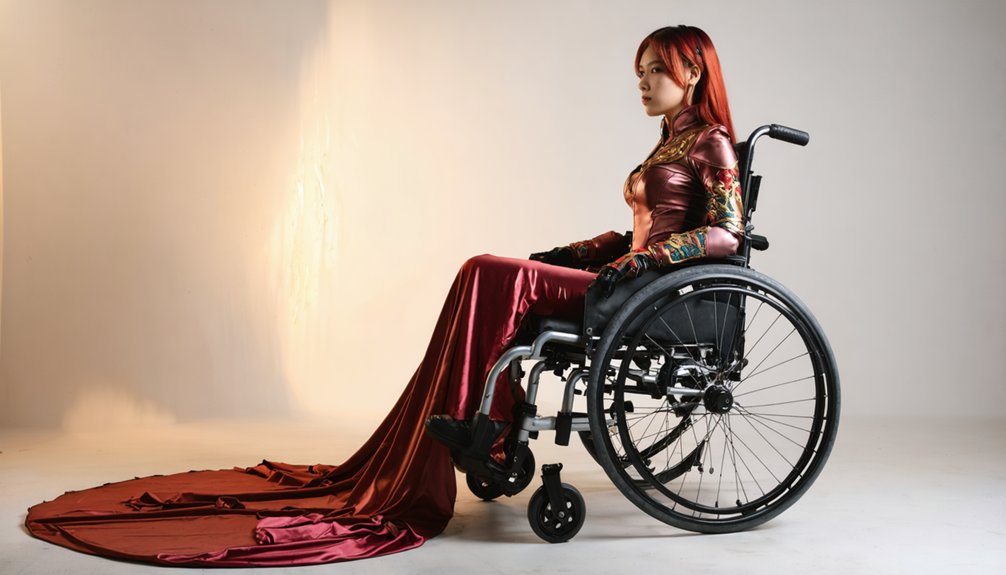
Before you build anything, measure your wheelchair or mobility aid’s height, width, and wheel diameter so your attachments fit the frame without blocking controls or brakes.
Once you have those measurements, you can design decorative elements that integrate naturally into the costume rather than fighting against the chair’s structure.
Use lightweight materials like cardboard, fabric, or pipe cleaners to keep add-ons secure and manageable without making your chair harder to move.
Measure Your Mobility Aid
Getting accurate measurements of your wheelchair or mobility aid is the foundation of any well-fitted adaptive costume. Before building attachments or decorative elements, you’ll need precise dimensions to guarantee everything integrates safely and looks intentional. These measurements also help you select accessibility tools and plan sensory accommodations around your specific setup.
Measure these three key areas:
- Height and width of the full frame, including armrests and footrests, so costume elements clear the structure without snagging.
- Wheel diameter and axle clearance to confirm decorative add-ons won’t interfere with rolling or braking.
- Seat depth and backrest height so fitted costume pieces maintain correct proportions while you’re seated.
Accurate measurements transform guesswork into confident construction, letting your costume work with your mobility aid, not against it.
Integrate Decorative Elements Safely
Once your measurements are in hand, you can start adding decorative elements that enhance your costume without compromising how your mobility aid functions. Prioritize decorative safety by choosing lightweight materials like cardboard, fabric, foam, or pipe cleaners that won’t shift your chair’s center of gravity or block your wheels and brakes.
Achieving aesthetic balance means your additions look intentional while keeping every functional control reachable. Attach decorations with removable fasteners like hook-and-loop tape or zip ties so you can quickly strip pieces off if something snags or restricts movement.
Test each element by rolling, turning, and transferring before your event day. If a decoration interferes with any motion, resize or reposition it. Your mobility aid should move just as freely decorated as it did bare.
Choose Fabrics That Hold Up Through a Full Convention Day
Fabric choice can make or break your convention experience, especially when you’re spending hours sitting, rolling, or transferring throughout the day. Prioritizing fabric durability and material breathability keeps you comfortable and confident from opening ceremonies to closing panels.
Choose materials that work with your body, not against it:
- Stretch fabrics like jersey or spandex blends move with you during repositioning and prevent painful pulling across seated pressure points.
- Moisture-wicking and breathable materials regulate your temperature during long hours in crowded, warm venues.
- Soft, non-irritating textures reduce sensory discomfort and skin irritation, especially where fabric contacts braces or mobility aids.
Testing your fabric choices before the event lets you catch problems early and arrive ready to enjoy every moment.
Use Closures and Dressing Adaptations That Work Independently
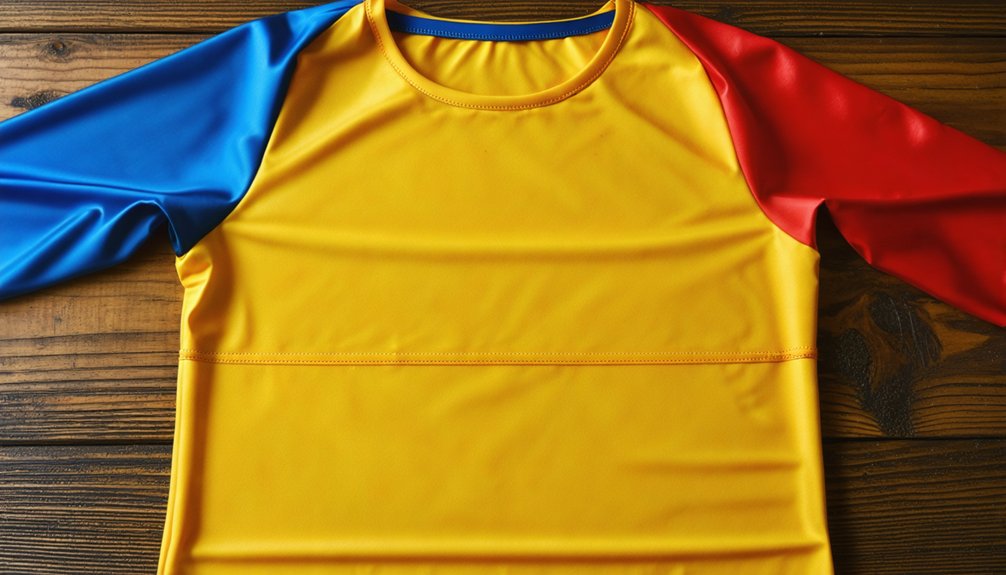
Dressing independently at a convention means your closures need to work as hard as your costume does. Swap out complex buttons and tight lacing for Velcro, magnets, and elastic bands that you can manage one-handed or from a seated position.
Add side zippers or hidden openings in fitted bodices to support seating comfort, since sitting compresses fabric differently than standing does. Build in adjustable closures so the fit shifts with your posture, braces, or mobility aid.
Side zippers and hidden openings aren’t shortcuts — they’re the difference between a costume that fits and one that fights you.
Sensory considerations matter here too, so test every closure against your skin before the event to catch anything scratchy or irritating. Most importantly, confirm you can reach the restroom without help or costume damage.
Independent dressing isn’t a workaround; it’s smart, intentional design.
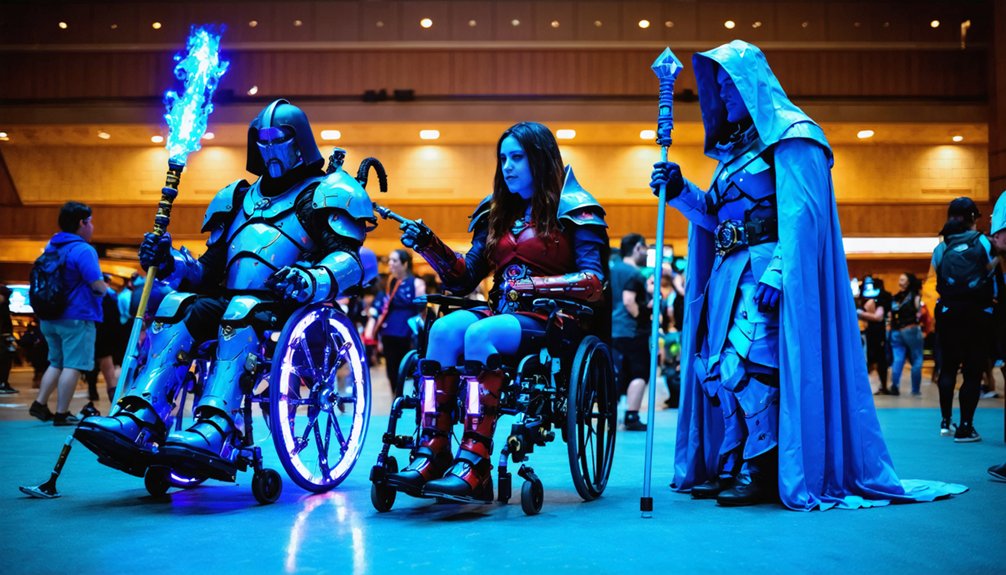
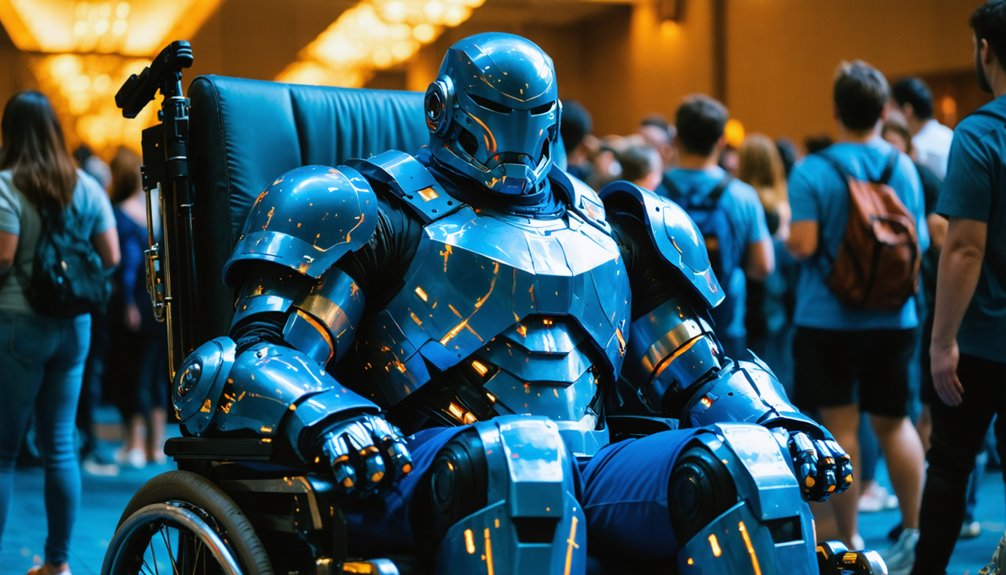
Make Your Wheelchair a Featured Part of the Costume
With your closures handled, it’s time to look at the biggest design opportunity you might be overlooking: your wheelchair itself. Inclusive storytelling means integrating your chair into the narrative, not hiding it. Your wheelchair can become a throne, cockpit, or themed vehicle that strengthens your entire look.
Before building attachments, follow these practical steps:
- Measure your chair’s height, width, and wheel diameter so decorative additions fit the frame accurately.
- Use lightweight materials like cardboard, fabric, or pipe cleaners to keep movement easy and prevent tipping.
- Keep brakes, wheels, and controls fully accessible beneath any decorative elements you add.
Community engagement thrives when disabled cosplayers are visibly celebrated. Treat your mobility aid as essential equipment, because it genuinely is.
Scout the Venue for Accessibility Before You Arrive
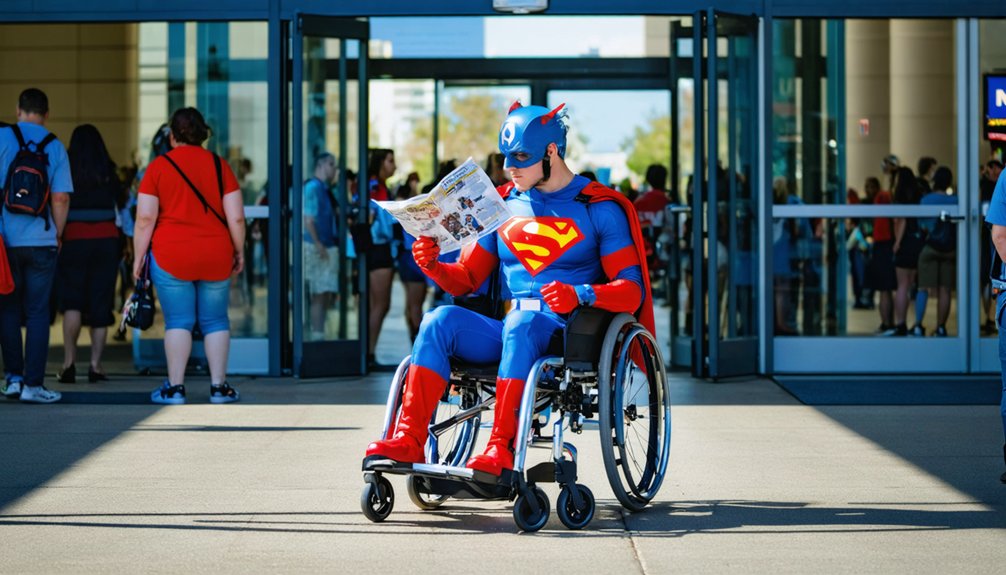
Once your costume’s built and tested, scouting the venue before event day can save you from preventable stress. Check pathways, restroom locations, seating areas, and elevator access ahead of time. Many conventions post venue maps online, so use them.
Contact the event’s accessibility coordinator directly — they’re your best resource for accurate, current information. Ask about sensory triggers like strobe lights or fog machines that could affect your experience.
Just as historical accuracy and cultural significance matter when building a character authentically, venue knowledge matters when planning your attendance practically.
Knowing where accessible entrances, quiet rooms, and charging stations are lets you focus on enjoying the event rather than navigating surprises. Preparation isn’t just smart — it’s what keeps you comfortable, safe, and fully present all day.
Test Your Adaptive Cosplay Build Before the Event
Before your event, wear the full costume and run through every movement you’ll actually use — sitting, rolling, turning, and transferring — so you can catch pressure points, snags, or closures that don’t cooperate.
Check that you can manage restroom access independently and quickly, because a costume that traps you is a real problem.
Pack a backup outfit you can switch into if pain, fatigue, or a wardrobe failure cuts the day short.
Practice Movement Before Events
Testing your adaptive cosplay build before the event can save you from avoidable problems on the day that matters most. Run through every movement you’ll actually use — sitting, rolling, transferring, and turning — while wearing the full costume.
Check these three critical areas:
- Costume durability — Pull, stretch, and stress every seam, closure, and attachment point to confirm nothing tears, snags, or shifts unexpectedly.
- Sensory considerations — Wear the costume for at least one extended session to identify fabrics, textures, or sounds that cause discomfort before the event day.
- Restroom access — Practice removing and refastening closures independently to confirm you won’t need outside help.
Document what breaks or irritates you, then fix it. You’ll arrive confident, prepared, and fully in control of your experience.
Check Restroom Access Early
Restroom access can make or break your convention experience, so test it early and test it thoroughly. Before event day, wear your full costume and practice removing it quickly for restroom use. If you can’t manage closures independently while seated or using your mobility aid, redesign them now. Velcro, side zippers, and magnetic closures all support faster, easier dressing without assistance.
Restroom planning also means researching the venue ahead of time. Locate accessible restrooms on the floor map, confirm door widths accommodate your chair, and identify how far they sit from your main event areas.
Accessibility awareness isn’t an afterthought—it’s core to a functional build. A costume that photographs beautifully but traps you is never worth the trade-off.
Pack A Backup Outfit
Even the most carefully planned costume can surprise you on event day, which is why packing a backup outfit belongs on every adaptive cosplayer’s checklist. Pain flares, costume durability failures, or a broken accessory attachment can shift your energy fast. A smart backup keeps you in the experience without crisis management.
Choose your backup by asking:
- Can you put it on independently, seated or with limited mobility, in under five minutes?
- Does it match your energy level for a difficult day, not just your best day?
- Does it work with your mobility aid, even without planned decorations or attachments?
Your backup isn’t a failure plan. It’s a power move that protects your comfort, your day, and your presence on the floor.
Pack for Pain Flares, Fatigue, and Backup Wearability
When pain flares or fatigue hit mid-convention, having a backup plan keeps your day going instead of ending it. Pack a secondary outfit that’s comfortable, easy to put on independently, and still reflects your cosplay identity. Think of it as emergency preparedness built into your kit, not a sign of defeat.
Your backup should require minimal effort to wear, use simple closures like Velcro or elastic, and avoid any sensory accommodations you’re already managing. If your main costume includes a wig that becomes overwhelming, your backup shouldn’t require one.
Keep this outfit accessible in your bag, not buried under props. When your body’s limits shift throughout the day, you’ll have options that let you stay present, comfortable, and still fully yourself on the convention floor.
Frequently Asked Questions
Can Adaptive Cosplay Be Created on a Tight or Limited Budget?
Yes, you can absolutely create adaptive cosplay using budget-friendly options! Embrace affordable materials like cardboard, fabric scraps, Velcro, and pipe cleaners. You’ll craft innovative, functional costumes without overspending, proving creativity and accessibility don’t require a large budget.
Are There Online Communities Specifically for Adaptive Cosplay Builders and Wearers?
Like finding your crew in a vast galaxy, yes, you’ll discover thriving online communities where adaptive fabric techniques and mobility aids integration are celebrated, shared, and innovated together by builders and wearers who truly get your journey.
How Do You Handle Costume Photography When Posing Options Are Limited?
Work with a photographer who’ll explore varied photography angles around you, highlighting your costume’s best details. You don’t need pose flexibility—you need creative framing that showcases your design powerfully, authentically, and on your own terms.
Can Children With Physical Disabilities Participate in Adaptive Cosplay Events?
Like an open gate, inclusive design welcomes everyone. Yes, children with physical disabilities can absolutely join adaptive cosplay events. You’ll find adaptive accessories make participation joyful, practical, and empowering for young cosplayers of all abilities.
Do Cosplay Competitions Have Accessibility Accommodations for Disabled Participants?
Many competitions now follow accessibility guidelines and inclusive design principles. You’ll find reserved judging spaces, seated presentation options, and mobility aid accommodations. Always contact organizers beforehand to confirm specific provisions and advocate for what you need.
References
- https://www.youtube.com/watch?v=-Mb8PubK7qg
- https://www.reddit.com/r/comiccon/comments/18jncix/im_a_wheelchair_user_and_dont_know_to_cosplay/
- https://lifeatilevel.com/2023/10/05/respect-and-representation-why-disability-shouldnt-be-a-costume-choice/
- https://starstruckpanda.com/best-wheelchair-accessible-cosplay-costume-modifications/
- https://starstruckpanda.com/disability-inclusive-cosplay-costume-tips/
- https://disabilityarts.online/magazine/opinion/superhero-for-a-day-the-world-of-cosplay/