To dress as a medieval peasant authentically, you’ll want to prioritize linen undergarments, a coarse woolen outer tunic, and a leather belt to define your silhouette. Stick to earth tones—browns, creams, and greys—derived from natural dye sources like walnut husks and oak bark. Avoid synthetic fabrics and saturated colors entirely, as they signal anachronism immediately. Women should add a simple veil or wimple, while men complete the look with cloth hoods and basic leather boots. There’s considerably more to uncover ahead.
Key Takeaways
- Choose natural fabrics like linen and wool in earth tones—browns, creams, and greys—avoiding synthetic materials for historical accuracy.
- Layer a linen undertunic beneath a woolen outer tunic, securing both with a leather belt at the waist.
- Avoid bright colors like purple or vibrant red, as these were reserved exclusively for nobility in medieval society.
- Men should wear simple cloth hoods or caps, while women require a cloth veil or wimple for cultural accuracy.
- Source budget-friendly materials from thrift stores and fabric remnant bins, prioritizing earth-tone wool and linen over brand-new fabrics.
What Did Medieval Peasants Actually Wear?
Medieval peasants dressed with more intentionality and craft than modern portrayals suggest. Their clothing reflected the peasant social hierarchy, signaling status through fabric quality, cut, and color rather than ornamentation.
Men layered linen shirts beneath woolen tunics, pairing them with hose and knee-length trousers. Women wore ankle-length tunics with simple cloth wimples covering their heads.
You’ll notice that earth tones — browns, creams, tans, and greens — dominated their palettes, derived from accessible plant-based dyes. Much like Medieval cuisine adapted to available resources, clothing relied on locally sourced materials: wool, linen, and hemp.
Bright colors like purple or vibrant red remained exclusive to nobility. Peasants constructed their own high-quality garments, demonstrating sophisticated textile knowledge that contradicts the assumption of crude, careless dressing.
Best Fabrics for an Authentic Peasant Costume
Fabric choice determines whether your costume reads as historically grounded or cosplay fantasy. Medieval textile techniques prioritized function, so peasant fashion history reflects materials derived from immediate agricultural environments.
Fabric choice separates historically grounded costumes from fantasy — medieval textiles prioritized function over form.
Select fabrics that align with documented historical evidence:
- Linen — use it for undergarments and shirts; it’s breathable, period-accurate, and widely available today.
- Wool — choose coarse, undyed varieties for outer tunics; avoid fine weaves reserved for nobility.
- Hemp — incorporate it for head coverings or undergarments, particularly when representing the lowest economic tiers.
Avoid polyester, sequins, and synthetic blends entirely. They immediately undermine historical authenticity.
Earth-toned fabrics in browns, creams, and greys reflect the dye sources peasants actually accessed, grounding your costume in verifiable material culture.
Which Colors Actually Look Historically Accurate?
When selecting your color palette, you’ll achieve the greatest historical accuracy by prioritizing muted earth tones—browns, tans, greys, and creams—that reflect the natural, undyed, or minimally processed textiles peasants commonly wore.
You should also recognize that certain accessible dye sources expanded the peasant palette beyond these neutrals. Onion skins, for instance, produced both yellows and soft pinks, while plant-based sources yielded greens and browns.
Reserve bright purples, vibrant reds, and deep blues exclusively for noble characters, as the expensive dyes required for these colors remained economically inaccessible to the working class.
Peasant-Appropriate Earth Tones
Choosing historically accurate colors for a Middle Ages peasant costume requires understanding how medieval dye sources actually worked. Just as peasant housing and medieval cuisine reflected locally available resources, clothing colors derived entirely from accessible natural materials.
Earth tones weren’t a limitation — they were a sophisticated material reality:
- Browns and tans emerged from walnut husks and oak bark, mirroring the organic palette of peasant housing construction.
- Muted greens came from nettles and bracken ferns, reflecting the agricultural environments defining medieval cuisine and labor.
- Creams and undyed wool represented the most economical choice, requiring zero dye investment.
Avoid bright purples, vibrant reds, and saturated blues — these required expensive imported dyes exclusively accessible to nobility.
You’ll achieve authenticity by selecting fabrics in these restrained, plant-derived tonal ranges.
Surprisingly Accessible Dye Colors
Beyond the muted earth tones, medieval peasants actually achieved a broader color range than most costume guides acknowledge. Onion skins — a byproduct of medieval food preparation — produced both yellow and soft pink hues, making these colors historically legitimate for peasant attire.
Green and brown derived from readily available plant sources, expanding your palette considerably.
When recreating peasant festival aesthetics, you’ll want to distinguish between genuinely accessible colors and restricted ones. Avoid purple, vibrant red, and blue — these required expensive dyes reserved for nobility. Instead, incorporate yellows, soft pinks, greens, and browns alongside traditional creams and tans.
This nuanced understanding prevents two common costuming errors: defaulting exclusively to grey tones or inappropriately adopting noble color palettes. Your historically grounded choices signal analytical precision rather than generic fantasy interpretation.
Men’s Peasant Costume: Tunics, Hose, and Footwear
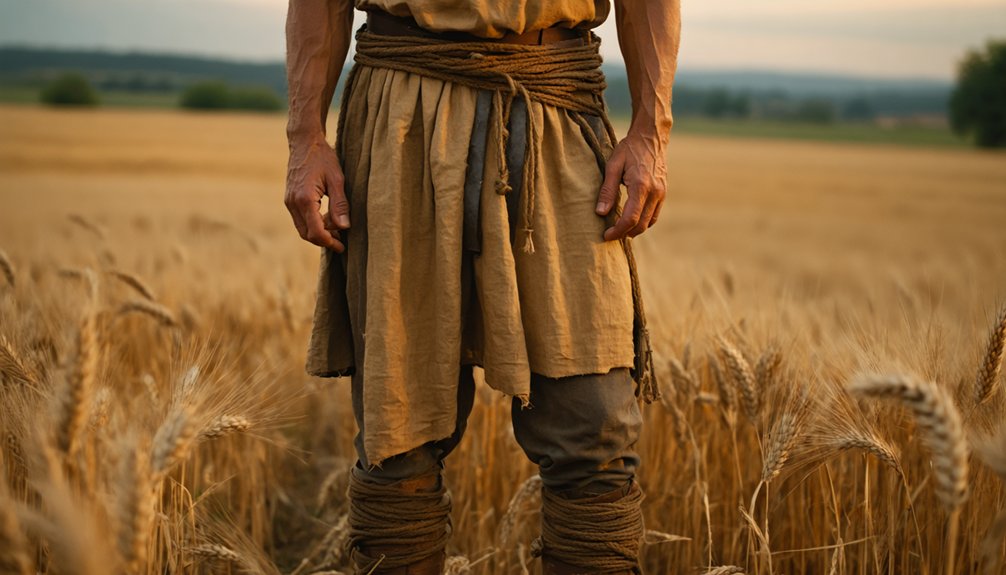
The male peasant’s wardrobe centered on a short woolen tunic worn over a linen undershirt. If you’re reconstructing this look, fabric choice determines historical accuracy. Tunics featured tubular sleeves often rolled back during labor, while woolen hose covered the legs over linen breeches. Working men frequently went barefoot due to footwear costs.
Key construction priorities:
- Tunic length: Keep it shorter than nobility’s silhouette, distinguishing class authenticity without medieval embroidery embellishment
- Layering system: Pair linen undershirts with coarse, undyed wool outer tunics to replicate subsistence-class textile realities
- Footwear hierarchy: Simple leather boots signal economic status; bare feet signal working conditions
Peasant headwear and accessories like cloth hoods further contextualize the ensemble within documented material culture, reinforcing analytical precision in your reconstruction.
Women’s Peasant Costume: Dress, Veil, and Layering
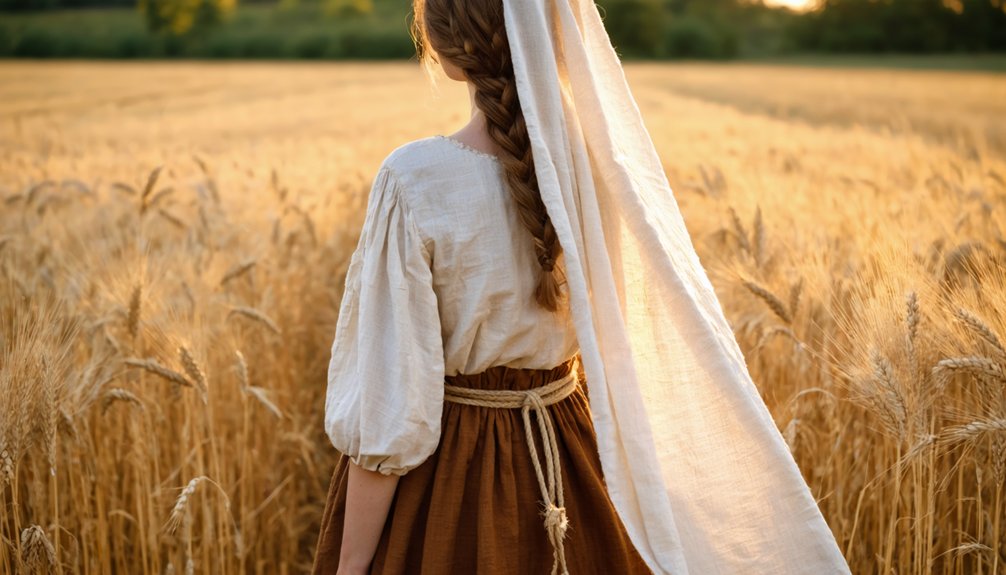
For a historically accurate women’s peasant costume, you’ll want to begin with an ankle-length woolen or linen tunic that extends to mid-calf or longer, reflecting the functional demands of agrarian and domestic labor.
Over this foundation, you can layer a simple cloth veil or wimple that drapes over the head and rests beneath the chin, a garment worn universally across working-class women regardless of regional variation.
Reserve the addition of a surcoat as a third layer only if your costume represents a peasant woman of modest means, as the poorest classes rarely afforded the extra fabric such a garment required.
Dress and Veil Essentials
When dressing as a medieval peasant woman, the ankle-length tunic or dress serves as your foundational garment, distinguishing you immediately from male peasants, who wore shorter tunics. Whether you’re recreating daily agrarian life or attending peasant festivals, your dress should reflect functional authenticity rooted in historical accuracy.
Key construction principles include:
- Fabric selection: Prioritize wool for outer layers and linen for undergarments, mirroring documented medieval textile practices.
- Color accuracy: Earth tones, soft yellows from onion-skin dyes, and muted greens authentically represent peasant-class pigmentation, contrasting nobility’s vibrant hues.
- Veil application: Layer a simple cloth wimple over your head, draping it to the chin, as working women did during medieval cuisine preparation and communal labor.
These elements collectively establish a historically grounded, analytically precise silhouette.
Layering for Authenticity
Beyond selecting the right dress and veil, layering separates a superficially assembled costume from one that’s analytically grounded in medieval textile reality. Just as medieval food production shaped daily labor, peasant clothing history reflects functional necessity — garments layered for warmth, durability, and task-specific movement.
Start with a linen undertunic against the skin, then layer a woolen outer tunic extending to mid-calf. You’re replicating a documented construction logic, not merely styling choices. The poorest women omitted surcoats entirely, since fabric costs were prohibitive. Incorporate that economic restraint into your build — fewer layers signal lower social standing with precision.
Secure each layer with a leather belt, cinching at the waist to define silhouette while maintaining the structured, purposeful silhouette that authentic peasant dress demanded.
How to Source Your Peasant Costume on a Budget
Sourcing a historically plausible peasant costume doesn’t require a substantial budget if you approach thrift stores and fabric remnant bins with a clear material checklist. Whether you’re preparing for a medieval feast or a castle visit, strategic sourcing guarantees authenticity without financial strain.
Prioritize these acquisitions:
- Linen or wool fabrics in earth tones—browns, creams, and greys—sourced from remnant bins for tunics and undergarments.
- Oversized thrifted shirts that you can recut into period-appropriate tunics, secured with a sturdy leather belt.
- Scrub pants or leggings substituting historical hose, paired with simple leather boots found at secondhand retailers.
Cross-reference each purchase against documented peasant material standards—linen undergarments, woolen outer layers—to maintain analytical rigor and historical credibility throughout your costume construction process.
Belts, Boots, and Accessories That Complete the Look
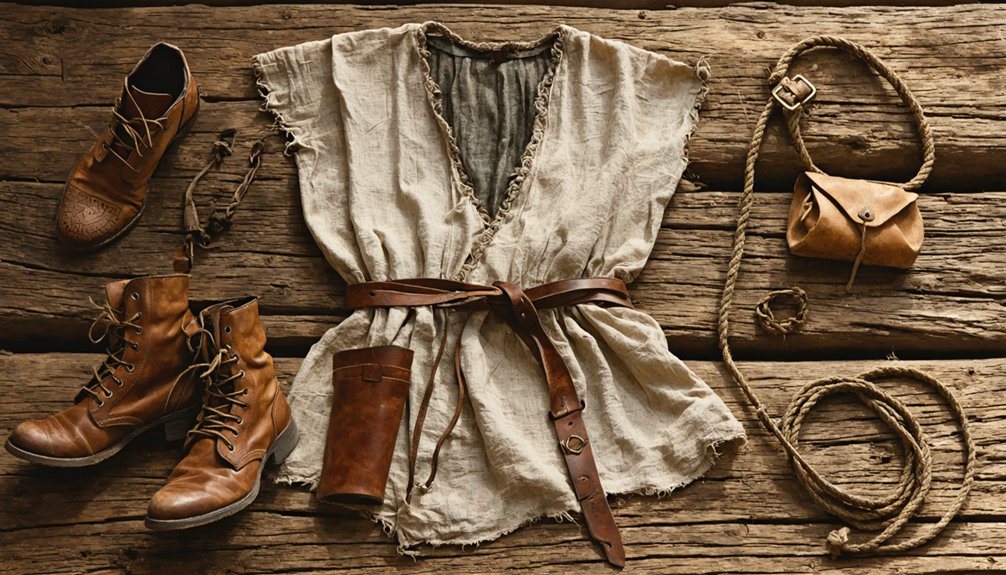
Once your base garments are sourced and assembled, accessories, belts, and footwear determine whether your costume reads as historically grounded or merely theatrical.
A sturdy leather belt cinches your tunic, creating structural definition while serving functional purposes authentic to the period.
For medieval footwear, prioritize simple leather or suede boots over modern alternatives; comfort and historical plausibility aren’t mutually exclusive.
Avoid synthetic materials that immediately signal anachronism.
For peasant jewelry, wooden bead necklaces remain your most defensible choice, as lower classes lacked access to precious metals.
Supplement these with favor knots on your belt, woven baskets as props, and cloth headscarfs or straw hats.
Each accessory you select should justify its presence through historical precedent, transforming individual components into a cohesive, analytically considered ensemble.
Frequently Asked Questions
Can Children Wear Peasant Costumes to Medieval-Themed Events?
Yes, children can wear peasant costumes to medieval-themed events. You’ll prioritize children’s costume safety by selecting breathable linen tunics and avoiding sharp peasant costume accessories, ensuring historically informed, age-appropriate designs that engage young participants innovatively.
Are Peasant Costumes Appropriate for Outdoor Renaissance Fairs in Summer?
Breathable, breezy, beautifully authentic—peasant costumes are perfectly appropriate! You’ll achieve both historical accuracy and seasonal comfort by selecting linen undergarments and lightweight woolen tunics in muted earth tones, ensuring innovative breathability while maintaining analytically sound medieval representation at summer Renaissance fairs.
How Do I Care for and Wash a Wool Peasant Tunic?
Hand-wash your wool tunic in cold water using gentle detergent for ideal wool fabric maintenance. Apply proper washing techniques: avoid agitation, don’t wring it, and lay flat to dry, preventing shrinkage and preserving the garment’s structural integrity.
Can Peasant Costumes Be Adapted for Wheelchair Users Comfortably?
Surprisingly, medieval peasants didn’t design for wheelchairs! You can make wheelchair friendly adaptations easily: shorten tunics, adjust hemlines, and implement comfortable costume modifications like side-fastening belts, ensuring authentic aesthetics without sacrificing mobility or practicality.
What Hairstyles Are Historically Accurate for Medieval Peasant Women?
For medieval hairdos, you’ll find peasant hairstyles centered on practical simplicity. You can style two small braids into a half-up look, then cover them with cloth headscarves or wimples, reflecting authentic historical accuracy.
References
- https://www.youtube.com/watch?v=QOIuTHBhLLY
- https://www.reddit.com/r/LARP/comments/t1kzsb/how_to_dress_a_peasant_in_medieval_france/
- https://renaissancewardrobe.com/blogs/renaissance-and-medieval-life/medieval-peasant-clothing
- https://www.youtube.com/watch?v=0ScIsDvSmxA
- https://shunvogue.com/article/what-can-you-dress-up-as-for-medieval-fair-man
- https://www.medievalists.net/2018/10/how-to-create-your-own-medieval-costume/
- https://www.learninglighthouse.org/sysfiles/site_uploads/events/event3736155_4.pdf
- https://en.wikipedia.org/wiki/English_medieval_clothing