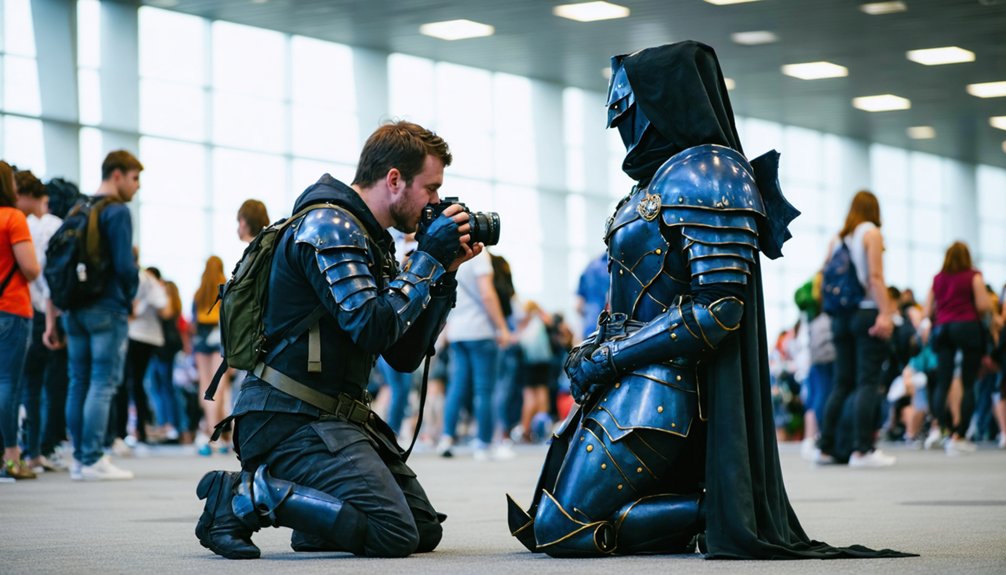
Handling cosplay criticism with elegance starts with knowing the difference between constructive feedback and harassment. Constructive criticism targets your craft — posing, accuracy, or presentation — while harassment attacks who you are. You’ll want to filter toxic comments, block bad-faith users, and lean on supportive communities for grounded perspectives. Tie your self-worth to your growth and enjoyment, not external approval. Keep creating, stay consistent, and everything you need to handle criticism like a pro is just ahead.
Key Takeaways
- Distinguish harassment from constructive criticism by noting whether feedback targets your craft or your personal identity and worth.
- Delete abusive comments, block bad-faith users, and use platform moderation tools to maintain a positive creative space.
- Tie self-worth to personal growth and enjoyment rather than audience approval or external validation.
- Convert vague negative feedback into neutral, actionable observations to identify legitimate skill gaps and improvement opportunities.
- Seek supportive communities with active moderation that encourage diversity, respectful engagement, and constructive creative feedback.
Cosplay Criticism vs. Harassment: What’s the Difference
When you share your cosplay publicly, not every critical comment carries the same weight or intent. Constructive criticism targets your craft—construction quality, accuracy, posing, or presentation—and gives you something actionable to work with.
Harassment, by contrast, attacks your identity, body, or worth, offering nothing useful in return.
Harassment targets who you are, not what you made — and that distinction makes all the difference.
Here’s a practical filter: ask whether the comment addresses your artistic expression or simply demeans you as a person. Feedback that respects your personal boundaries while suggesting specific improvements is worth examining.
Mockery disguised as critique isn’t.
Recognizing this distinction early protects your confidence and sharpens your judgment. You don’t have to accept every comment as truth, but you also don’t have to dismiss every uncomfortable observation.
Discernment is the skill that keeps you growing.
How to Stop Cosplay Criticism From Hurting Your Confidence
Knowing how to spot criticism versus harassment is only half the battle—the other half is keeping your confidence intact when negative comments land. Your creative expression shouldn’t depend on strangers’ approval, so start by detaching your self-worth from audience reactions.
Focus on what you built, what you learned, and how the process served your personal growth.
When harsh comments arrive, ask whether they address your craft or your identity. If it’s the latter, discard it. If it’s the former, extract what’s useful and move on. Reframe hostile remarks as the commenter’s issue, not your truth.
Celebrate small wins, lean on trusted community members, and keep creating. Confidence in cosplay grows through consistent action, not perfect reception.
Practical Tools That Block Toxic Comments Immediately

Toxic comments don’t have to linger—you’ve got platform tools that can cut them off immediately. Comment moderation features on Instagram, TikTok, and Twitter let you filter keywords, restrict replies, and auto-hide offensive content before it reaches your feed. Use them proactively, not reactively.
Blocking persistent bad-faith accounts reinforces your emotional boundaries without requiring confrontation. Reporting abusive users escalates removal to platform administrators, protecting not just you but the broader community.
Pinning positive comments also shifts visual focus away from hostility.
Consider scheduling social media check-ins rather than monitoring posts in real time—this reduces impulsive emotional responses to criticism. Privacy settings controlling who can comment add another protective layer.
These tools exist specifically for you, so use them confidently and without hesitation.
Find a Cosplay Community That Has Your Back
Once you’ve put practical tools in place to filter out toxic comments, finding the right community becomes your next layer of protection.
Seek out online spaces—subreddits, Discord servers, or social media groups—that actively celebrate diverse builds, body types, and character interpretations.
When anonymous criticism stings, trusted peers who know your work and your growth will offer the grounded perspective that strangers simply can’t.
Seek Encouraging Online Spaces
Finding a cosplay community that genuinely supports you can make a significant difference in how you handle criticism. Seek out spaces that prioritize clear community guidelines and model strong cosplay etiquette, since both signal a commitment to respectful engagement. Platforms like Discord servers, subreddits, and dedicated forums often feature moderators who actively protect members from harassment.
Once you’ve found a promising space, observe how members respond to newcomers and unconventional builds. Inclusive communities celebrate creative interpretation rather than rigid accuracy standards. They also tend to offer constructive feedback rooted in craft rather than personal judgment.
Surrounding yourself with peers who genuinely invest in your growth helps you filter criticism more effectively. Their encouragement reinforces your confidence and keeps your focus where it belongs — on creating.
Lean On Trusted Peers
While online spaces offer broad reach, the peers you trust most will carry you through your toughest moments in cosplay. When criticism stings, a reliable circle reframes it constructively and keeps your momentum going.
Lean on trusted peers who:
- Celebrate your costume craftsmanship honestly, pointing out both strengths and genuine areas for growth
- Collaborate on cosplay photography sessions that build confidence through shared creative experimentation
- Offer grounded perspective when hostile comments blur the line between useful feedback and personal attacks
Your trusted community filters noise that strangers create. They’ll remind you why you started, challenge you to innovate, and support your next build without conditions.
Their encouragement isn’t validation-seeking—it’s a foundation that sustains your long-term creative growth.
How to Extract Useful Feedback From Harsh Criticism

Even the harshest comments can contain a kernel of useful information if you know how to filter them. Techniques for filtering comments start with a simple question: does the remark address craft, construction, or presentation? If yes, it’s worth examining. If it attacks your identity or worth, discard it immediately.
Strategies for emotional resilience help you stay objective during this process. Convert vague insults into neutral statements—”that wig looks cheap” becomes “improve wig styling and fiber quality.” That reframe transforms hostility into a development plan.
Look for repeated criticism patterns across multiple comments, since consistency often signals a legitimate skill gap worth addressing.
You’ll grow faster by mining useful signals from noise than by either absorbing abuse or dismissing all feedback entirely.
Stay Confident When Critics Target Your Cosplay
When critics target your cosplay, your first move is recognizing whether their comments address your craft or simply attack your identity—because only the former deserves your attention.
Guard your emotional well-being by anchoring your self-worth in your own creative goals rather than a stranger’s approval.
Most importantly, keep creating and posting, since continuing your work refuses critics the power to silence your participation.
Recognize Harassment Versus Critique
Separating harassment from genuine critique is one of the most useful skills you’ll develop as a cosplayer. Cosplay etiquette cuts both ways — critics should offer thoughtful feedback, and you should evaluate comments with clear judgment.
Ask yourself whether the remark addresses your costume craftsmanship or attacks your identity.
Use these filters to distinguish the two:
- Constructive critique targets specific elements like accuracy, construction techniques, or presentation choices
- Harassment mocks your appearance, worth, or identity without offering anything actionable
- Ambiguous comments can often be reframed into neutral, usable observations — or discarded entirely
When feedback serves your growth, absorb it. When it only serves someone’s negativity, block, report, and move forward. Your creative momentum matters more than their opinion.
Guard Your Emotional Well-Being
Knowing how to label a comment is only half the work — protecting yourself from its emotional weight is the other half. Building emotional resilience means you’re not letting strangers define your creative value. Tie your self-worth to your craft, your growth, and your enjoyment — not to audience approval.
Setting mental boundaries is equally practical. Delete abusive comments before they linger. Block accounts that repeatedly tear you down. Schedule platform breaks when negativity accumulates. These aren’t avoidance tactics; they’re strategic choices that preserve your energy for creating.
When a harsh comment sticks, reframe it as the commenter’s limitation rather than your truth. Focus on what’s working in your build. Self-compassion isn’t weakness — it’s what keeps you experimenting, improving, and showing up confidently next time.
Keep Creating Despite Critics
Critics don’t get to decide whether you keep creating. Your creative costume ideas and innovative fabric choices reflect a personal vision that no hostile comment can invalidate. Staying active in your craft is itself a statement of confidence.
When critics push back, refocus by remembering:
- Your enjoyment drives the work — not audience approval from strangers
- Each build sharpens your skills — treating projects as experiments keeps momentum alive
- Progress outweighs perfection — iterative growth matters more than flawless execution
Continuing to post new work removes critics from the equation entirely. You control your creative direction, your material choices, and your participation. Don’t let isolated negativity interrupt a practice that genuinely excites you. Keep building, keep experimenting, and keep showing up.
Turn Cosplay Criticism Into Your Next Build Plan
Once you’ve filtered out harassment and bad-faith attacks, the remaining feedback becomes raw material for your next cosplay build.
Filter out the noise, and what remains is pure signal—honest feedback ready to shape your next build.
Look for recurring patterns—if multiple people mention material quality or costume accuracy, those are legitimate skill gaps worth addressing.
Write these observations down and convert them into a concrete checklist for your next project.
Treat each critique as a development prompt rather than a verdict.
Vague comments like “it looks off” can be reframed into specific questions: Which proportions need adjusting? Which techniques need refining?
That shift turns passive disappointment into active problem-solving.
Frequently Asked Questions
Should I Respond to Critics Publicly or Stay Silent?
You’ll want to assess constructive vs destructive intent first. Respond publicly to constructive feedback to model growth, but handle destructive comments privately or ignore them entirely—protecting your energy while maintaining a confident, innovative creative presence.
Can Criticism From Judges Affect My Convention Entry Scores?
Yes, judge feedback can directly influence your scores. You’ll build feedback resilience by treating critiques as growth data. Practicing cosplay etiquette means embracing specific, constructive notes on construction and presentation to innovatively refine your next competition entry.
How Do I Handle Criticism From Someone I Know Personally?
Nearly 70% of people find personal criticism harder to process than anonymous feedback. When someone you know critiques your work, distinguish constructive feedback from personal attacks, and don’t hesitate to practice setting boundaries while valuing genuine improvement suggestions.
Is It Worth Apologizing if My Cosplay Offends Someone?
If cultural sensitivity is genuinely at stake, you’re better off apologizing sincerely. Good apology etiquette means acknowledging harm without over-explaining. Reflect, learn, and adjust your approach—it’ll strengthen both your craft and community relationships.
When Should I Take a Full Break From Posting Cosplay Content?
Take a full break when negativity drains your cosplay self care more than creating fulfills you. Protect your creative resilience by stepping back whenever anxiety, burnout, or hostile feedback consistently outweighs your genuine enjoyment and motivation.
References
- https://www.reddit.com/r/CosplayHelp/comments/1luitvf/how_do_i_deal_with_harsh_comments_towards_your/
- https://www.youtube.com/watch?v=OkJx5R9131I
- https://www.youtube.com/watch?v=Dt6VsRlGxx0
- https://www.reddit.com/r/cosplay/comments/1lkifb/help_i_need_advice_on_how_to_deal_with_the/
- https://starstruckpanda.com/how-to-handle-negative-comments-about-your-cosplay-body/