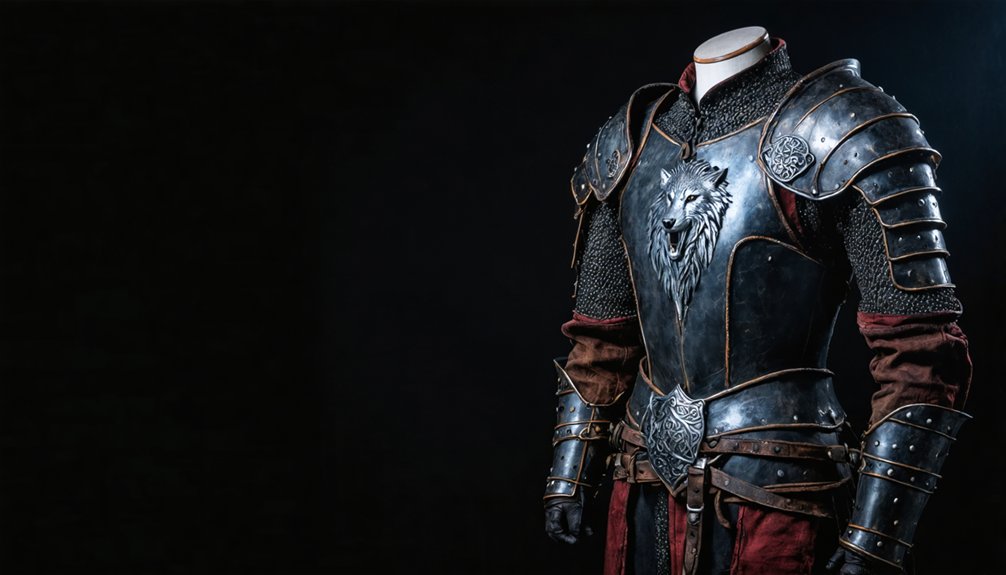
You can build a screen-accurate Witcher armor replica using high-density EVA foam as your structural base, rubber trim for clean edges, and 3D-printed components fabricated with an Ender-3 printer. Shape the foam using a heat gun, secure straps with velcro reinforced by super glue, and finish with detailed painting for that battle-worn look. The full build takes roughly four months, and there’s plenty of technique and precision involved that’ll sharpen your approach considerably.
Key Takeaways
- High-density EVA foam is the primary structural material, shaped using a heat gun to contour panels accurately against the body.
- Rubber trim from hardware store seals creates clean, screen-accurate edges when bonded with fabric adhesive along armor panels.
- Velcro strips reinforced with super glue secure shoulder pieces and straps, allowing adjustability throughout the build.
- Sword components are designed in Fusion 360 and fabricated with an Ender-3 3D printer for precision compatibility with foam armor.
- A complete Witcher armor cosplay build takes approximately four months, covering modeling, heat-forming, riveting, stitching, and painting phases.
What Materials Work Best for Witcher Armor Cosplay?
When building Witcher armor for cosplay, high-density EVA foam stands out as your best primary material, offering the structural integrity needed for detailed texturing while remaining lightweight enough for extended wear. It replicates the layered complexity of medieval armor without sacrificing comfort during long convention hours.
Pair your foam with rubber trim sourced from hardware store seal products to achieve clean, uniform edges across every panel. This combination elevates your fantasy cosplay from amateur craft to screen-accurate replica.
Rubber trim from hardware store seals transforms raw foam edges into polished, screen-accurate Witcher armor panels.
You’ll also want velcro strips backed with super glue for securing shoulder pieces and straps, ensuring adjustability without compromising structural hold.
For sword components, 3D modeling software like Fusion 360 paired with an Ender-3 printer delivers precision-fabricated parts that integrate seamlessly with your handcrafted foam armor.
How Long Does a Full Witcher Cosplay Build Actually Take?
Building a full Witcher cosplay like Geralt’s iconic armor set demands roughly four months of committed, hands-on labor from initial design to final assembly. You’ll move through distinct phases: 3D modeling sword components in Fusion 360, heat-forming EVA foam panels, rivet work, stitching, and painting.
Historical accuracy drives every decision, forcing you to reference screen materials repeatedly before cutting a single piece.
Each stage compounds complexity — shoulder molding alone requires precise contouring so pieces rest naturally against your chest without shifting.
You’ll also factor in costume maintenance planning during construction, building adjustable velcro attachment points that allow quick repairs between convention appearances.
Rushing any phase compromises structural integrity and visual fidelity. Treat the timeline as non-negotiable, and your finished armor will authentically reflect Geralt’s legendary aesthetic.
What Tools Do You Need Before You Start Building?
Before you cut a single foam panel, you’ll need to stock your workspace with tools that handle four distinct job categories: shaping, fastening, fabricating, and finishing. Each category demands specific equipment that directly impacts crafting foam details with precision and consistency.
Before the first cut, your workspace must be stocked with tools built for four distinct jobs.
- Heat gun – contours high-density EVA foam into custom body shapes
- Hole punch – creates clean fastening points across torso sections
- Rivet equipment – locks structural elements before stitching begins
- 3D printer (Ender-3) – fabricates sword components modeled in Fusion 360
- Fine-tip applicators – support painting and finishing techniques across detailed surface areas
You’ll also need super glue, velcro strips, and mock leather stitching tools. Without this complete toolkit assembled beforehand, your build timeline extends unnecessarily and your results lose technical accuracy.
How Do You Shape and Contour Foam for Geralt’s Armor?
Shaping EVA foam into Geralt’s distinctive armor profile demands a disciplined sequence: you’ll start with the front panels, apply concentrated heat from your heat gun until the foam becomes pliable, then press and hold each section against your body to establish a base contour. Your foam cutting precision directly determines how cleanly edges meet during this thermal forming stage.
Once front panels cool and hold their shape, migrate to the sides, continuing your contour shaping workflow around the torso’s natural curves. Each transition zone requires short, controlled heat bursts rather than prolonged exposure, preventing warping or surface degradation.
Shoulder pieces demand particular attention — you’ll need to mold them so they rest flush against the chest rather than jutting outward awkwardly. Patience during each cooling cycle locks in accurate, screen-faithful geometry.
How to Assemble Straps and Trim on Witcher Cosplay Armor
Once your contoured panels have cooled and locked in their final geometry, strap and trim assembly becomes your next mechanical challenge — and it’s where the armor shifts from shaped foam into something genuinely wearable.
Fabric adhesives bond rubber trim along exposed edges before stitching synchronizes each piece uniformly. Decorative rivets anchor structural zones prior to final stitching phases, maintaining integrity under movement stress.
Fabric adhesives seal every raw edge before decorative stitching unifies each panel into polished, movement-ready armor.
- Punch fastening holes across all three torso sections before attaching straps
- Reinforce velcro strips using super glue on shoulder and back strap undersides
- Apply fabric adhesives to trim edges for clean, screen-accurate uniformity
- Set decorative rivets before mock leather stitching begins
- Secure lower back strap sections with velcro for adjustable, stable fit
This sequence transforms individual panels into cohesive, wearable armor.
Frequently Asked Questions
How Do You Paint EVA Foam to Look Like Geralt’s Armor?
Paint EVA foam in small sections, using layered acrylic techniques for depth. You’ll want to master foam preparation first—seal it with Plasti-Dip, then apply dark base coats, dry-brushing lighter tones to nail Geralt’s battle-worn aesthetic.
Can Beginners Successfully Build Witcher Armor Without Prior Cosplay Experience?
You can absolutely build Witcher armor as a beginner! Start with EVA foam basics, master heat-gun contouring, then refine your costume fitting and cosplay makeup skills progressively—each stage you’ll innovate, building confidence through hands-on experimentation.
How Much Does Building a Full Witcher Cosplay Set Cost?
Coincidentally, your budget mirrors your ambition: you’ll spend $150–$400 on high-density EVA foam, 3D printing filament, rivets, and paint. Smart costume customization choices directly impact armor durability, stretching or compressing costs considerably.
Where Can You Find Accurate Reference Images for Geralt’s Netflix Armor?
You’ll find accurate medieval armor and fantasy cosplay references through Netflix’s official promotional stills, the show’s behind-the-scenes content, high-resolution screencaps, Witcher fan wikis, and cosplay community forums showcasing detailed breakdowns of Geralt’s iconic design.
How Do You Store and Transport Finished Witcher Armor Safely?
Store your finished pieces in rigid, foam-lined containers for armor maintenance and transportation safety. You’ll want to wrap each EVA section individually, preventing surface contact, while securing straps loosely to avoid compression deforming your carefully heat-formed contours.
References
- https://www.youtube.com/watch?v=ZmFmPCvgNhs
- https://www.reddit.com/r/witcher/comments/uvw24g/i_made_a_cosplay_of_older_ciri_wearing_geralts/
- https://gamerant.com/witcher-geralt-of-rivia-outfit-cosplay/