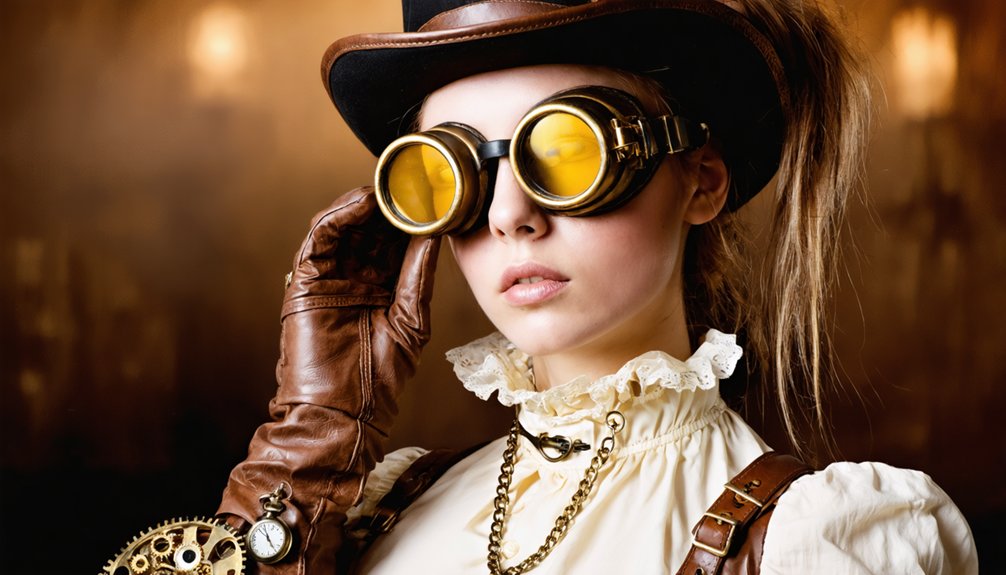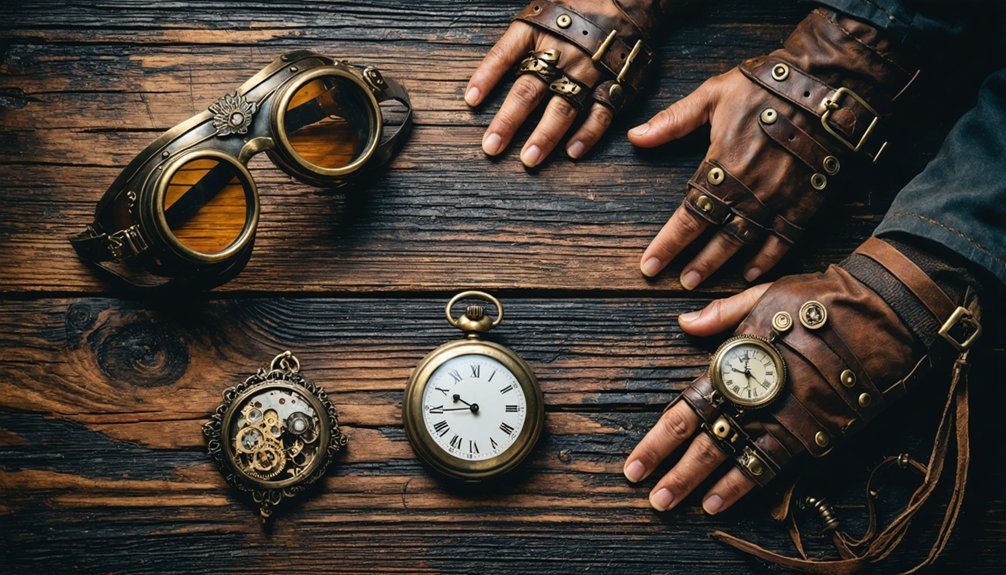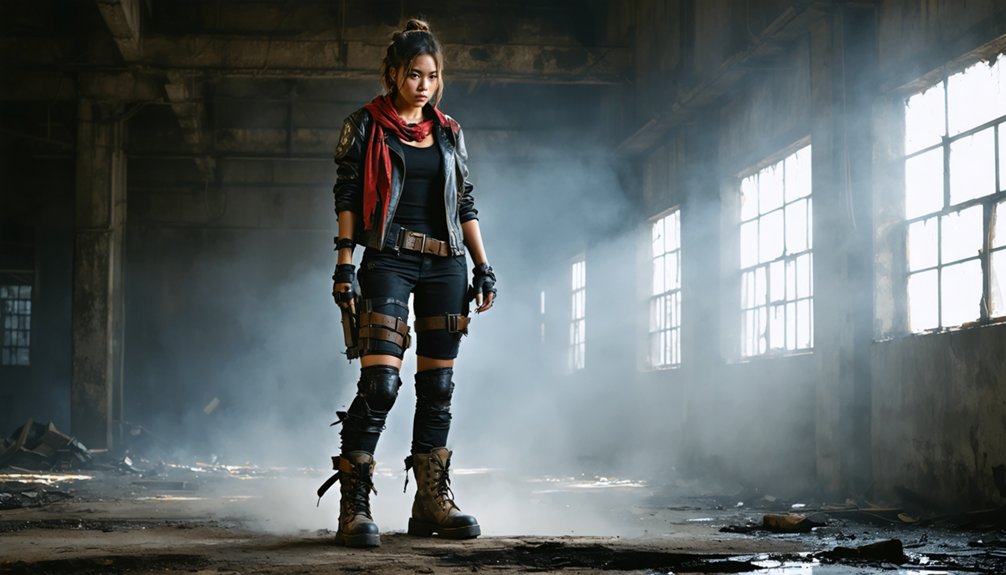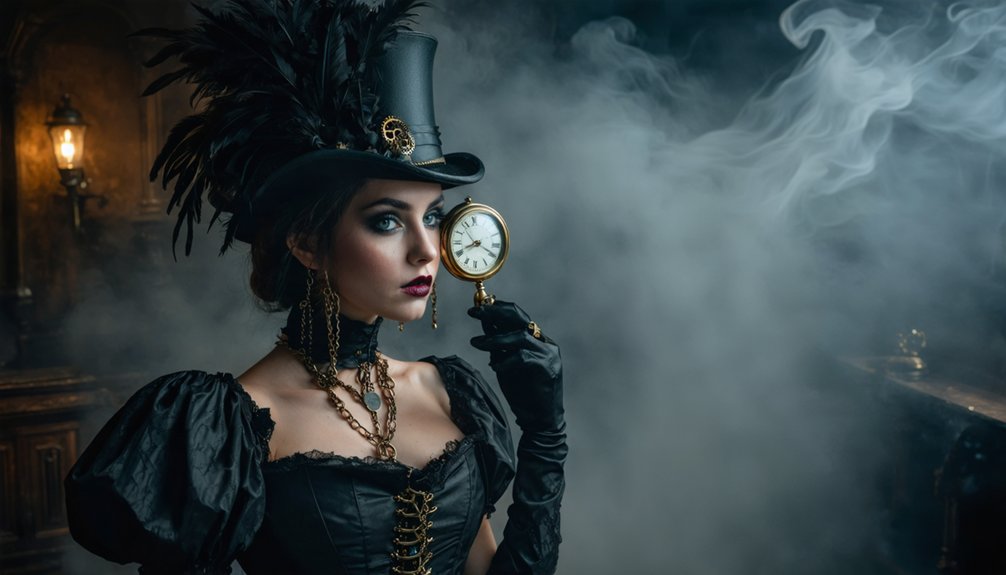
For steampunk, you’ll want structured Victorian silhouettes—corsets, tailcoats, layered skirts—built from leather, brass, and canvas, then weathered with sanding, staining, and dry-brushed metallic finishes. Gothic cosplay demands crushed velvet, distressed lace, asymmetrical cuts, and deep jewel tones like oxblood and midnight blue. Both styles rely on mechanical accessories, visible gears, riveted straps, and deliberate imperfections that suggest wear and conflict. Keep exploring to uncover every technique that separates an ordinary costume from an unforgettable character.
Key Takeaways
- Steampunk and gothic cosplay rely on Victorian silhouettes like corsets, tailcoats, and layered skirts with asymmetrical hemlines and decorative rivets or gear motifs.
- Key materials include leather, velvet, lace, brass, and canvas, combined through layering to create tactile contrast and visual depth.
- Weathering techniques—sanding, staining, dry-brushing metallic paints—simulate age and wear, adding authenticity to costumes and props.
- Accessories like goggles, pocket watches, riveted harnesses, and gear-embossed buckles reinforce the mechanical or gothic identity of each character.
- Color palettes feature deep browns, oxblood, midnight blue, and sepia tones, with jewel tones used sparingly as rich accents.
How Steampunk and Gothic Cosplay Differ in Construction
While both steampunk and gothic cosplay draw from Victorian-era foundations, they diverge sharply in construction philosophy and material execution.
Steampunk demands that you integrate industrial textures — leather, brass, canvas — into mechanically cohesive builds where every prop appears functional. You’re engineering a narrative through visible gears, riveted seams, and weathered finishes.
Gothic construction, however, prioritizes emotional atmosphere over mechanical logic. You’ll favor asymmetrical cuts, distressed fabrics, and dark jewel tones that deliberately subvert the precision of Victorian fashion rather than celebrate it.
Steampunk rewards technical problem-solving — scratch-built gadgets, repurposed hardware, layered earth tones.
Gothic rewards expressive disruption — chains, theatrical makeup, structured decay.
Understanding this distinction lets you make deliberate material choices that sharpen your costume’s identity rather than blend both styles into visual noise.
Victorian Garments That Form the Steampunk Silhouette
When you build a steampunk silhouette, you anchor it around two structural workhorses: the corset and the tailcoat. You’ll use a boned corset or structured bodice to cinch the waist and create that signature Victorian hourglass form.
While a tailcoat or frock coat in wool or canvas establishes your outer architectural layer. Layered skirts with gear-accented trim or asymmetrical hemlines complete the foundation, giving your costume both historical credibility and mechanical personality.
Corsets and Structured Bodices
Corsets and structured bodices serve as the architectural backbone of any steampunk silhouette, pulling together the Victorian foundation that defines the entire aesthetic. You’ll want to select canvas or leather construction over synthetic alternatives, as these materials hold shape while aging authentically.
Steel boning channels create the dramatic waist compression that distinguishes genuine Victorian structure from casual approximation.
Layer your bodice over a fitted blouse, then integrate steampunk jewelry—brass gear pendants, copper rivets, or clockwork brooches—directly onto the garment’s surface for mechanical cohesion.
Pairing structured bodices with bold Gothic makeup, think deep oxblood lips and smoky, kohl-rimmed eyes, amplifies the dystopian character persona convincingly.
Distress your corset’s edges deliberately, adding worn patina details that signal functional use rather than theatrical costume.
Tailcoats and Layered Skirts
Tailcoats and layered skirts form the primary outer architecture of the steampunk silhouette, so selecting the right base materials determines whether your costume reads as authentically Victorian or falls flat. Prioritize wool, canvas, or structured twill when constructing tailcoats, as these fabric textures carry weight and drape with the precision that Victorian fashion demanded.
Cut your tailcoat with angular rear panels and fitted shoulders to maintain structural authority.
For layered skirts, build depth by stacking contrasting fabric textures — combine heavy brocade underskirts with distressed canvas or leather overlays. Incorporate functional-looking decorative elements like buckled straps, gear appliqués, or asymmetrical hemlines to push the silhouette beyond period reproduction into steampunk innovation.
Weathering both garments with sandpaper and tea staining unifies your layers into one cohesive, mechanically inspired ensemble.
Industrial Materials That Define the Steampunk Look
When you’re building a steampunk costume, leather and canvas aren’t just material choices—they’re structural commitments that define every silhouette, strap, and reinforced panel you construct.
You’ll cut, rivet, and layer these fabrics to create garments that communicate industrial function over decorative excess.
Once assembled, you apply weathering techniques—sanding edges, staining surfaces with tea or acrylic washes, and distressing stitching—to transform raw materials into components that look genuinely worn by a hardworking mechanical engineer.
Leather and Canvas Dominance
Leather and canvas aren’t just material choices in steampunk cosplay—they’re the backbone of the entire industrial aesthetic. Both materials carry structural integrity while honoring Victorian fashion’s demand for tailored, purposeful construction.
You’ll want to select full-grain leather for corsets, holsters, and belts, letting the material’s natural texture communicate age and utility. Canvas works brilliantly for coats and waistcoats, accepting weathering techniques that simulate decades of workshop grime.
Where these materials truly shine is through mechanical detailing—riveted seams, brass-grommet reinforcements, and stitched panel overlays that suggest functional engineering rather than decoration. You’re not just wearing fabric; you’re wearing a working apparatus.
Layer leather over canvas strategically to create dimensional contrast, letting each material serve a distinct structural role within your overall silhouette.
Weathering for Authentic Texture
Weathering transforms pristine materials into convincing relics of industrial labor, and you’ll apply it through a deliberate sequence of mechanical and chemical techniques. Sand edges aggressively, burn leather selectively, and stain fabric layering with diluted acrylic washes to simulate decades of mechanical exposure.
Victorian embroidery benefits from deliberate fraying and ink-darkened thread, pushing ornate stitching toward functional grit.
- Dry-brush metallic paint across raised leather surfaces to simulate oxidized wear patterns
- Apply tea or coffee staining directly onto canvas panels for authentic sepia discoloration
- Scratch copper accents with steel wool to reveal convincing patina beneath polished surfaces
- Distress seams and buttonholes using sandpaper and controlled heat application
Each technique compounds authenticity, ensuring your costume reads as lived-in machinery rather than theatrical novelty.
How to Weather and Distress Cosplay Materials for Realism
Achieving that lived-in, authentic steampunk aesthetic requires deliberate distressing techniques applied across leather, canvas, and metal components.
You’ll sand leather edges with coarse-grit paper to simulate decades of wear, then apply dark brown shoe polish into creased areas to mimic aged patina reminiscent of vintage machinery.
Fabric staining with diluted coffee, tea, or tobacco-colored dye creates convincing oxidation patterns across canvas waistcoats and tailcoats.
For metallic accessories, dry-brush copper and black acrylic layers, allowing undercoats to peek through strategically.
You can use wire brushes to scratch brass finishes, then seal everything with matte varnish to lock in the weathered quality.
Focus distressing on high-contact zones — collar edges, cuffs, and buckle straps — where authentic wear naturally concentrates.
Gothic Colors and Textures That Deepen the Aesthetic
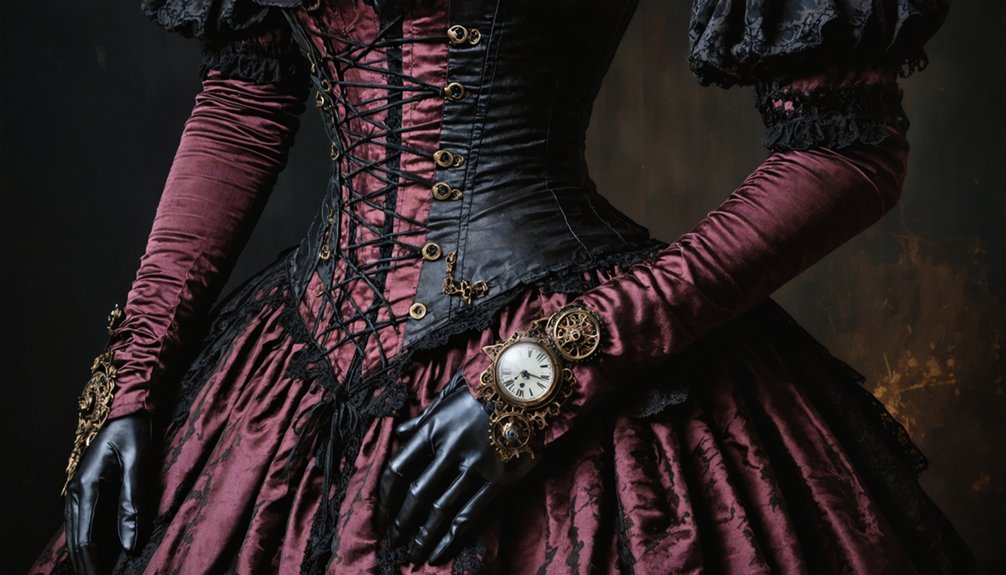
Where Victorian refinement ends, gothic depth begins — and your color choices form the foundation of that shift. You’ll anchor your palette in deep browns, rich sepias, and jewel tones that reference Victorian fashion while pushing darker boundaries.
Fabric manipulation — crushing velvet, distressing lace, layering asymmetrical cuts — transforms flat surfaces into dimensional storytelling.
- Combine velvet and weathered leather to create immediate tactile contrast
- Layer jewel tones like oxblood or midnight blue beneath sepia outer garments
- Introduce asymmetrical tears or raw-edged hems to disrupt Victorian tailoring precision
- Use muted metallic threading through lace panels to echo mechanical motifs
These deliberate choices signal rebellion without sacrificing structural integrity. Your textures must feel purposeful — every layer communicating character history rather than random aesthetic accumulation.
Gothic Styling Elements That Add Edge to Any Build
When you build a gothic-edged costume, you anchor the entire look in a dark, muted palette of deep browns, sepias, and rich jewel tones that contrast sharply against the precision of Victorian tailoring.
You then introduce asymmetrical cuts and distressed, ripped textures to break the structured silhouette and signal a deliberately rebellious, dystopian character identity.
Finally, you layer chains, riveted leather straps, and functional holsters across the body to inject a gritty industrial weight that transforms a clean Victorian build into something mechanically threatening and visually complex.
Dark Color Palette Choices
Dark color palettes form the backbone of gothic steampunk styling, and you’ll find that deep browns, rich sepias, and jewel tones like burgundy or midnight blue do far more heavy lifting than black alone. These tones mirror both Victorian architecture’s weathered stone facades and the soot-stained surfaces of steam machinery, creating visual authenticity that pure black simply can’t achieve.
Layer your palette strategically using these key principles:
- Limit selections to 2-3 earth tones to keep mechanical details visually dominant
- Introduce jewel tones as accent layers against neutral base garments
- Apply weathering techniques to unify mismatched fabric tones cohesively
- Contrast matte textures against metallic copper or brass finishes for dimensional depth
This disciplined approach transforms color itself into a functional design tool.
Asymmetrical Cuts And Textures
Color sets the mood, but asymmetrical cuts and deliberately distressed textures inject the rebellious edge that separates gothic steampunk from its more refined Victorian counterpart. You’ll want to deliberately subvert traditional Victorian fashion symmetry by incorporating uneven hemlines, diagonal seams, and intentionally torn fabric edges. These breaks in precision signal a character who operates outside polished society.
Fabric layering becomes your primary technical tool here. Stack leather over lace, velvet beneath frayed canvas, or weathered cotton against structured wool. Each layer should contrast the one beneath it in texture, weight, or finish.
Strategic distressing—achieved through sandpaper, heat, or chemical treatments—adds authenticity that new materials can’t replicate. You’re fundamentally constructing a visual history onto the costume itself, communicating wear, conflict, and mechanical ingenuity simultaneously through every deliberate imperfection.
Chains And Leather Accents
Chains and leather straps transform a gothic steampunk build from visually interesting to structurally commanding, and you’ll want to treat them as load-bearing aesthetic elements rather than afterthoughts. They anchor Gothic motifs while simultaneously framing your Steampunk gadgets within a gritty, industrial context.
Layer these components with intentional precision:
- Cross-body leather harnesses create anchor points for mounting functional-looking gadgets and holsters
- Brass-linked chains connect structural pieces while reinforcing the mechanical aesthetic through metallic continuity
- Riveted leather straps wrapped around forearms or thighs suggest utilitarian purpose beyond decoration
- Chain-draped belts with gear-embossed buckles unify the lower silhouette while adding rhythmic movement
Position each strap and chain so it follows the body’s natural lines, making your overall build appear engineered rather than assembled.
Goggles, Gloves, and Timepieces: Accessories That Complete the Look
When assembling a steampunk or gothic cosplay, three accessories carry more visual weight than nearly anything else: goggles, gloves, and timepieces. Each piece references the Industrial Revolution‘s obsession with mechanical precision and the ornamental complexity of Victorian architecture.
Mount repurposed welding goggles onto your top hat or forehead — brass fittings and tinted lenses signal both function and rank. Choose fingerless leather gloves to expose knuckle details while maintaining that gritty workshop aesthetic.
For timepieces, you’ve got two strong options: a pocket watch with an engraved brass case worn on a chain, or a wrist-mounted clockwork piece with exposed gears. Coordinate all three accessories within your 2-3 earth-tone palette.
Together, they transform a decent costume into a fully realized, mechanically authentic character build.
How Headwear Shapes Your Steampunk Character
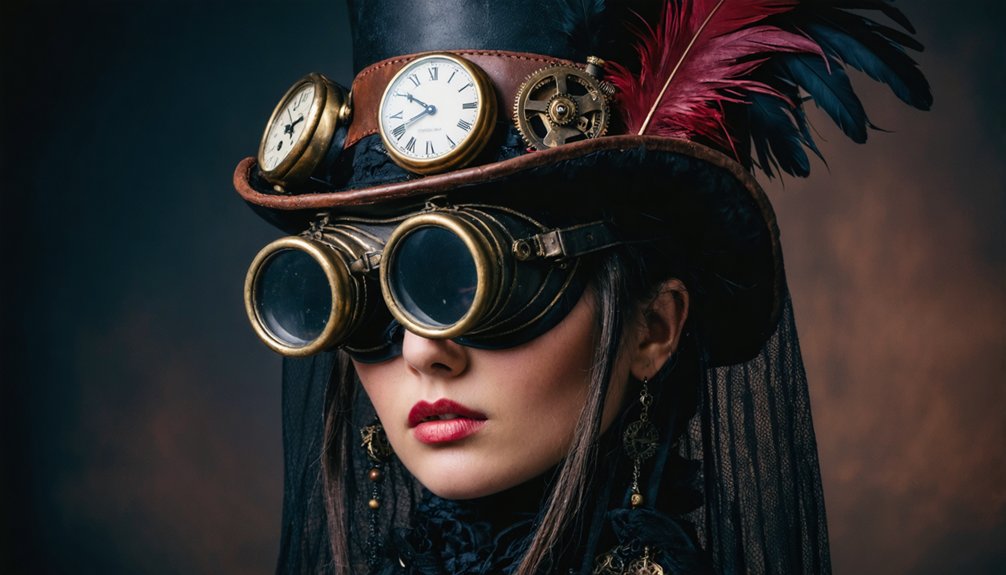
Headwear operates as the architectural crown of your steampunk build, and once you’ve locked in your goggles, gloves, and timepiece, it’s the hat that frames all three. Victorian fashion established headwear as a marker of social rank, and steampunk repurposes that accessory significance into character engineering. Your hat communicates profession, faction, and technical expertise instantly.
- Top hat: signals aristocratic inventor or airship commander status
- Bowler hat: grounds your character in working-class industrial identity
- Modified top hat with brass gearing: broadcasts mechanical innovation visually
- Leather aviator cap: establishes pilot or field engineer credibility
Each silhouette tells a different story before you speak a word. Choose deliberately, modify strategically, and let your headwear do the narrative heavy lifting your costume demands.
Mechanical Props That Make Your Costume Feel Authentic
Once your silhouette is locked in, mechanical props shift your costume from decorative dress-up into functional character engineering. Choose props that suggest operational purpose — ray guns with exposed pistons, navigational compasses, or inventor’s tools communicating deliberate mechanical intent.
Steam powered devices work best when they incorporate visible pressure gauges, copper tubing, and articulated components that imply actual function. You’re not carrying decoration; you’re carrying engineered history.
Mechanical gadgets demand construction precision. Scratch-build using PVC, leather straps, and brass hardware to create pieces that feel mission-critical rather than theatrical. Wrist-mounted contraptions, gear-driven holsters, and piston-based canisters all reinforce your character’s technical identity.
Prioritize props with tactile complexity — layered components, weighted materials, and weathered finishes. When someone examines your gadget and genuinely questions whether it works, you’ve achieved authentic steampunk engineering.
Budget-Friendly Ways to Build Your First Steampunk Costume
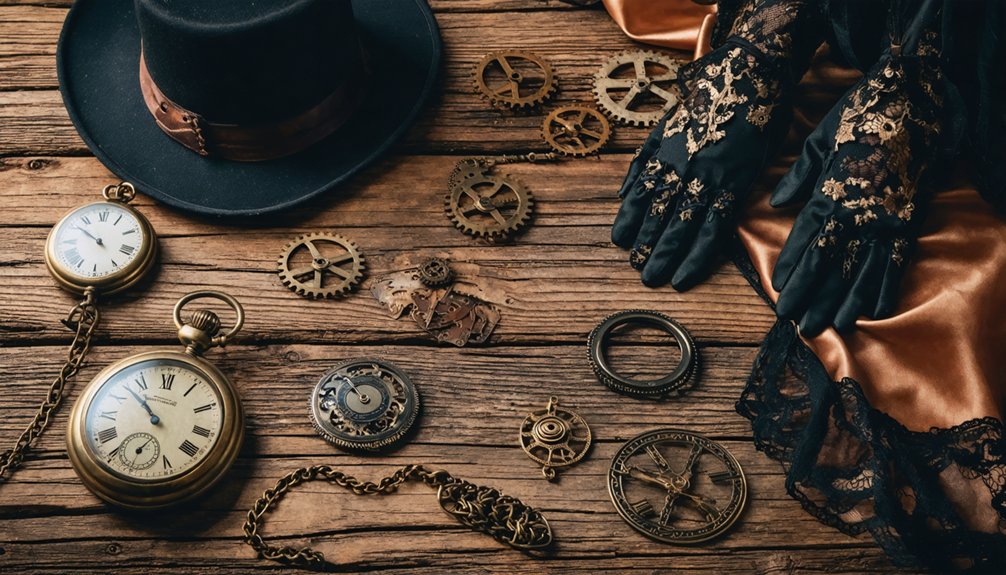
Building your first steampunk costume on a tight budget forces creative ingenuity that often produces more authentic results than buying pre-made pieces. Thrift stores, hardware suppliers, and craft outlets become your personal fabrication workshop, echoing the resourceful spirit embedded within Victorian literature’s self-made inventors.
Tight budgets breed ingenuity, transforming thrift store discoveries into costume pieces no catalog could authentically replicate.
- Repurpose welding goggles using brass spray paint and leather scraps for authentic eyewear
- Source waistcoats from secondhand shops, then distress them with sandpaper and tea staining
- Craft gear-themed jewelry using PVC pipe fittings and copper-toned acrylic paint
- Build navigational props from cardboard tubes reinforced with hot glue and metallic finishes
Steampunk architecture itself demonstrates that layering humble materials creates extraordinary complexity. Apply that same philosophy to your costume, combining leather strips, canvas remnants, and repurposed clockwork components strategically.
Frequently Asked Questions
Can Steampunk Cosplay Be Worn to Non-Convention Everyday Events?
Ironically, you’d blend right in wearing Steampunk fashion daily — nobody notices gears anymore. You can absolutely integrate Everyday wear with brass accents, tailored waistcoats, and subtle goggles, transforming ordinary outings into extraordinary mechanical showcases effortlessly.
Are There Steampunk Cosplay Communities or Clubs Available for Beginners?
You’ll find vibrant steampunk craftsmanship communities online and locally where beginners actively share Gothic accessories tutorials, construction techniques, and Victorian design principles. Platforms like Reddit, Discord, and Meetup connect you with innovative makers refining their mechanical artistry.
How Do Steampunk and Gothic Cosplay Differ Across Various Global Cultures?
You’ll find cultural influences reshape steampunk and gothic cosplay dramatically worldwide—Japan blends manga aesthetics, India incorporates sari fabrics, and Latin America infuses bold colors through regional adaptations, letting you innovate beyond traditional Victorian and industrial Western frameworks.
What Historical Figures Inspire Popular Steampunk and Gothic Cosplay Characters?
You’ll draw inspiration from figures like Nikola Tesla, Ada Lovelace, and Queen Victoria, whose historical fashion and artistic influences fuel iconic steampunk and gothic characters blending scientific innovation with dark, mechanically-driven Victorian aesthetics.
Do Steampunk Costumes Require Special Storage or Maintenance Between Events?
Yes, your steampunk costume requires dedicated costume preservation strategies. Store leather and brass components in climate-controlled, padded storage solutions, avoiding humidity. You’ll want to condition leather regularly and polish metallic finishes to maintain authentic, lived-in craftsmanship between events.
References
- https://www.reddit.com/r/steampunk/comments/16n6k0p/for_you_what_are_the_main_elements_of_steampunk/
- https://www.youtube.com/watch?v=ZP_bApTo03U
- https://cosplaycurves.com/pages/steampunk-cosplay-guide
- https://steamwroughttimepieces.com/the-ultimate-guide-to-steampunk-cosplay-costumes/
- https://arisarcher.com/pages/steampunk-cosplay-tips
- https://www.crazecosplay.com/blogs/questions/what-is-steampunk-cosplay
- https://steampunktribune.com/what-is-a-steampunk-costume-heres-everything-you-need-to-know/