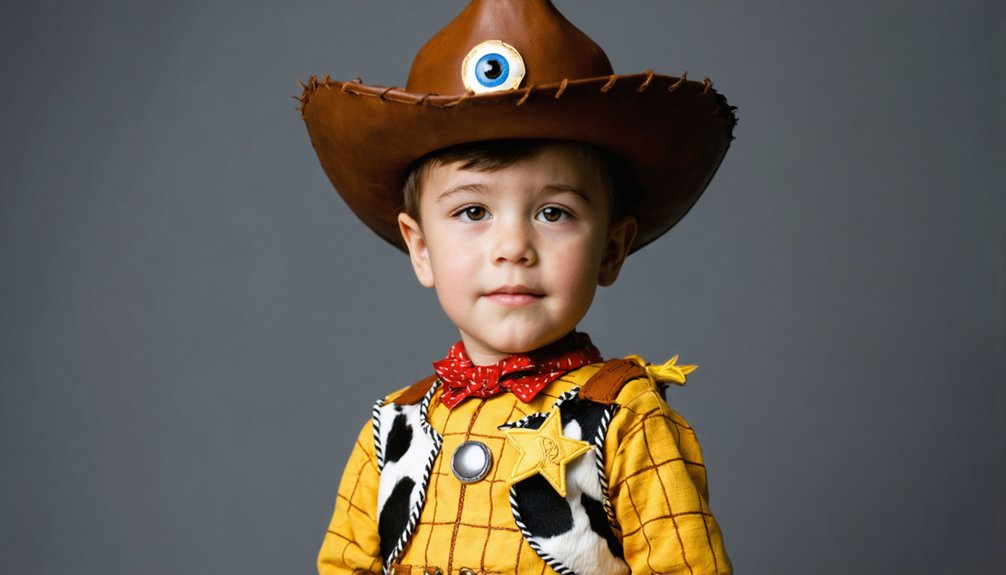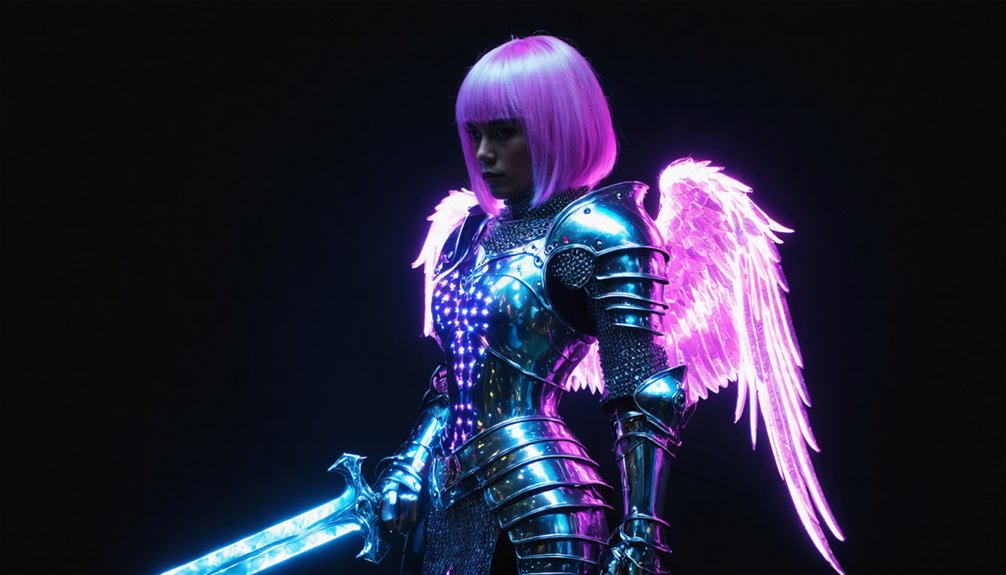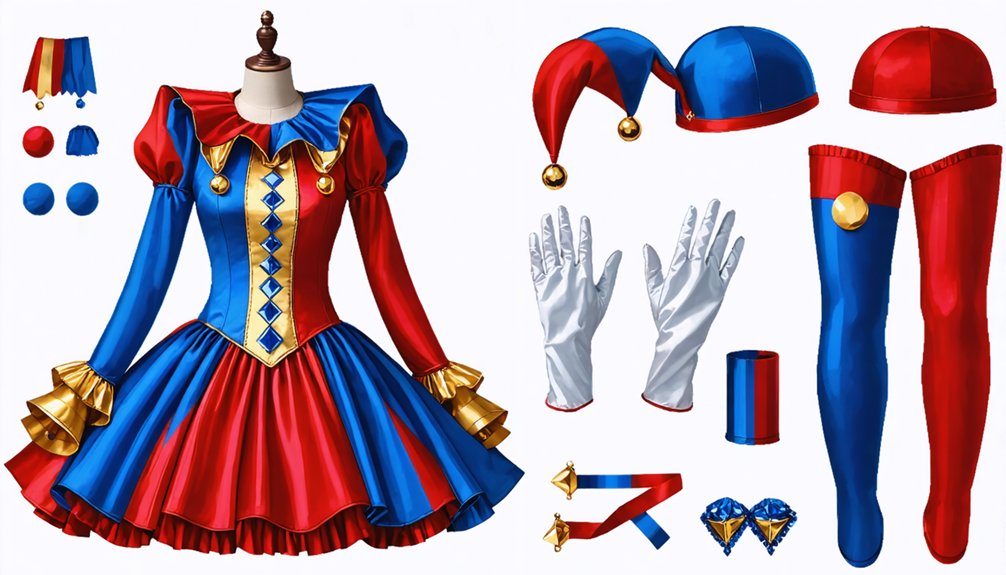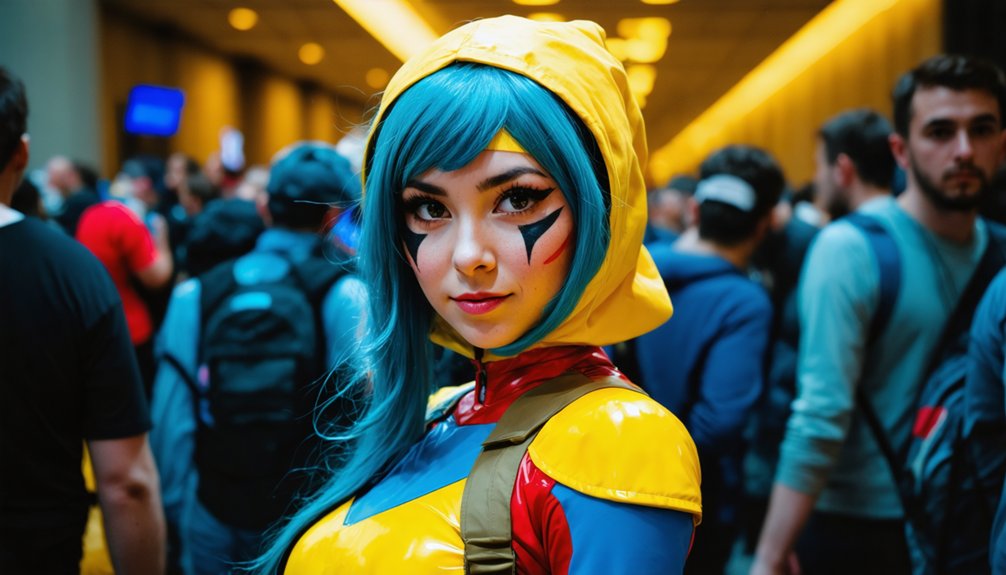
Nailing cartoon character cosplay starts with choosing a character you’re passionate about, then obsessively studying reference images from every angle. You’ll need to match fabrics, colors, and silhouette with precision before tackling construction, fit, and durability. Coordinate your wig and makeup to mirror the character’s graphic features, practice their signature poses, and pack an emergency repair kit for the event. Master these fundamentals and the finer details that separate good cosplay from iconic cosplay become much clearer.
Key Takeaways
- Choose a character you’re passionate about; deep emotional investment drives accuracy in fabric, color, and costume detail decisions.
- Gather multi-angle reference images from official sources to identify definitive design features and avoid inaccurate fan interpretations.
- Prioritize silhouette accuracy first, then layer in signature details like insignia, trim, and accessories for instant recognition.
- Match fabrics carefully—matte materials suit hand-drawn aesthetics, while glossy characters require vinyl or lamé for accuracy.
- Pack an emergency kit with needles, thread, fabric glue, and safety pins to handle costume failures at events.
Pick a Cartoon Character You Genuinely Love
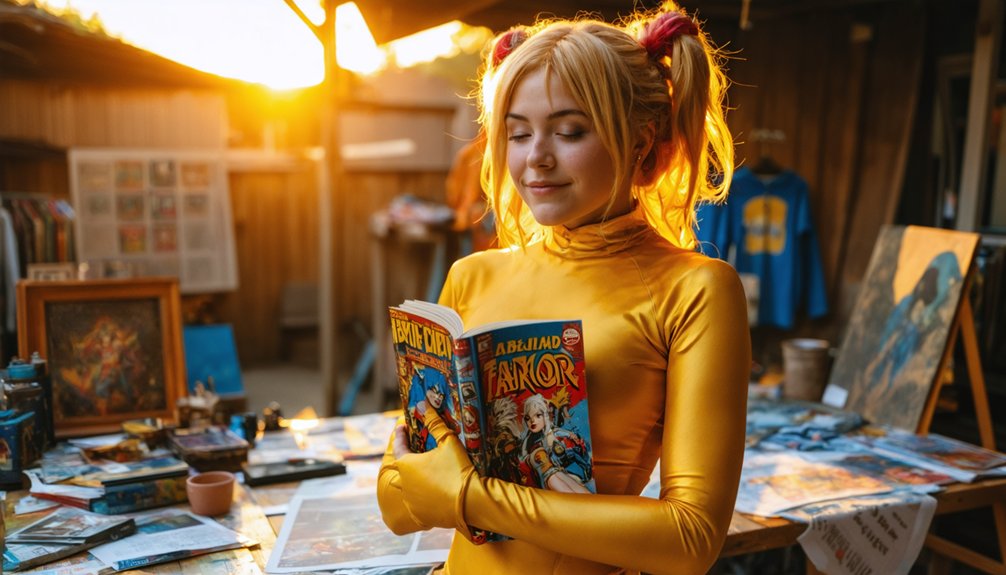
Choosing a cartoon character you genuinely love is the single most important decision in the entire cosplay process, because passion directly sustains your focus through long build timelines, repeated fitting sessions, and inevitable setbacks.
Passion for your chosen character is the foundation that carries every cosplay build from start to finish.
When you’re emotionally invested, you’ll research the character backstory thoroughly, catching costume evolution details and design inconsistencies that casual builders overlook.
Deep familiarity also sharpens your application of color theory. You’ll notice whether a character’s palette uses complementary contrasts, muted analogous tones, or high-saturation primaries, and you’ll replicate those choices with greater precision across fabric selection, wig dyeing, and makeup planning.
Strong personal connection transforms technical execution from obligation into instinct, producing builds that communicate authentic character identity rather than surface-level imitation.
Study Reference Images for Cartoon Cosplay Accuracy
Once you’ve locked in your character, pull official references from source material like show screencaps, production art, and licensed merchandise to build a complete image pack.
Study your character from front, back, and three-quarter angles to catch design elements that a single illustration won’t reveal.
Prioritize signature details like insignia placement, color blocking, and accessory proportions, since these are the markers that make your cosplay instantly recognizable.
Gather Official Character References
Building an accurate cartoon cosplay starts with collecting reference images from as many official sources as you can find—comic panels, animated episodes, game cutscenes, and promotional artwork all capture different angles, lighting conditions, and costume variations that a single screenshot will miss.
Cross-referencing these sources helps you identify the definitive design rather than accidentally basing your build on fan interpretations, which frequently drift from official specifications.
Pull stills from multiple episodes to track costume evolution, since character designs often shift between seasons. Check promotional materials released alongside voice acting announcements, as these frequently include high-resolution turnaround sheets that show back and side profiles rarely visible on screen.
Organize your references by category—color, texture, silhouette, and accessories—so every construction decision connects directly to verified source material.
Analyze Multiple Visual Angles
Cartoon characters are rarely designed with a single viewing angle in mind, so relying on front-facing screenshots will leave you guessing about back panels, collar depths, sleeve constructions, and attachment points that only appear in profile or three-quarter shots. Pull episode stills, turnaround sheets, and promotional renders to build a complete 360-degree picture.
Apply color theory deliberately—lighting shifts between scenes alter perceived hues, so identify the character’s true palette from neutral-lit reference frames rather than action sequences.
Examine fabric texture cues embedded in the animation style; cross-hatching, gradient shading, and highlight placement often signal whether a material reads as matte cotton, structured canvas, or sheer synthetic.
Cross-reference every angle before cutting a single pattern piece to eliminate costly construction errors later.
Capture Signature Design Details
Signature details separate a recognizable cosplay from a generic approximation, so you’ll want to isolate and catalog every recurring motif before touching your materials. Cross-reference official artwork, animation frames, and promotional renders to pinpoint iconic costume elements — specific collar shapes, insignia placement, trim widths, and hardware finishes that define the character’s visual identity.
Signature accessories carry equal weight; a miscolored brooch or incorrectly scaled weapon immediately weakens screen accuracy. Build a detail sheet organized by category: color codes, material textures, attachment points, and scale proportions.
Flag which elements appear consistently across episodes versus which vary by scene. Prioritize high-visibility details that read clearly in photographs, since those drive instant recognition.
Treat each cataloged motif as a non-negotiable construction target rather than an optional finishing touch.
Set Your Cartoon Cosplay Budget Before You Shop
Before you buy a single yard of fabric or order a wig, set a firm budget that accounts for every cost category in your build. Break it into line items: fabric texture selection, dyes, interfacing, wig, makeup, props, hardware, shipping, and contingency reserves.
Cartoon costumes demand precise costume color coordination, so allocate funds specifically for color-matching swatches, test dyes, and backup materials before committing to bulk yardage.
Assign spending caps per category, then prioritize visible, high-impact components first. If your budget tightens, scale down prop complexity before compromising fabric quality or color accuracy.
Track every purchase against your cap in real time. A disciplined pre-shop budget prevents cost overruns and keeps your build decisions strategic rather than reactive.
Build a Cartoon Cosplay Timeline With Contingency Time
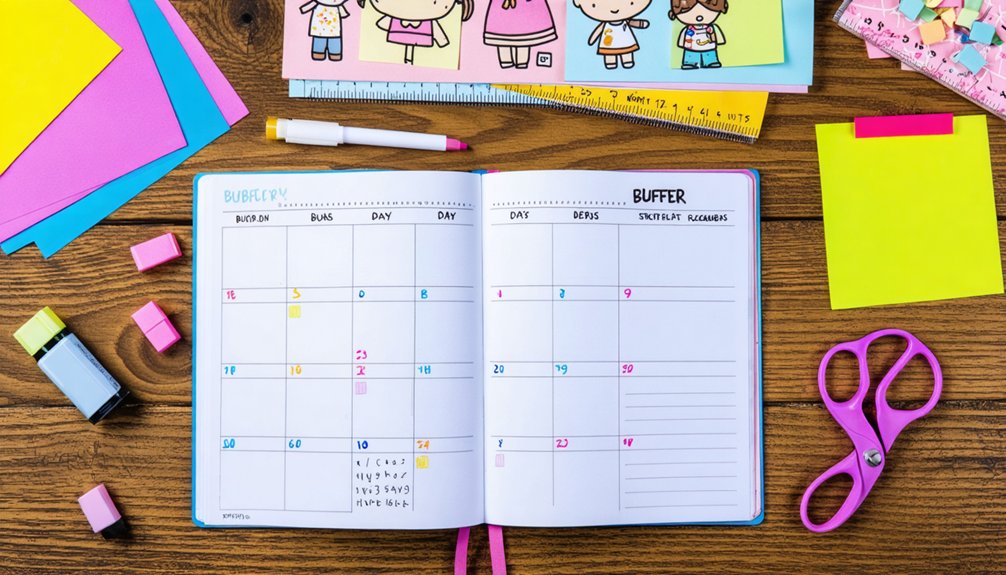
Once your budget’s locked, map your entire build as a staged timeline with discrete milestones: research and reference collection, material sourcing, pattern drafting, construction, assembly, wig styling, makeup testing, and a final dress rehearsal.
Assign firm deadlines to each phase, then add buffer time after every stage. Fabric selection delays are common—specialty materials, imported textiles, and dye lots often ship late. Color theory decisions also demand iteration time; testing pigment accuracy under convention lighting versus natural light frequently reveals mismatches requiring corrections.
Build contingency windows of at least one week per major phase. When unexpected revisions hit—and they will—you’ll absorb them without compressing your final fitting. A compressed fitting session is where critical errors become permanent mistakes.
Treat the timeline as a living document, updating it as each milestone completes.
Nail Your Cartoon Character’s Silhouette First
Silhouette is the first visual signal your audience decodes, so getting the overall shape right carries more weight than any individual costume detail. Silhouette symbolism operates before color, texture, or insignia register — viewers identify characters through shape recognition alone, even in low-light environments or crowded convention floors.
Start your build by isolating the character’s outline across multiple reference angles and stripping away surface details entirely. Identify dominant structural elements: exaggerated shoulders, oversized headwear, unusual proportions, or distinctive limb geometry. Replicate those structural anchors first using padding, boning, wire framing, or strategic layering.
Once your silhouette reads accurately from twenty feet away, fine details reinforce rather than guarantee the illusion. Prioritize structure over decoration at every construction phase to ensure instant, unmistakable character recognition.
Choose Fabrics That Match Your Character’s Visual Style
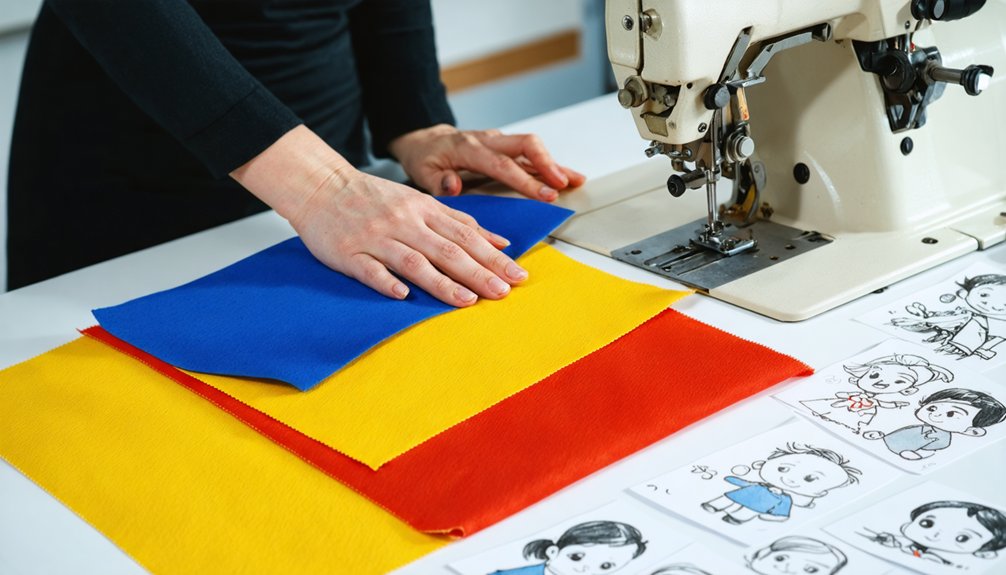
Fabric selection directly shapes how accurately your costume translates a cartoon character’s visual language into physical form. Cartoons use flat, high-contrast aesthetics that specific textiles replicate more convincingly than others. Matte fabrics like cotton twill or felt eliminate unwanted shine, preserving that hand-drawn flatness.
Conversely, characters designed with metallic or glossy surfaces demand spandex, vinyl, or lamé to communicate their visual identity correctly.
Prioritize color matching against your reference pack under multiple lighting conditions, since convention floors often use harsh artificial lighting that shifts hues dramatically. Test fabric swatches outdoors and indoors before committing.
Fabric durability becomes non-negotiable for long convention days involving repeated movement, sitting, and photography. Select materials that maintain structural integrity and color vibrancy under sustained wear, preventing premature degradation mid-event.
Construct Your Cartoon Cosplay for Fit and Durability
Building a cartoon cosplay that holds up through a full convention day starts with accurate seams, secure joins, and proper closures—construction fundamentals that determine whether your costume survives repeated wear or falls apart mid-event.
Solid seams, secure joins, and reliable closures are what separate a costume that lasts from one that doesn’t.
Prioritize seam reinforcement at high-stress points like armholes, crotch seams, and waistbands, where movement creates maximum tension. Double-stitching or serging raw edges substantially extends fabric durability, preventing fraying under repeated strain.
Line structured pieces whenever possible; lining adds integrity, comfort, and a professional interior finish.
Use support garments like corsets or crinolines when your character’s silhouette requires deliberate shaping.
Test every closure—zippers, snaps, hooks—under realistic movement conditions before the event.
Always conduct a full dress rehearsal to catch fit issues, structural weaknesses, and nonfunctional elements while you still have time to correct them.
Match Your Wig and Makeup to the Character’s Look
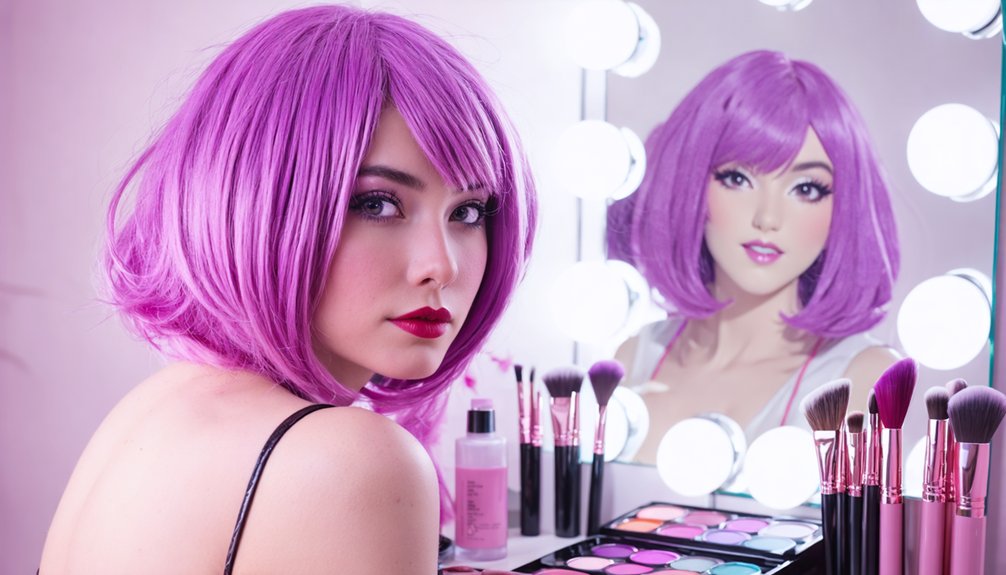
Once your costume’s construction is solid, wig styling and makeup take over as the primary tools for visual accuracy—and they deserve the same methodical planning you gave your seams and closures.
Cartoon characters often feature exaggerated proportions, bold color blocking, and stylized facial features that demand deliberate execution. Your wig styling should mirror the character’s silhouette precisely—tease, pin, and seal fibers with got2b or similar freeze sprays to hold angular or volumetric shapes.
Match fiber color to your reference pack under consistent lighting.
For makeup techniques, translate flat graphic features—thick outlines, saturated shadows, stylized blush placement—onto dimensional facial planes using face paint, setting spray, and layered pigments.
Practice both applications before the event to confirm color accuracy, adhesion, and wear time under convention conditions.
Practice Your Character’s Pose and Body Language
With your wig and makeup locked in, body language becomes the final layer that sells the character. Study your character’s posture, weight distribution, and movement patterns across multiple scenes or episodes. Identify their signature stance, then rehearse it until it feels automatic rather than forced.
Incorporate dynamic facial expressions that mirror the character’s emotional range, whether fierce, comedic, or stoic. Don’t overlook expressive hand gestures; these small details communicate personality instantly in photos and video. Practice in front of a mirror and record yourself to audit accuracy objectively.
Rehearse your full pose sequence in complete costume before the event. Confirm that armor, props, or layered garments don’t restrict your movement or distort your silhouette.
Precision in body language transforms a well-built costume into a fully realized character portrayal.
Pack a Cartoon Cosplay Emergency Kit for the Event
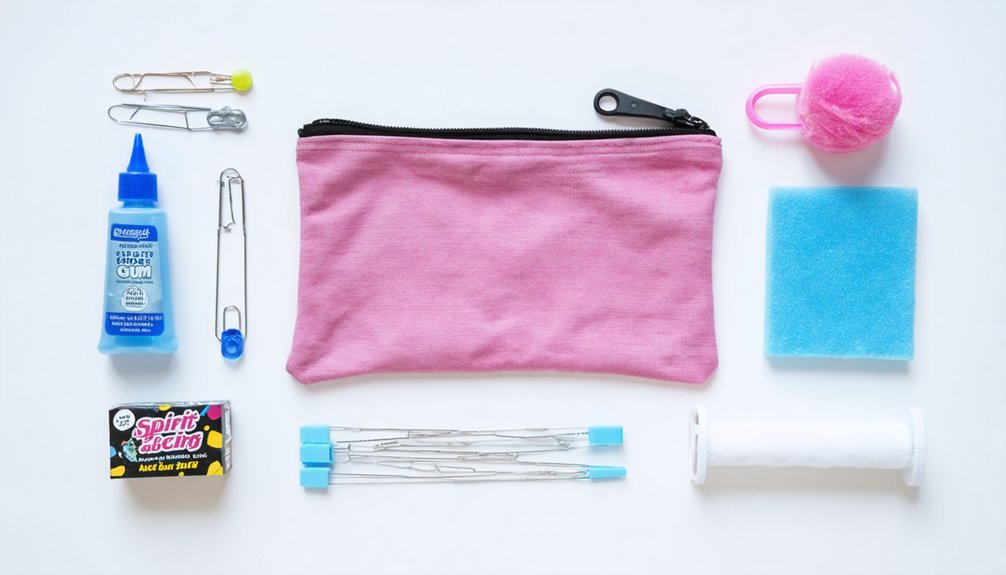
Your character reads through movement, but events test gear in ways rehearsal never fully predicts. Cosplay safety depends on preparation you’ve already packed before you walk through the venue doors.
Build a compact emergency kit using these targeted components:
- Fabric repair: needles, thread matched to your costume, safety pins, and hem tape
- Adhesives: fabric glue, spirit gum, and double-sided tape for wigs and appliances
- Makeup touch-ups: matched foundation, setting powder, and your character’s signature accent colors
- Hardware fixes: spare snaps, a seam ripper, and zip ties for structural components
- Comfort and safety: pain relievers, blister pads, and any personal medications
Event logistics move fast. Keeping this kit accessible in a small belt bag or backpack ensures you’re solving problems in minutes rather than losing hours.
Frequently Asked Questions
Can I Cosplay a Cartoon Character if I Have a Different Body Type?
Yes, you can! Body positivity powers perfectly personalized builds—embrace costume customization by adjusting patterns, silhouettes, and support garments to fit your unique frame, ensuring your character reads accurately while maximizing comfort and confident wearability throughout the event.
How Do I Handle Copyright Issues When Selling My Cartoon Cosplay?
You must avoid trademark infringement by securing proper licensing agreements before selling cartoon cosplay. Don’t replicate exact logos or proprietary designs commercially. Research fair use boundaries, consult an IP attorney, and position your work as transformative fan art.
What Are the Best Conventions Specifically Focused on Cartoon Character Cosplay?
You’ll find top cartoon cosplay opportunities at San Diego Comic-Con, Anime Expo, and MomoCon, where costume construction quality and character accuracy are celebrated, judged, and showcased among innovation-driven communities that push creative boundaries.
How Do I Cosplay a Cartoon Character Alongside a Group or Partner?
Even if schedules clash, you can nail group coordination by assigning each member specific characters early. Share reference packs, standardize costume matching through consistent color palettes, and rehearse signature poses together for unified, visually striking presentations.
Are There Online Communities Where Cartoon Cosplayers Share Feedback and Advice?
You’ll find thriving online forums like Reddit’s r/cosplay and specialized Social media groups on Facebook and Discord where cartoon cosplayers actively exchange construction feedback, technique breakdowns, material sourcing tips, and innovative design critiques.
References
- https://www.reddit.com/r/CosplayHelp/comments/1uv0glo/anyone_have_any_final_last_minute_tips_for/
- https://geekgals.co/2019/02/05/cosplay101-character/
- https://wigs101.com/10-tips-cosplay-beginners
- https://www.backstage.com/magazine/article/how-to-cosplay-76975/
- https://www.jay-japan.com/blogs/otaku-spot/cosplay-like-a-pro-7-expert-tricks-for-authentic-anime-character-portrayal
- https://starstruckpanda.com/achieving-authentic-comic-book-character-cosplay-success/
- https://www.pointpress.site/cosplay-confidence-tips-to-bring-characters-to-life-1
- https://realitypathing.com/steps-to-cosplay-your-favorite-anime-character-perfectly/