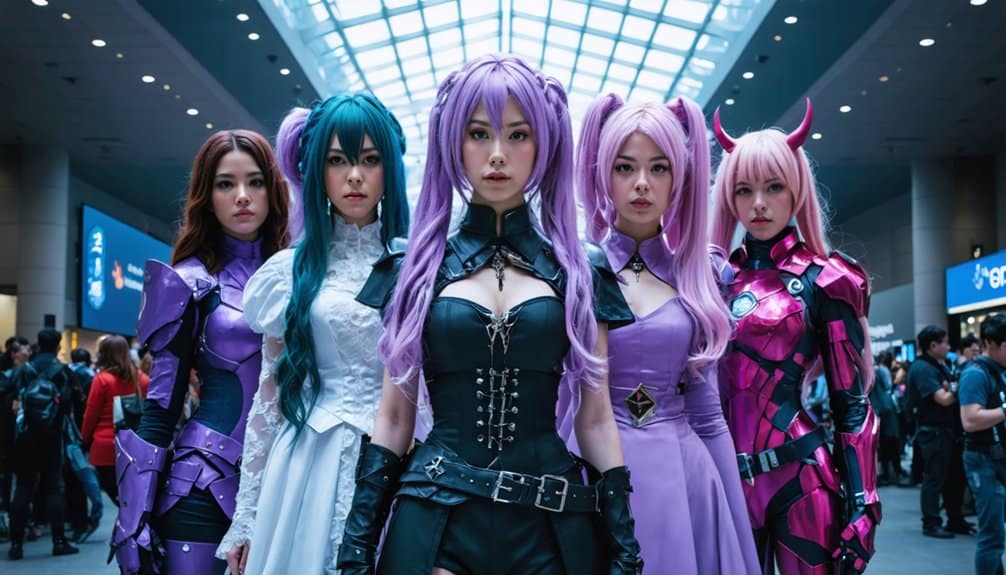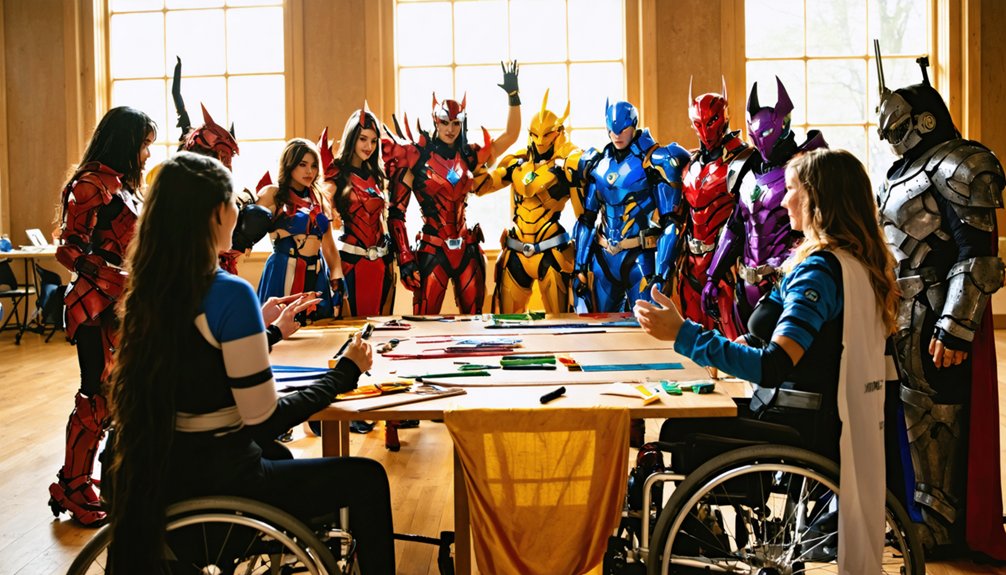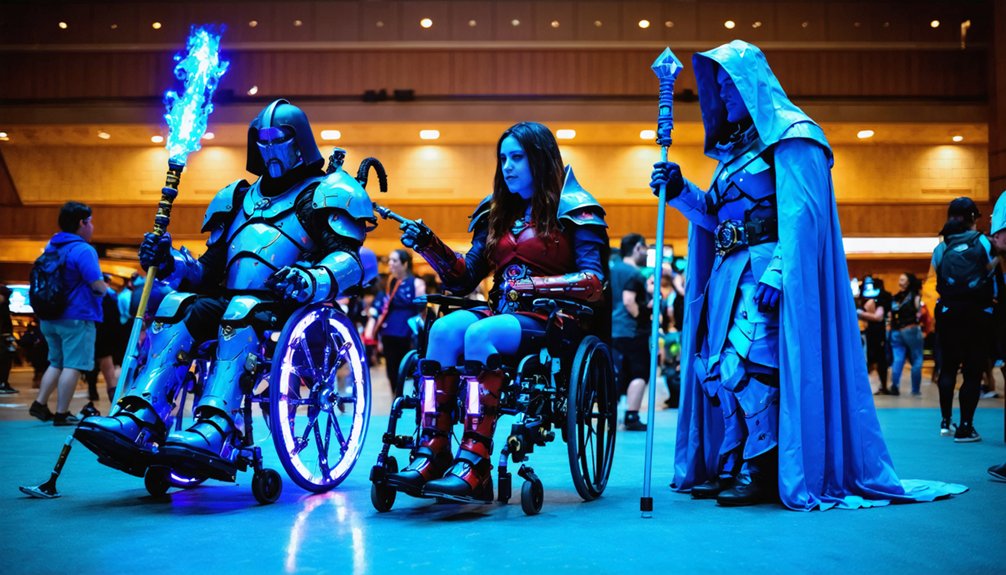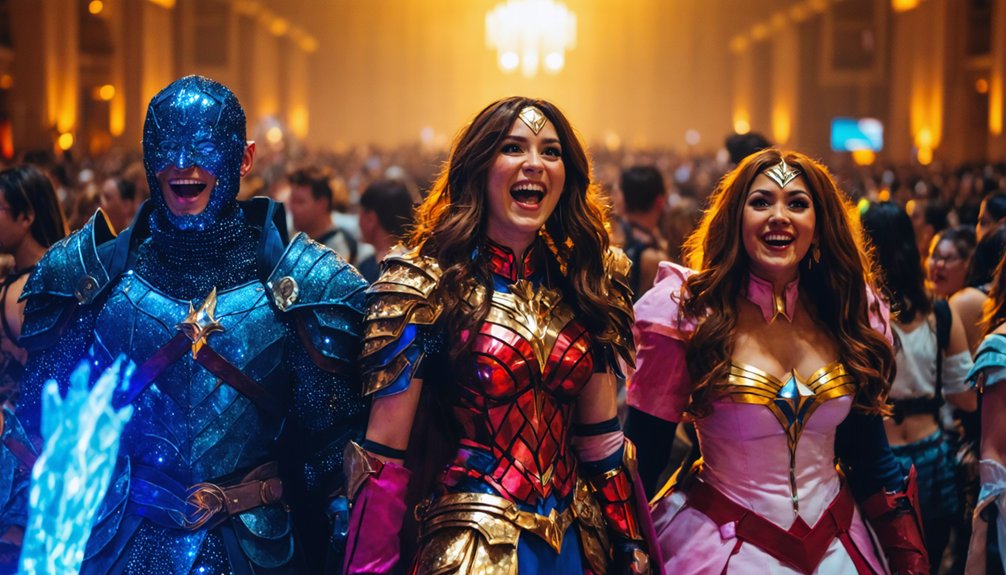
When you look closely at genderbent cosplay, you’ll find it’s powered by character devotion, creative reinvention, identity exploration, and community belonging working together. You’re not just wearing a costume—you’re authoring a reinterpretation, testing gender expression in a low-stakes space, and earning recognition from people who genuinely get it. Conventions and online platforms amplify all of it, turning individual passion into collective cultural momentum. There’s considerably more shaping this community than most outsiders assume.
Key Takeaways
- Deep character admiration and personal identification drive fans to genderbend cosplay as a creative homage rather than a political statement.
- Convention spaces and online platforms normalize genderbent expression, providing permission, visibility, and community validation that encourage ongoing participation.
- Unique craftsmanship challenges—adapting silhouettes, fabrics, and design elements—fuel creative investment and reinforce participants’ sense of authorship and fandom knowledge.
- Low entry barriers, shared creative effort, and cross-identity solidarity build belonging, attracting trans, nonbinary, and cisgender fans alike.
- Community recognition and feedback loops motivate skill development, experimentation, and cultural evolution, continuously expanding the genderbent cosplay community.
The Character Love That Drives Genderbent Cosplay
When fans choose to genderbend a character, they’re rarely making a statement about gender politics—they’re expressing devotion to a character they love. That devotion shapes decisions across every layer of participation, from purchasing fandom merchandise to entering cosplay competitions with reimagined designs.
Research consistently places character love at the center of cosplay motivation, ranking it above escapism and social belonging. You’re not reinterpreting a character arbitrarily; you’re honoring them through a lens that feels personally authentic.
This intersection of admiration and creative reframing reflects how deeply fans identify with fictional figures. Genderbending becomes less about subversion and more about proximity—getting as close as possible to a character whose story, aesthetics, or values genuinely resonate with who you are.
What Makes Genderbent Cosplay a Unique Creative Challenge
Character love may explain why you pick a character, but it doesn’t explain how you rebuild them. Genderbent cosplay forces you to interrogate every design choice — silhouette, fabric, color, and cultural symbolism embedded in the original costume. You’re not copying; you’re translating.
Historical influences shape how gender gets encoded into clothing, and genderbending exposes those codes directly. You must decide what stays, what shifts, and what the adaptation communicates about identity and power. That analytical process demands both craft knowledge and cultural literacy.
The challenge isn’t just technical — it’s intersectional. You’re steering through fandom expectations, gendered aesthetics, and your own creative vision simultaneously. That tension is precisely what makes genderbent cosplay compelling to innovators who want their work to mean something beyond the surface.
The Craftsmanship Behind a Great Genderbent Design
When you take on a genderbent cosplay, you’re not simply replicating an existing design — you’re reverse-engineering its visual logic to make it legible across a gender presentation the original artist never drew.
You adapt silhouettes, reinterpret color palettes, and reconstruct structural elements like armor, tailoring, or fabric drape to signal the character while shifting its gendered codes.
The fabrication choices you make — pattern modifications, material substitutions, binding or padding decisions — become the technical evidence of your fluency in both costume craft and character identity.
Adapting Original Character Designs
Innovative redesigns preserve core visual anchors—a signature weapon, palette, or motif—while restructuring proportion, tailoring, and fabrication to reflect your interpretation.
You’re not erasing the source; you’re translating it. That translation requires pattern drafting, material selection, and cultural literacy about the character’s narrative role.
Every seam becomes an argumentative choice, communicating both fandom knowledge and creative authorship simultaneously.
Costume Fabrication Techniques
Fabrication is where design intent meets material reality, and in genderbent cosplay, that collision is especially revealing. You’re not replicating a costume — you’re reinterpreting it through a different bodily and cultural lens.
Fabric dyeing becomes a precision tool here, letting you shift color temperature to signal a character’s gender reinterpretation without abandoning visual recognition. A desaturated palette or inverted tone can communicate transformation instantly.
Accessory crafting follows similar logic: scaled-down armor, restructured belts, or reimagined headpieces carry gendered meaning that fabric alone can’t express. Each fabrication decision reflects intersecting choices about identity, aesthetics, and fandom fidelity.
Skilled cosplayers treat these techniques not as workarounds but as expressive vocabulary — a craft-based argument for how a character can exist differently and still remain unmistakably themselves.
How Escape From Everyday Life Powers Genderbent Cosplay
Stepping into a genderbent costume lets you shed the roles everyday life assigns you—even if only for a weekend. The fantasy escape cosplay offers isn’t passive—it actively disrupts your daily routine by placing you inside a character whose identity differs from your own.
Genderbent cosplay intensifies this break through several intersecting mechanisms:
- Costume transformation physically signals a role exit
- Convention spaces suspend ordinary social expectations
- Cross-gender performance introduces unfamiliar embodiment
- Character inhabitation shifts your psychological frame
- Community validation reinforces the alternate identity
Ethnographic accounts consistently show participants describing convention floors as “different atmospheres”—less judgmental, more fluid. You’re not just wearing a costume; you’re temporarily reorganizing how others read you.
That reorganization is precisely what keeps cosplayers returning season after season.
What Genderbent Cosplay Makes Possible for Gender Exploration
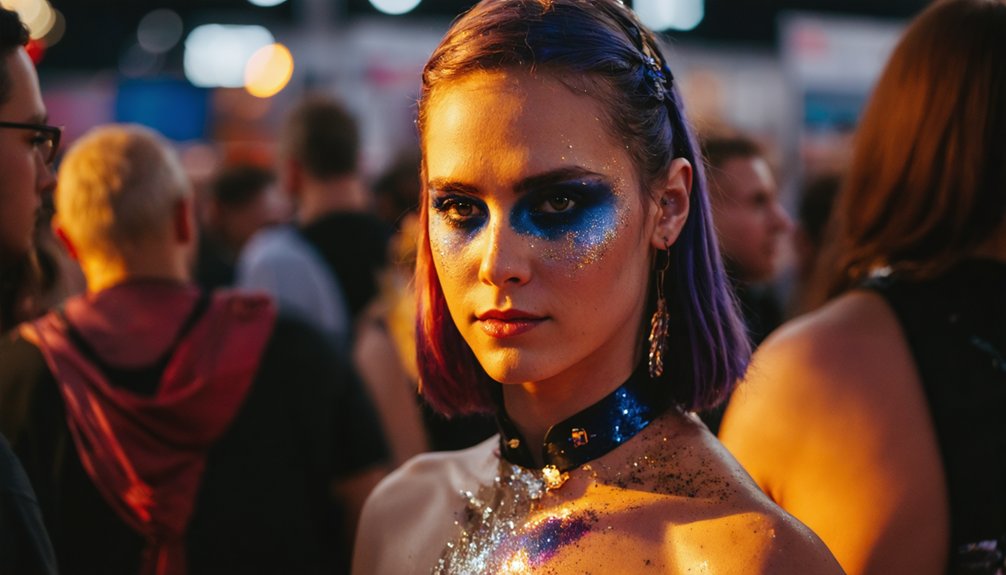
When you wear a genderbent costume, you’re actively dismantling the gender presentation your daily life expects of you, using a character’s identity as both shield and vehicle.
The convention floor becomes a low-stakes laboratory where you can test expressions, aesthetics, and embodied roles that carry real social risk outside that space.
For many cosplayers, this practice doesn’t just gesture at identity—it confirms it, producing measurable euphoria and reducing dysphoria through the act of performance itself.
Blurring Everyday Gender Lines
Genderbent cosplay opens a practical space where fans test forms of gender presentation that everyday social scripts typically foreclose. Through fashion innovation and cultural exchange, you’re actively dismantling binary defaults without requiring ideological commitment.
This practice lets you:
- Wear silhouettes, fabrics, and aesthetics coded outside your assigned gender
- Embody masculinity or femininity on your own negotiated terms
- Access character archetypes your gender position normally blocks
- Experiment with presentation before committing to everyday identity shifts
- Signal gender fluidity within community spaces that reward creative risk
Convention floors become low-stakes laboratories. You’re not making a permanent declaration — you’re gathering data about yourself. The cosplay frame grants permission structures that ordinary social environments withhold, making genderbending less transgressive act and more practical exploration tool.
Safe Space for Expression
Convention spaces function as bounded social environments where the normal penalties for gender nonconformity are substantially reduced — and that reduction is what makes genderbent cosplay generative rather than merely decorative.
When you enter cosplay competitions or attend promotional events, the frame shifts entirely. Performance becomes expected, and that expectation dissolves the social cost of stepping outside your assigned presentation. You’re not transgressing — you’re participating.
That structural difference matters. It’s what allows gender exploration to occur without requiring a fixed identity declaration beforehand.
Ethnographically, these environments function as low-stakes laboratories where you can test embodied expressions, register community responses, and calibrate identity in real time.
The safe space isn’t incidental to genderbent cosplay’s appeal — it’s architecturally built into how fandom organizes its shared gatherings.
Affirming Identity Through Cosplay
Beyond the structural shelter conventions provide, genderbent cosplay does something more intimate: it hands you a controlled mechanism for testing who you might actually be.
Through creative expression tied to a beloved character, you’re not performing randomly—you’re mapping identity onto a recognizable framework.
Interpersonal dynamics shift when you embody a genderbent role; others respond differently, and those responses become data points about selfhood.
Genderbent cosplay makes possible:
- Gender euphoria through low-stakes presentation
- Reduced dysphoria via character-mediated identity
- Exploration without requiring fixed political identity
- Community validation that reinforces authentic self-perception
- Iterative identity testing across multiple conventions
Each costume becomes an experiment. You wear the design, read the room, and learn something measurable about how identity performs under different conditions.
How Community Belonging Keeps Genderbent Cosplayers Coming Back
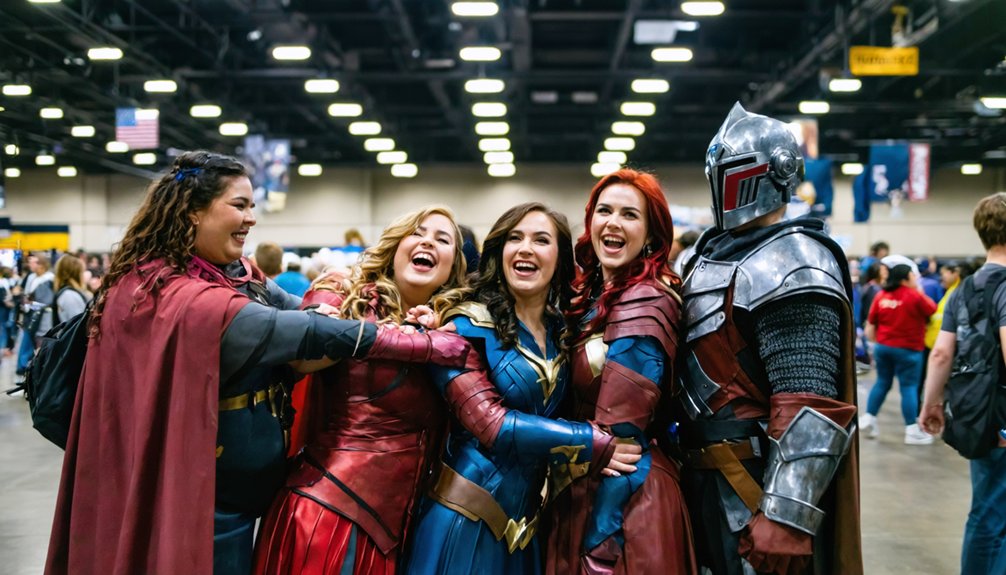
For many genderbent cosplayers, the convention floor isn’t just a showcase—it’s a return. You come back because the people here already understand what you’re building. Community support functions as a structural force, not merely a backdrop.
Shared enthusiasm creates feedback loops—your craft improves, your confidence grows, and your investment deepens. Ethnographically, this mirrors what researchers identify as belongingness: a high-ranking motivator that sustains participation well beyond initial curiosity.
Belongingness sustains participation—shared enthusiasm sharpens craft, deepens investment, and keeps cosplayers returning long after curiosity fades.
For genderbent cosplayers specifically, that belonging carries added weight. You’re not just celebrating a character—you’re finding others who challenge the same norms you do.
Convention spaces reward that courage with recognition. Each affirming interaction reinforces return. The community doesn’t just welcome you; it actively reproduces the conditions that bring you back.
Why Genderbent Cosplay Makes Fandom More Inclusive
When you step into a genderbent cosplay space, you’re entering a community that actively dismantles the assumption that gender determines which characters you can claim as your own.
You’ll find fans across the gender spectrum — trans, nonbinary, and cisgender alike — welcomed through a shared language of character love and creative adaptation.
That collective belonging reshapes fandom itself, making participation feel less like an audition and more like a homecoming.
Breaking Gender Barriers Together
Genderbent cosplay doesn’t just challenge costume conventions—it restructures who gets to feel at home in fandom spaces. Its historical influences and cultural significance reveal how gender-nonconforming performance has long disrupted exclusionary fan hierarchies.
You’ll find community belonging functions as both entry point and anchor:
- Shared creative labor builds cross-identity solidarity
- Convention spaces normalize gender-fluid character interpretation
- Collective recognition validates participants outside mainstream representation
- Intersecting identities—race, gender, sexuality—find visible expression simultaneously
- Community reinforcement sustains participation beyond individual motivation
When you engage with genderbent cosplay, you’re entering a social framework that actively redistributes who holds visibility.
Belongingness rankings in cosplay research confirm this isn’t incidental—it’s structural. The practice transforms fandom from a gatekept archive into a living, adaptive community where barriers don’t just bend; they break collectively.
Welcoming All Fan Identities
Because fandom has historically centered narrow identity templates, genderbent cosplay doesn’t just diversify aesthetics—it restructures access. When you reinterpret a character through artistic reinterpretation, you’re dismantling the assumption that representation requires exact mirroring. You’re claiming the character’s cultural symbolism on your own terms.
This matters intersectionally. LGBTQIA+ fans, fans of color, and non-binary participants often encounter franchises that weren’t built with them in mind. Genderbent cosplay lets you enter those spaces anyway—not as an outsider approximating belonging, but as someone actively reshaping what the fandom includes.
Ethnographically, convention spaces confirm this shift. Communities around genderbent cosplay consistently report higher acceptance and lower gatekeeping. You’re not just welcomed—you’re recognized as expanding what the source material can mean.
Shared Belonging Through Cosplay
Belonging, as cosplay research consistently shows, ranks among the highest motivations for participation—and genderbent cosplay intensifies that pull by lowering the threshold for who feels entitled to enter fandom space.
Drawing from historical influences of drag, masquerade, and theatrical cross-dressing, genderbent practice carries artistic innovation that reshapes who fandom recognizes as legitimate. You don’t need to match a character’s assigned gender to claim your place in the community.
Genderbent cosplay builds belonging by:
- Creating entry points for fans previously excluded by rigid character representation
- Reinforcing shared identity across gender-diverse participants
- Validating non-normative presentations within convention spaces
- Encouraging recognition through craftsmanship rather than conformity
- Generating friendships rooted in mutual creative investment
That collective acceptance doesn’t happen passively—you build it through participation.
Does Sexual Attraction Factor Into Genderbent Cosplay?
While most cosplayers cite character love, community, and escapism as their primary drivers, sexual attraction does factor into genderbent cosplay—though it’s a more complex and gendered phenomenon than it might first appear.
Research consistently shows men rate sexual attraction higher than women as a cosplay motivator, and that gap is significantly more pronounced than in other motivation categories.
Men report sexual attraction as a cosplay motivator far more than women—a gap wider than in nearly any other category.
For some participants, attraction intersects with character admiration—you’re drawn to embody a character whose aesthetic and persona you find compelling.
Costume realism can intensify this dynamic, as a precisely executed genderbent design blurs the line between honoring a character and inhabiting their allure.
Rather than contradicting deeper motivations, sexual attraction often layers onto them, functioning as one thread within a richer, intersecting web of fandom investment.
Why Genderbent Cosplayers Show Deeper Fandom Investment
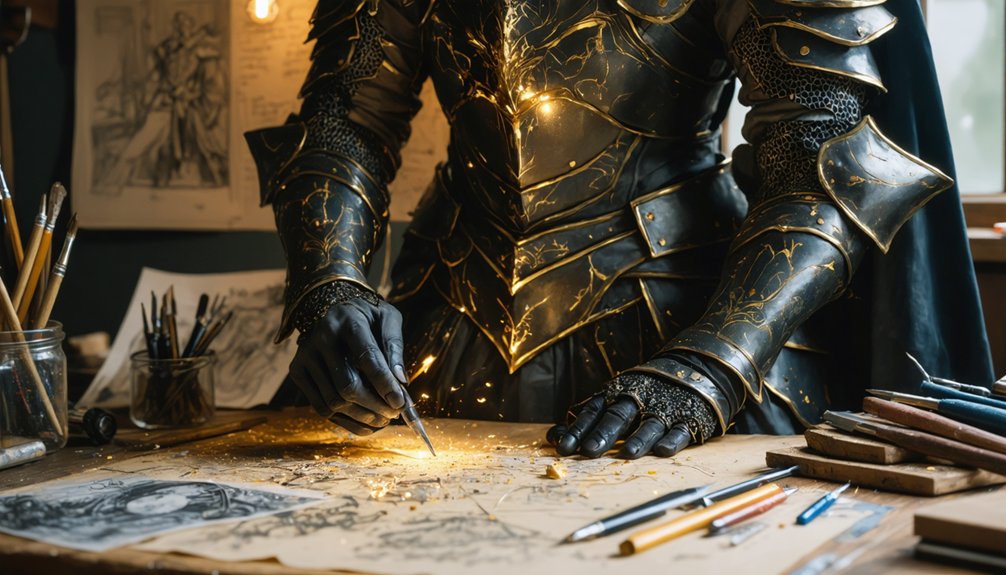
Research consistently shows cosplayers report higher motivation levels than non-cosplayers across every major category—and genderbent cosplayers push that investment further still. You’re not simply wearing a costume; you’re engaging with historical influences and cultural symbolism embedded in a character’s design, identity, and narrative role.
Genderbent cosplayers layer multiple motivations simultaneously:
- Character love drives costume choices beyond surface aesthetics
- Community belonging deepens through shared intersectional fandom spaces
- Escapism intensifies when gender performance adds transformative distance from daily life
- Creative craftsmanship expands through adaptive redesign challenges
- Identity exploration anchors participation in personal meaning-making
Each layer compounds fandom investment. You’re not passively consuming a franchise—you’re actively renegotiating its boundaries. That renegotiation demands more skill, more vulnerability, and more dedication than conventional cosplay typically requires.
How Convention Culture and Online Fandom Grow the Genderbent Community
Convention floors and online platforms don’t just host genderbent cosplay—they actively cultivate it. When you walk a convention space, you’re moving through layered historical influences—decades of fan dress-up culture that normalized creative reinterpretation long before it had a label. That history created permission structures communities still operate within today.
Online fandoms amplify this further. Discord servers, TikTok showcases, and Reddit threads function as distributed convention halls, extending cultural symbolism beyond geographic limits. You’re not just sharing a costume; you’re participating in ongoing meaning-making around characters, gender, and identity.
Both spaces reward visibility and iteration. Seeing genderbent work recognized publicly encourages more experimentation. Community feedback accelerates craft.
Together, convention culture and digital fandom don’t passively reflect the genderbent community—they structurally expand it.
Frequently Asked Questions
How Do Genderbent Cosplayers Handle Negative Reactions From Traditional Fans?
Like a river carving new paths through stone, you navigate criticism by leaning on community acceptance, transforming hostility into fuel for creative reinterpretation, actively reclaiming character love over rigid gatekeeping traditions.
What Specific Anime or Game Franchises Inspire the Most Genderbent Cosplay?
You’ll find franchises like *Naruto*, *One Piece*, *Genshin Impact*, and *League of Legends* dominating genderbent spaces. Their rich character reinterpretations fuel fandom diversity, inviting you to reimagine iconic figures across intersecting creative and cultural dimensions.
How Much Does a Typical Genderbent Cosplay Costume Cost to Make?
You’ll spend anywhere from $50 to $500+, where budget thrift meets high-end costume craftsmanship. Your fabric selection dramatically shifts costs—cheap polyester versus quality brocade defines that gap, reflecting your creative investment and genderbent design ambitions.
Are There Competitions Specifically Designed for Genderbent Cosplay Entries?
You’ll find that dedicated gender swap categories exist at select conventions, where judges celebrate your cosplay transformation as craft and identity. These specialized competitions reward innovation, intersecting artistry with community belonging in uniquely affirming, culturally rich spaces.
How Do Beginners Start Their First Genderbent Cosplay Project Successfully?
Why not start small? Pick a character you love, then adapt their design with bold cosplay makeup and creative costume accessories. You’ll find community support accelerates your confidence, transforming a beginner’s uncertainty into an innovative, identity-affirming genderbent expression.
References
- https://www.academia.edu/37241618/Motivations_of_cosplayers_to_participate_in_the_anime_fandom
- https://search.proquest.com/openview/2a13a299a150669c6c80c945133196c7/1?pq-origsite=gscholar&cbl=18750
- https://folklife.si.edu/magazine/cosplay-community
- https://scispace.com/pdf/fantastical-body-narratives-cosplay-performance-and-gender-3zb0f2aqxv.pdf
- https://fansconference.org/dRuZ33A/wp-content/uploads/2013/04/Gender-Sexuality-and-Cosplay-by-Rachel-Leng1.pdf
- https://pure-oai.bham.ac.uk/ws/portalfiles/portal/235484106/s40711-022-00168-z.pdf
- https://mars.gmu.edu/server/api/core/bitstreams/1565b4a0-daf9-4e6b-b882-7338d4b5523a/content
- https://link.springer.com/chapter/10.1007/978-3-031-12942-1_9