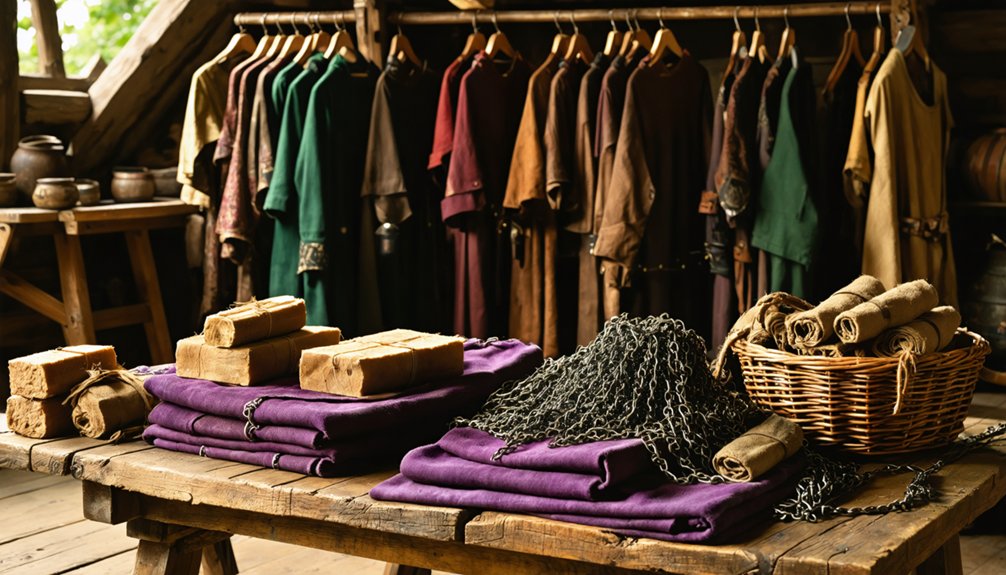
To maintain and store LARP costumes, clean every piece thoroughly before storage, addressing stains immediately before they bond to fibers. Maintain around 50% relative humidity in a cool, dark, ventilated space. Fold minimally using acid-free tissue, and segregate incompatible materials to prevent dye transfer. Lay foam weapons flat and store leather armor away from moisture. Each costume type has specific demands, and knowing those details keeps your gear event-ready for seasons to come.
Key Takeaways
- Clean all costume pieces thoroughly before storage to prevent stains, insect damage, and moisture buildup from setting into fibers.
- Store costumes in cool, dark, ventilated spaces at around 50% humidity to prevent mold and fiber deterioration.
- Use acid-free tissue to pad folds and archival boxes to minimize damaging creases during long-term storage.
- Lay foam and latex weapons flat, and store leather armor away from humidity, sunlight, and incompatible materials.
- Schedule regular inspections for pests, mold, and deterioration to catch and address damage early.
Clean Your LARP Costume Before Storing It
Before packing anything away, clean every costume piece thoroughly to prevent stains from setting and to eliminate the organic residue that attracts insects and moisture. Apply appropriate costume cleaning techniques based on each material—machine wash durable fabrics, hand wash delicates, and spot-treat structured pieces.
Clean every costume piece before packing to prevent stains, repel insects, and eliminate moisture-attracting residue.
Use targeted stain removal methods early; dried stains bond chemically to fibers, making later extraction considerably harder.
Once cleaned, remove all pins and staples before storage. These corrode and tear fabric over time. Strip out any colored paper wrappings, since their dyes transfer onto textiles during prolonged contact.
Only acid-free tissue is safe to keep in direct contact with garments. Storing even a slightly soiled costume accelerates fiber degradation, so treat cleaning as a non-negotiable first step rather than an optional finishing task.
Store Your LARP Costumes in the Right Environment
Once you’ve cleaned your LARP costumes, you’ll want to store them in a stable environment that maintains around 50% relative humidity to prevent both mold growth and fiber brittleness.
Keep your storage space cool, ventilated, and away from basements or other damp areas where moisture fluctuations can degrade fabrics and leather over time.
Direct sunlight and harsh artificial lighting will fade dyes and weaken fibers, so choose a dark, enclosed space that limits light exposure as much as possible.
Ideal Temperature And Humidity
Where you store your LARP costumes matters just as much as how you store them. Prioritize humidity control and ideal airflow to protect fabrics, leather, and foam components from long-term degradation.
Follow these four environmental benchmarks:
- Target 50% relative humidity — fluctuations above or below accelerate fabric deterioration and mold growth.
- Keep temperatures cool and stable — avoid spaces prone to heat spikes, such as attics or garages.
- Ensure ideal airflow — ventilated storage prevents moisture buildup without exposing costumes to damaging drafts.
- Eliminate direct sunlight — UV exposure fades dyes and weakens fibers faster than most other environmental factors.
Avoid damp basements entirely.
Consistent conditions matter more than perfect ones — stability is your primary goal.
Avoid Light And Dampness
Controlling humidity and temperature sets the foundation, but light and dampness introduce their own distinct threats that can ruin fabrics, leathers, and foam components even in a well-ventilated space.
UV protection isn’t optional — direct sunlight degrades dyes, weakens fibers, and causes irreversible discoloration across textile and latex surfaces alike. Store costumes in a dark location or use UV-filtering covers to block damaging radiation.
Moisture control demands equal attention; damp basements and poorly sealed rooms accelerate mold growth, warp foam structures, and corrode metal hardware.
Avoid moisture-trapping sealed plastic bags, which concentrate humidity against fabric surfaces. Instead, use breathable garment covers that allow air circulation while blocking dust and light exposure.
Inspect storage areas regularly for condensation or leaks before damage compounds.
Fold and Box Your LARP Costumes Without Causing Damage
When boxing your LARP costumes, keep folds to a minimum and use large archival or conservation-quality boxes so you’re not forcing garments into tight creases. Smart costume folding techniques paired with archival storage boxes protect fabric integrity long-term.
Minimize folds and choose large archival boxes to protect your LARP costumes from damaging creases during storage.
- Pad every fold with acid-free tissue, prewashed cotton, or foam to prevent permanent crease lines.
- Layer strategically by placing heavier costumes at the bottom and lighter pieces on top.
- Interleave items with cushioning material if stacking multiple garments is unavoidable.
- Distribute weight evenly across seams and embellishments to prevent stress fractures on structured pieces.
These steps eliminate unnecessary pressure points and preserve construction details.
Consistent application of these methods keeps your costumes performance-ready and structurally sound between events.
Know When to Hang vs. Store Your LARP Costumes Flat
Choosing between hanging and flat storage directly affects how well your LARP costumes hold their shape over time. Hanging aesthetics matter, but hanging only works when a garment’s construction can handle sustained vertical load. Use padded hangers shaped to the garment’s shoulder profile, and cover them with washed cotton to prevent slippage and fabric stress.
Avoid hanging beaded pieces, bias-cut garments, or heavily embellished armor components—their weight distorts seams progressively.
Flat storage benefits fragile, heavy, or structurally complex costumes by distributing weight evenly and eliminating gravitational strain. Lay these pieces in archival boxes with acid-free tissue padding at seams and folds.
Don’t overcrowd hanging racks either; compressed shoulders and crushed seams degrade craftsmanship quickly. Evaluate each costume’s weight, fabric weave, and embellishment load before deciding which method applies.
Protect Your LARP Costumes From Dust, Pests, and Handling
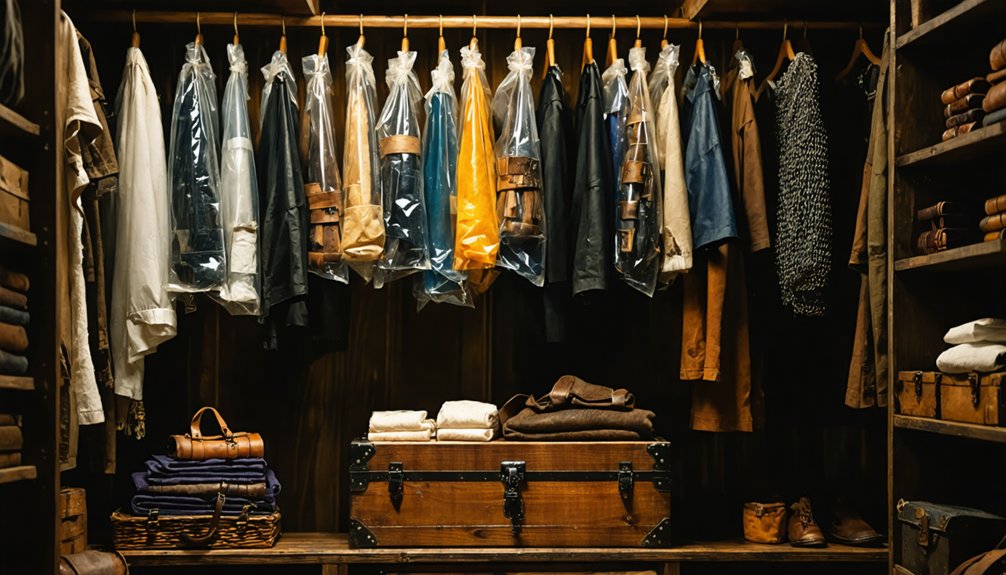
Dust, pests, and unnecessary handling degrade LARP costumes faster than most storage failures, so enclosure is your first line of defense. Build a threaded storage system that keeps each piece accessible yet fully protected between events.
- Use breathable covers — fabric garment bags over sealed plastic prevent moisture buildup while blocking dust and light exposure.
- Line boxes with acid-free tissue or prewashed cotton — this buffers against humidity shifts and deters insect activity.
- Minimize direct handling — retrieve costumes only when necessary, reducing fiber stress and surface soil transfer.
- Schedule regular inspections — organized threaded storage lets you rotate through pieces systematically, catching pest evidence or mold early.
Dust attracts moisture and insects, making consistent enclosure non-negotiable for long-term costume integrity.
Store Your LARP Armor, Weapons, and Accessories Safely
Armor, weapons, and accessories each carry different structural vulnerabilities, so you’ll need to tailor your storage approach to the material and form of each piece.
Lay latex and foam weapons flat on even surfaces to distribute pressure uniformly, and never rest them on their tips, which causes compression deformation.
Lay foam and latex weapons flat—never on their tips—to prevent compression deformation and preserve their original shape.
Keep leather armor in a cool, ventilated space away from humidity and direct sunlight to prevent cracking and accessory material compatibility failures.
Use padded compartments for elaborate pieces to prevent scratches and dents.
When storing dyed components alongside metal or mixed-material accessories, assess costume dye stability carefully, since reactive materials can transfer pigment or accelerate fading.
Segregate chemically incompatible pieces, and inspect compartments regularly to catch early deterioration before it spreads to adjacent costume elements.
Frequently Asked Questions
How Often Should I Inspect My LARP Costumes During Long-Term Storage?
Like a vigilant craftsman guarding their masterpiece, you should inspect your LARP costumes every three to six months. Prioritize costume fabric preservation by monitoring storage environment considerations, catching humidity shifts, pest activity, and material degradation early.
Can I Store Multiple LARP Costumes Together in One Container?
You can store multiple LARP costumes together, but you’ll want to interleave each costume fabric layer with acid-free tissue. Place heavier storage materials and garments at the bottom, preventing crush damage to delicate pieces above.
What Is the Best Way to Repair Minor Damage Before Storing Costumes?
Like a surgeon before sealing a wound, you’ll want to tackle repairs first. Prioritize costume cleaning, re-stitch loose seams, and patch tears to guarantee damage prevention before storage keeps your LARP gear battle-ready for future adventures.
How Do I Safely Transport LARP Costumes to and From Events?
Use breathable garment bags for costume cleaning protection during transit, and maintain stable storage climate conditions by avoiding car trunks in extreme heat. Pad armor pieces, lay latex weapons flat, and organize compartments to prevent crushing or bending damage.
Should I Label My Storage Containers to Keep LARP Costumes Organized?
Absolutely label everything — it’ll save you hours of chaos! Precise costume labeling transforms your storage container organization into a masterful system. You’ll instantly locate garments, prevent mishandling, and maintain meticulous inventory control, keeping your innovative LARP collection perfectly preserved and inspection-ready.
References
- https://www.canada.ca/en/conservation-institute/services/preventive-conservation/guidelines-collections/textiles-costumes.html
- http://www.larphack.com/larp-storage-solutions/
- https://www.canada.ca/en/conservation-institute/services/conservation-preservation-publications/canadian-conservation-institute-notes/hanging-storage-costumes.html
- https://www.larpinn.co.uk/module/ybc_blog/blog?id_post=17
- https://historicalsewing.com/cleaning-storing-costumes
- https://manual.museum.wa.gov.au/textile-storage/index.html
- https://www.nps.gov/subjects/museums/upload/MHI_AppK_TextilesObjects.pdf
- https://www.thehenryford.org/docs/thehenryfordlibraries/research-services/historic-textiles-branded.pdf?sfvrsn=b6cc3033_1
- https://filmcostumecollection.com/storing
- https://www.icon.org.uk/conservation-hub/caring-for-your-collections/costume-and-textiles.html