Building a replica comic book costume that truly impresses requires strategic planning from the start. You’ll want to match your natural frame to a character whose silhouette complements your proportions. Gather extensive reference photos, limit your palette to two or three saturated colors, and prioritize four-way stretch fabrics that breathe under convention lighting. Apply weathering techniques like acrylic washes and sandpaper abrasion to add combat authenticity. Stick around, because every technical detail covered ahead will sharpen your build considerably.
Key Takeaways
- Choose a character that complements your natural body frame to ensure an authentic, visually balanced silhouette without awkward proportions.
- Gather extensive reference images from multiple angles to accurately capture canonical colors, costume details, and design variations.
- Select four-way stretch, moisture-wicking fabrics with reinforced stitching to ensure comfort, durability, and freedom of movement.
- Use muslin mockups and photograph fittings to refine pattern alterations before cutting into premium costume materials.
- Apply layered weathering techniques like sandpaper abrasion and acrylic washes to simulate realistic combat damage and storytelling depth.
Choose a Character Whose Costume Matches Your Build
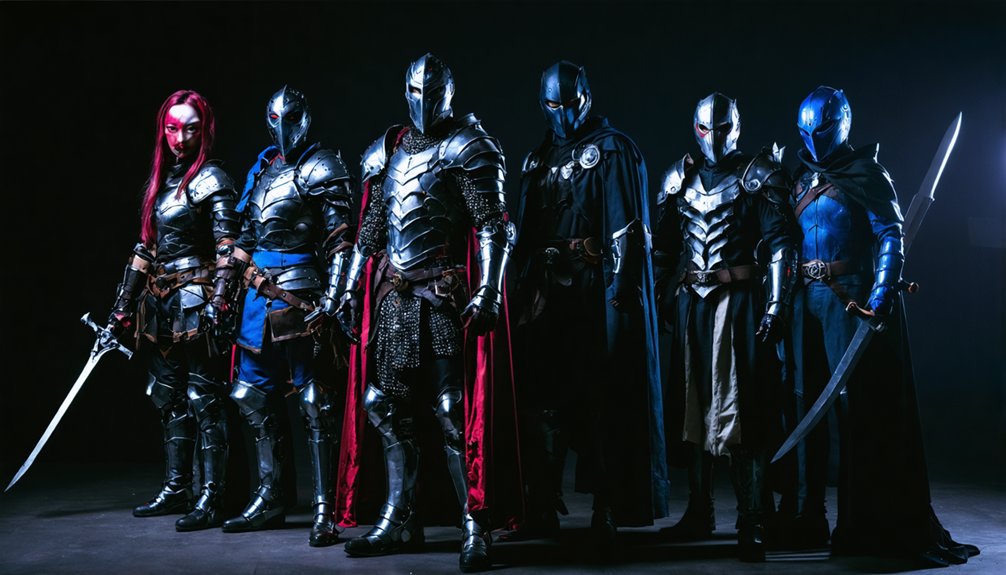
When selecting a comic book character to cosplay, your body type should be your first and most practical filter — it’s the foundation that determines whether a costume will look authentic or forced.
Match your natural frame to the character physique you’re replicating. Broad shoulders suit armored titans like Thor, while leaner builds translate brilliantly into speedsters or acrobatic characters.
Your body type is your greatest cosplay asset — let your natural frame guide you toward characters built just like you.
Costume proportions aren’t just aesthetic — they’re structural. A heavily padded suit on a slight frame creates visual imbalance that no amount of craftsmanship can fully correct.
Study reference materials carefully, analyzing how each costume element interacts with the character’s body dimensions.
You’ll achieve a far more convincing result when your natural silhouette complements the design rather than fights it, elevating both accuracy and overall visual impact.
Gather Reference Photos Before You Buy Anything
Before you spend a single dollar, build an extensive reference library that captures every angle, lighting condition, and version of your character’s costume. Pull reference sources from comics, films, animated series, and official merchandise to understand the full costume history and character evolution across decades.
Study design variations carefully — artistic styles shift dramatically between writers and illustrators, revealing fascinating color theory decisions that transform your character’s visual storytelling.
Pin your photo inspiration into organized folders sorted by era, medium, and artist.
Cross-reference multiple sources to identify consistent costume elements versus artist-specific interpretations. You’ll quickly distinguish canonical features from creative liberties.
This research phase prevents costly purchasing mistakes and guarantees your final build reflects authentic, intentional design choices rather than fragmented, mismatched components assembled without strategic vision.
Select Fabrics That Stretch, Breathe, and Last Through Wear
Your fabric choices can make or break a comic book costume, so you’ll want to prioritize four-way stretch materials like spandex or lycra blends that move with your body during dynamic poses and active wear.
Layer in moisture-wicking, breathable textiles such as mesh panels or performance knits to prevent dangerous overheating during long convention hours or active performances.
Lock in longevity by selecting reinforced, double-stitched fabrics that resist tearing at high-stress points like knees, elbows, and shoulder seams where repeated movement causes the most breakdown.
Stretch Fabric Performance Matters
Choosing the right fabric transforms a comic book costume from a stiff, uncomfortable shell into a second skin that moves with you through every pose, panel recreation, and convention hall sprint.
Stretch fabric types like spandex, lycra, and four-way stretch polyester blends deliver exceptional recovery, snapping back after every movement without sagging or distorting your silhouette.
These stretch fabric benefits extend beyond flexibility — moisture-wicking properties keep you cool during extended wear while compression-grade materials maintain structural integrity under physical stress.
You’ll want fabrics with at least 50% stretch capacity in both directions for full-body suits.
Test your chosen material by pulling it diagonally; quality performance fabric rebounds instantly without pilling, tearing, or losing its original shape during repeated stress cycles.
Breathable Materials Prevent Overheating
Stretch performance gets you moving, but breathability keeps you going when convention floors turn into heat traps and photo sessions stretch past the three-hour mark.
Prioritize breathable fabrics like moisture-wicking polyester blends and mesh-backed spandex that deliver serious moisture control without sacrificing structure.
Smart heat management starts with fabric blends engineered for active wear—think 88% polyester, 12% elastane constructions that pull sweat away from skin instantly.
Deploy lightweight layers strategically, using removable pieces that let you adapt to shifting temperatures throughout the day.
Ventilation strategies matter too; hidden mesh panels sewn into underarm gussets and back yokes create airflow channels invisible from a distance.
A precise comfort fit eliminates bunching that traps heat, keeping your performance sharp from opening ceremonies straight through evening programming.
Durable Textiles Withstand Repeated Wear
You don’t need premium pricing for performance.
Cost-effective options like athletic compression fabrics from sportswear retailers rival specialty costume materials, delivering professional-grade durability without breaking your build budget.
Build a Color Palette for Your Superhero Costume That Reads From a Distance
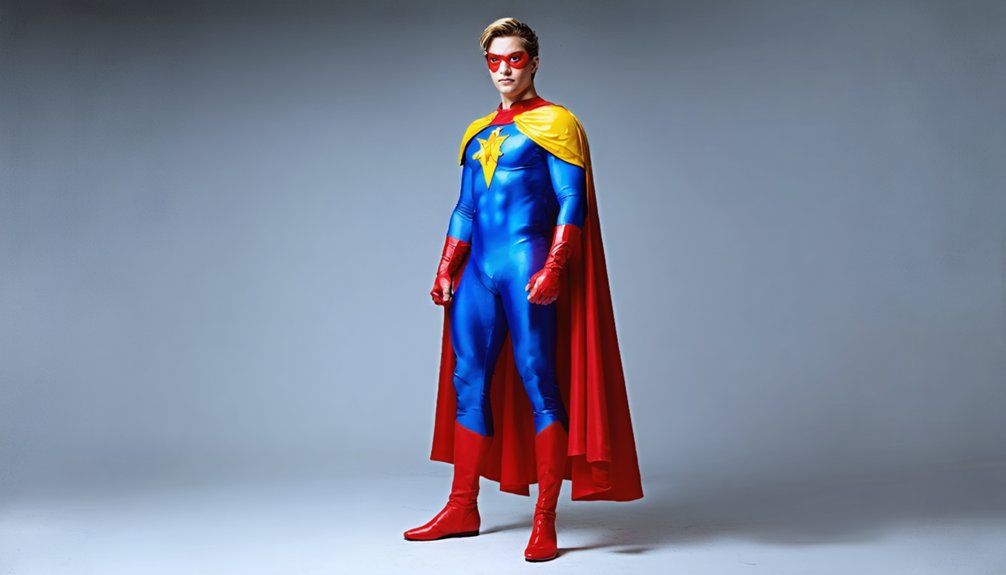
When building a superhero costume that commands attention across a crowded convention floor, your color palette is one of your most powerful tools. Strategic hue contrast separates your character from visual noise instantly.
Limit yourself to two or three dominant colors maximum, letting black and white function as neutral anchors without counting against your palette.
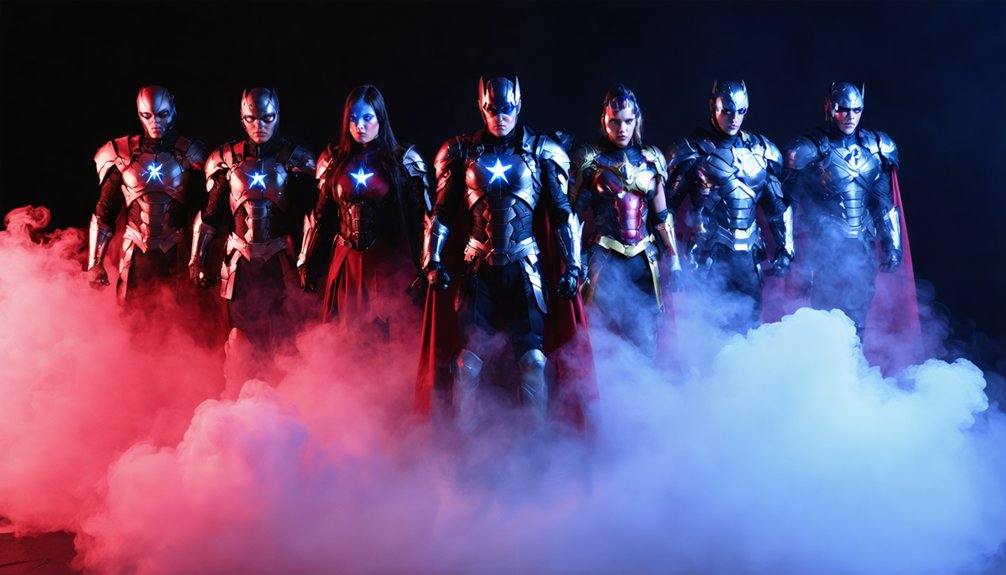
Color symbolism drives immediate emotional recognition — deep crimson signals aggression and power, while electric blue communicates authority and calm. Your audience should identify your character from twenty feet away before reading any emblem detail.
Color speaks before you do — choose your hues deliberately, and let them announce your character from across the room.
Avoid muddied mid-tones that flatten under convention lighting. Saturate your primary hues deliberately, test them under fluorescent and natural light conditions, and guarantee each color block creates sharp, readable boundaries against adjacent tones.
Build a Silhouette That Matches the Source Character Exactly
Nailing your character’s silhouette transforms a good costume into an unmistakable one — it’s the single most critical visual element that registers before color, emblem, or detail ever enters the equation.
Study your source character’s silhouette proportions obsessively — shoulder width, cape flow, cowl shape, and boot height all contribute to instant recognition. Gather reference images from multiple angles and identify the defining geometric shapes that make the character unmistakable.
Notice how a character pose reinforces silhouette — certain heroes carry signature stances that amplify costume structure. Padding shoulders, adding structured capes, or building volume into specific costume zones replicates those proportions accurately on your body type.
Prioritize clean, bold outlines over interior detailing; viewers decode shape first, everything else second.
Customize Commercial Patterns to Fit Your Replica Costume Precisely
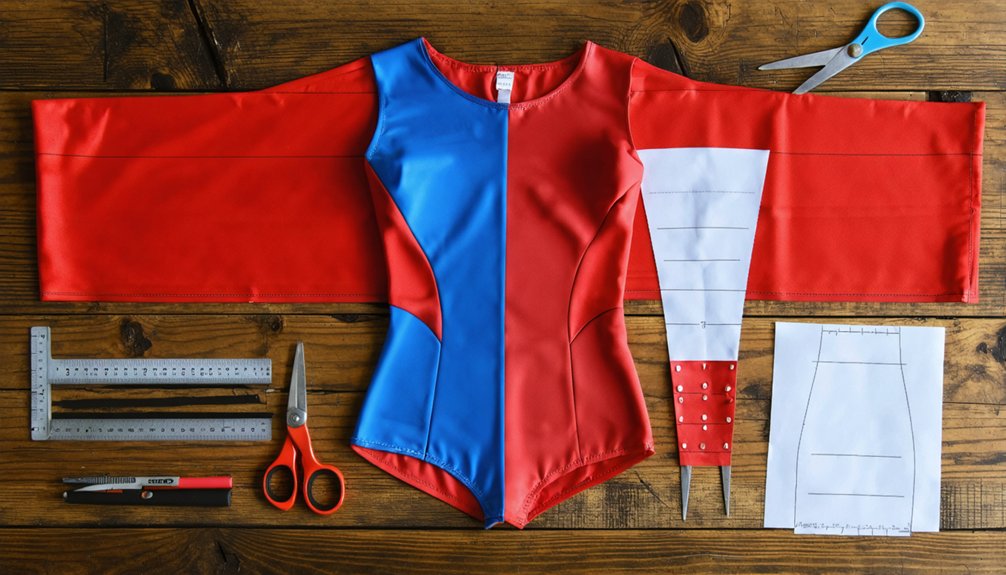
Commercial patterns get you 80% of the way there — precise customization closes the gap between “close enough” and screen-accurate.
Start by recording every major body measurement: chest, waist, hips, inseam, and sleeve length. Compare those numbers directly against your chosen pattern’s size chart before cutting a single piece.
Next, execute pattern alterations on paper first — never on fabric. Add seam allowances strategically, slash-and-spread panels for muscular builds, and redraw curved seams for anatomical accuracy.
Fitting techniques like muslin mock-ups let you test adjustments without wasting premium materials. Pin your muslin, wear it, photograph yourself, then refine ruthlessly.
Transfer every confirmed modification back onto your original pattern pieces with permanent marker. You’ll build a custom template that delivers repeatable, character-accurate results every time you construct a new version.
Make Your Replica Costume Look Battle-Worn and Real
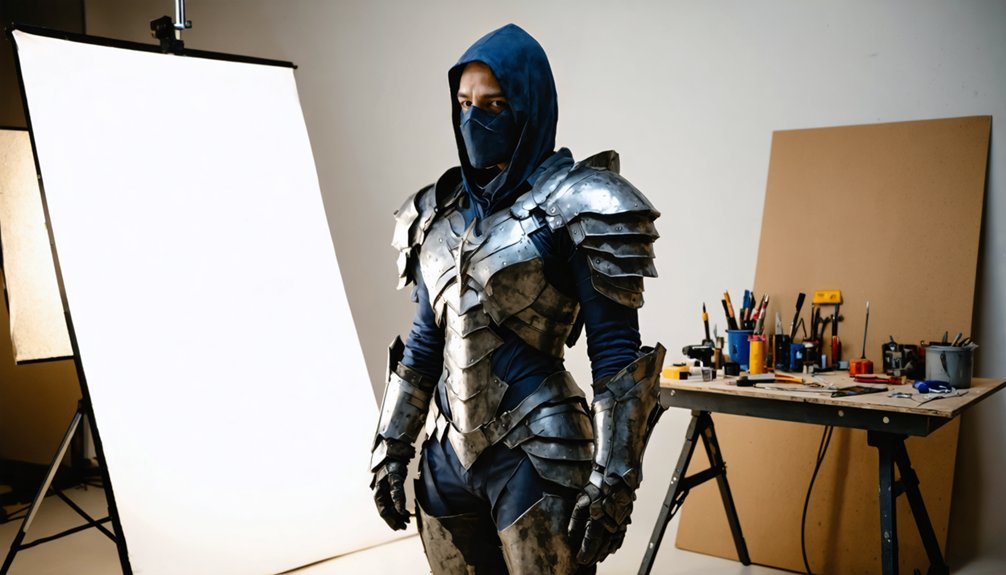
Once your costume fits perfectly, you can elevate its authenticity by applying weathering techniques that simulate real combat wear — think sandpaper abrasion along stress points, diluted acrylic paint washes to mimic grime buildup, and strategic bleaching to fade fabric naturally.
You’ll want to study your character’s specific battle history to place damage accurately, tearing seams at conflict-relevant locations and scorching edges with a heat gun for explosion or energy-blast effects.
These deliberate, reference-driven choices transform a clean replica into a visually compelling, story-rich costume that instantly communicates your character’s hard-fought experience.
Weathering Techniques for Costumes
There are 3 core weathering techniques that’ll transform your pristine replica costume into a genuinely battle-hardened piece: dry brushing, strategic distressing, and layered staining.
Dry brushing delivers subtle color fading by dragging diluted acrylic paint across raised fabric surfaces, creating authentic texture variation.
For fabric distressing, use sandpaper, cheese graters, or razor blades to simulate battle damage along stress points like elbows, knees, and collar edges. Material choice dramatically impacts your results—natural fibers accept aging effects more convincingly than synthetics.
Layered staining combines tea-dyeing, diluted brown acrylic washes, and strategic dirt application to build realistic grime depth.
Always work incrementally, evaluating prop realism after each technique layer. You’ll achieve genuinely convincing battle-worn authenticity by combining all three methods rather than relying on any single approach.
Realistic Battle Damage Effects
Battle damage effects elevate your costume from store-bought replica to lived-in war relic, and mastering them requires understanding how real-world trauma actually deforms fabric and material.
Study how fabric tears directionally along stress points, never randomly. Use sandpaper aggressively on seams, elbows, and knees to simulate costume aging through genuine friction wear.
For battle scars on armor pieces, apply a heat gun carefully to warp thermoplastic sections, creating authentic impact deformation. Slash fabric with razor blades following muscle movement lines, then fray edges using wire brushes.
Layer burnt sienna, raw umber, and charcoal acrylic washes into damaged zones, building depth gradually. Seal everything with matte varnish to prevent fresh-looking shine.
Your goal’s convincing viewers this costume survived something genuinely brutal.
Frequently Asked Questions
Can Thrift Stores Provide Useful Pieces for Building a Replica Costume?
You’ll discover incredible thrift store treasures perfect for creative repurposing into authentic replica pieces. Actively hunt unique fabrics, belts, and accessories that you can transform, customizing commercial finds to precisely match your character’s technical costume specifications.
Should Utility Belts Be Included if They Serve No Functional Purpose?
Don’t add utility belts purely for costume aesthetics! Only incorporate practical accessories that serve a real function. You’ll create a more authentic, innovative design by ensuring every element purposefully supports your character’s abilities and overall visual storytelling.
How Do You Prevent Your Costume From Resembling an Existing Famous Superhero?
Dodge “visual borrowing” by crafting an original design with a unique emblem specific to your character inspiration. You’ll want to avoid full-body dark suits with cowls and capes that’ll immediately evoke recognizable, iconic heroes!
Should Color Intensity Differ Between Comic Book and Real-World Costume Settings?
Yes, you’ll want to adjust color intensity based on your setting! High-saturation hues maximize visual impact in comic universes, while real-world builds demand toned-down color symbolism to avoid appearing garish and maintain authentic, innovative wearability.
How Many Colors Should a Superhero Costume Palette Typically Include Maximum?
Studies show simpler palettes boost recognition by 80%! You should limit your superhero costume to 2-3 hues maximum — color theory confirms this palette balance creates instant visual distinction, ensuring your character’s silhouette reads powerfully from any distance!
References
- https://www.youtube.com/watch?v=Dvq9bBR_HE8
- https://springhole.net/art_tutorials/better-superhero-and-supervillain-costumes.htm
- https://www.wikihow.com/Make-Cosplay-Costumes
- https://www.reddit.com/r/comicbooks/comments/wz1vox/when_creating_a_superhero_whats_the_best_advice/
- https://www.youtube.com/watch?v=46VpJ4UvPCE
- https://www.reddit.com/r/comicbooks/comments/vb6l7/90s_superhero_costume_ideas/
- https://www.comicsbeat.com/know-how-four-tips-for-designing-a-comics-costume/
- https://craftingdiycenter.com/diy-marvel-costumes
- https://www.geeknative.com/173506/how-to-cosplay-without-breaking-your-budget-or-your-sanity/
- https://starstruckpanda.com/comic-book-character-costume-accuracy-tips/