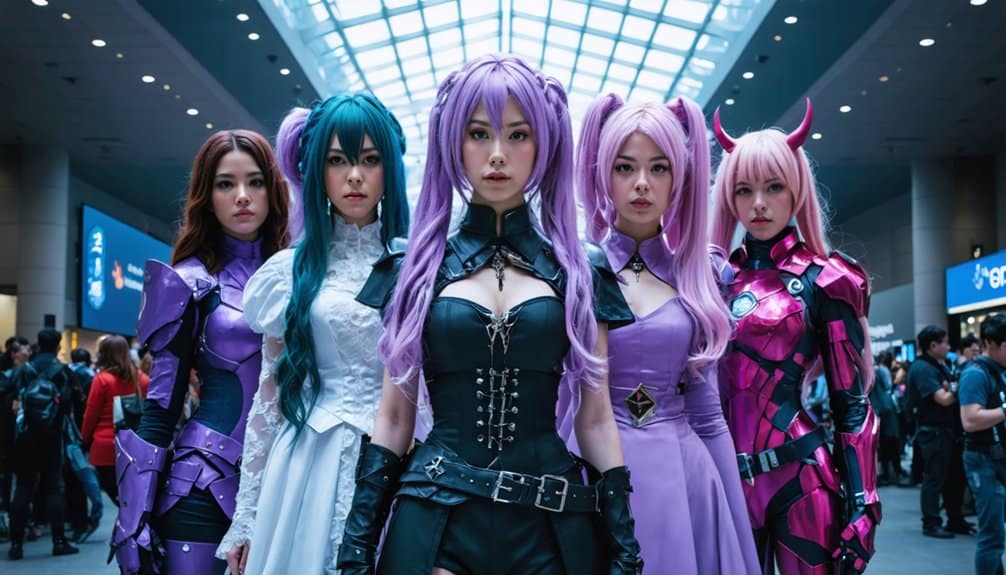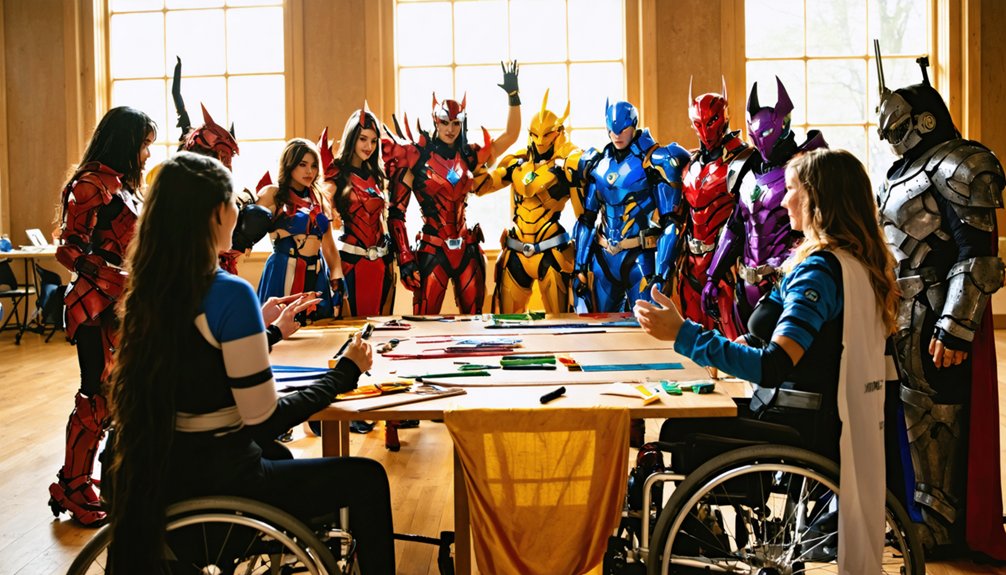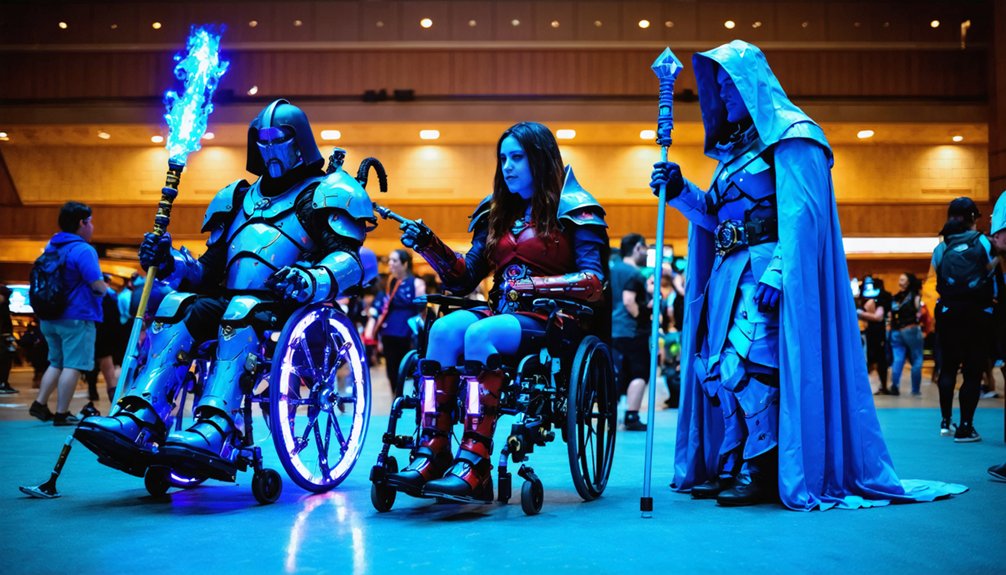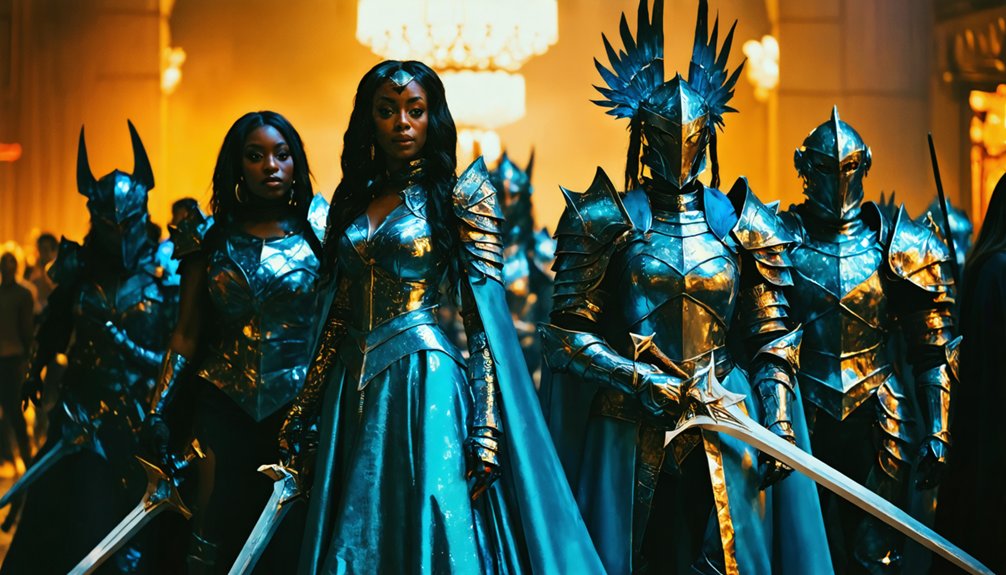
Genderbent cosplay representation matters because it challenges the assumption that iconic characters are gender-locked, proving that identity transcends biological sex. When you reimagine characters across gender lines, you disrupt binary stereotypes embedded in media, expand access for diverse audiences, and create low-stakes spaces for authentic self-exploration. These practices also drive fashion innovation and normalize gender-diverse expression within fan communities. There’s far more complexity behind why this movement continues reshaping cultural conversations around identity and belonging.
Key Takeaways
- Genderbent cosplay challenges binary media portrayals, proving iconic characters aren’t gender-locked and expanding who can authentically embody them.
- It creates safe spaces for gender exploration, helping individuals discover genuine self-expression with reduced social risk.
- Shared participation in genderbent cosplay builds inclusive communities that normalize diverse gender expressions and foster genuine belonging.
- It elevates cosplay as serious artistic authorship, requiring advanced craftsmanship, interpretive intelligence, and technical costume design skills.
- These practices drive broader cultural conversations about identity, representation, and gender norms, influencing fashion innovation and societal standards.
What Is Genderbent Cosplay?
Genderbent cosplay is a practice in which participants reimagine and embody fictional or pop culture characters through a gender presentation that differs from the original character’s design. You’re not simply swapping clothing — you’re reinterpreting identity through costume design, makeup, posture, and character personality.
This practice sits at the intersection of creative expression and gender identity exploration, allowing you to challenge binary assumptions embedded in media representations. Research confirms that authentic genderbent performance relies on both gendered visual cues and faithful character portrayal, not biological sex alone.
Instead of functioning as novelty, genderbent cosplay operates as a deliberate reframing of who gets to embody iconic figures. It’s a practice that treats gender as interpretive, socially constructed, and thus open to thoughtful, skillful reimagination.
Why Genderbent Cosplay Supports Identity Exploration
Once you understand genderbent cosplay as an interpretive, socially constructed practice, its capacity to support identity exploration becomes immediately apparent. When you experiment with costume, makeup, and pose, you’re actively testing expressions of personal identity without requiring permanent disclosure or social risk.
Convention spaces offer lower-stakes environments than everyday settings, letting you try presentations that fall outside your usual norms.
Research confirms that cosplay authenticity depends on character personality alongside gender cues, meaning you’re not simply swapping sex categories—you’re constructing nuanced self expression through deliberate creative choices. This process generates practical self-knowledge.
You discover which presentations resonate, which feel authentic, and how gender functions as interpretive rather than fixed. Genderbent cosplay, hence, isn’t escapism—it’s a structured method for learning who you actually are.
How It Challenges Gender Stereotypes in Media and Fandom
When you reimagine a canon character with an altered gender presentation, you’re directly disrupting the binary assumptions that media and fandom have long reinforced.
Genderbent cosplay challenges media influence by proving that iconic roles aren’t gender-locked, and it pushes back against societal norms that treat masculinity and femininity as fixed categories.
Here’s how this practice actively dismantles stereotypes:
- It exposes gender in media as constructed, not inherent
- It mixes masculine and feminine traits, collapsing binary performance expectations
- It challenges who gets to embody beloved characters
- It reduces stigma around gender nonconformity in public fan spaces
- It reframes fandom as an interpretive, not prescriptive, cultural space
You’re not just wearing a costume—you’re participating in a visible critique of how media has historically defined gender.
How Genderbent Cosplay Expands Character Representation
By reimagining iconic characters outside their original gender presentation, genderbent cosplay directly expands who those characters can represent. When you engage in character reinterpretation, you’re actively challenging the assumption that beloved fictional figures belong exclusively to one gender presentation.
Genderbent cosplay dismantles the myth that iconic characters belong to one gender presentation—and that changes everything.
That shift matters because audiences whose bodies or identities don’t align with original character designs gain meaningful access to those figures.
Cross gender storytelling within cosplay demonstrates that a character’s core identity—their personality, power, and narrative weight—transfers across gender presentations. Research supports this, showing that authenticity in cosplay depends more on character personality than on matching the source material’s sex category.
You’re not just wearing a costume; you’re expanding representation by proving that iconic characters aren’t fixed cultural property. That’s a measurable, intersectional contribution to how fandom reimagines inclusion.
How It Builds Stronger, More Inclusive Fan Communities
When you participate in genderbent cosplay, you enter a community where shared investment in reimagined characters creates genuine social bonds across identity lines.
Convention spaces actively reduce the pressure you’d face in everyday settings, giving you room to experiment with gender presentation without risking everyday social consequences.
That structural safety, combined with collective acceptance of diverse bodies and expressions, makes inclusive cosplay culture one of the more effective environments for building belonging among gender-nonconforming fans.
Shared Fandom Builds Bonds
Shared fandom around gender play doesn’t just create connection—it actively restructures how fan communities define belonging. When you engage with genderbent cosplay, shared experiences reshape interpersonal dynamics by centering mutual creativity over conformity.
Evidence shows camaraderie emerges when fans collectively challenge rigid gender expectations rather than reinforce them. You’re not just wearing a costume—you’re participating in a social framework that expands who counts as a fan.
Key ways shared fandom strengthens community bonds:
- Normalizes gender-diverse expression across convention spaces
- Reduces social pressure tied to traditional costume expectations
- Creates mutual recognition between identity-diverse participants
- Builds collaborative networks around creative reinterpretation
- Transforms fan spaces into environments where authenticity is socially supported
This collective practice makes inclusion structural, not incidental.
Safe Spaces Foster Belonging
Collective fandom reshapes belonging, but the physical and social environments where that fandom unfolds matter just as much as the shared practice itself.
Convention spaces operate as structured breaks from everyday social scrutiny, offering you room to experiment with gender presentation under conditions that prioritize cultural sensitivity and emotional safety.
Research confirms that cosplay environments reduce conformity pressure, allowing participants across diverse identities to engage authentically without risking permanent social exposure.
When you enter a space that actively normalizes genderbent expression, you’re not just wearing a costume — you’re accessing a framework where nonconformity carries lower social cost.
That reduced risk directly strengthens community inclusion.
Safe environments don’t emerge accidentally; they’re built through collective norms that communities consciously reinforce, making belonging structurally available rather than conditionally granted.
Acceptance Reduces Social Pressure
How a community responds to difference determines whether belonging remains accessible or quietly conditional. When social acceptance normalizes diverse gender expression, you’re no longer steering through fandom while managing external judgment simultaneously. Acceptance redistributes that energy toward creativity, connection, and craft.
Inclusive cosplay culture reduces the social tax placed on gender-nonconforming participants by making difference unremarkable rather than exceptional.
- You experiment with gender expression without rehearsing defensive explanations
- Social acceptance signals that your interpretation of a character holds equal legitimacy
- Reduced pressure allows deeper engagement with costume construction and performance
- Collective normalization shifts community standards away from binary gatekeeping
- Belonging becomes structural, not conditional on passing or conforming
That structural shift distinguishes genuinely inclusive fan communities from spaces that only tolerate difference selectively.
The Craft and Technical Skill Behind Genderbent Cosplay
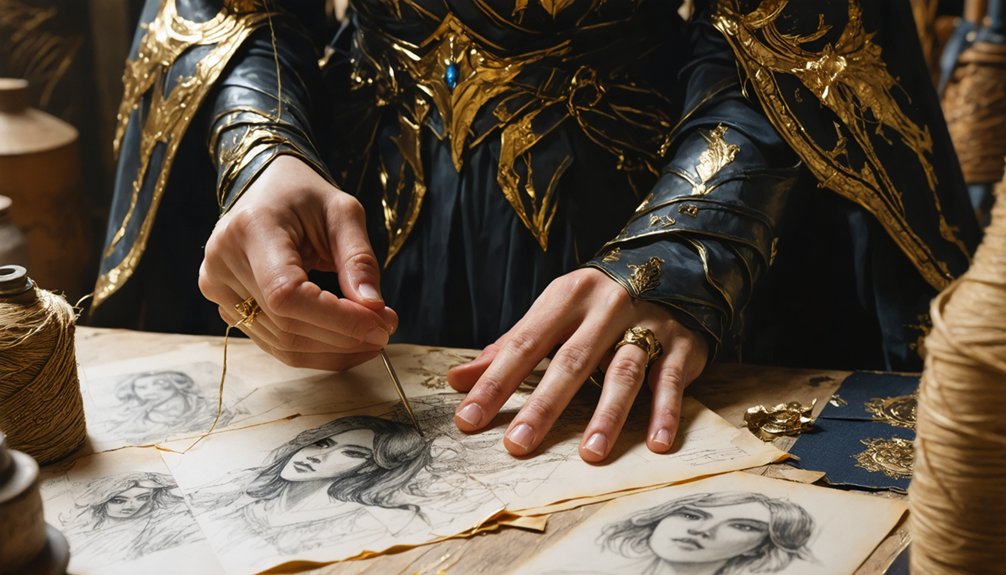
Genderbent cosplay demands technical mastery that goes well beyond simple replication of a character’s appearance. When you reconstruct a costume for a different body presentation, you’re engaging in advanced costume craftsmanship that requires rethinking silhouette, proportion, and structural support from scratch.
Tailoring techniques like dart placement, interfacing, and seam shaping become essential tools rather than optional refinements.
You’re also integrating makeup application, movement choices, and digital post-processing to complete the gendered effect. Each decision compounds, meaning a miscalculated seam or an inconsistent styling choice undermines the entire interpretation.
This process transforms cosplay from imitation into genuine artistic authorship. The technical demands push you to develop skills that rival professional costume design, making genderbent cosplay a rigorous creative discipline grounded in both craft precision and interpretive intelligence.
How Genderbent Cosplay Is Reshaping Fandom and Fashion Norms
When you participate in genderbent cosplay, you’re doing more than reimagining a character—you’re actively pressuring fandom and fashion industries to reckon with how narrowly they’ve defined who certain styles, roles, and aesthetics are for. Your choices signal demand for fashion innovation and cultural diversity within spaces that historically defaulted to binary norms.
Genderbent cosplay isn’t just costume play—it’s a demand for broader representation in fashion and fandom alike.
Genderbent cosplay reshapes these norms by:
- Demonstrating that iconic characters aren’t gender-locked, expanding who fans see themselves in
- Creating market pressure for costume options accommodating diverse bodies and identities
- Influencing how fandom communities collectively negotiate authenticity beyond sex categories
- Functioning as visible, social resistance against restrictive masculinity and femininity standards
- Contributing to wider cultural conversations about representation, identity freedom, and appearance norms
You’re not just wearing a costume—you’re rewriting the rules.
Frequently Asked Questions
Can Genderbent Cosplay Be Considered Culturally Appropriative in Any Circumstances?
Yes, it can. Imagine you’re genderbending a culturally sacred character without cultural sensitivity — that’s appropriative. You must guarantee respectful portrayal by researching cultural significance before reimagining characters tied to marginalized identities or traditions.
Are There Age Restrictions or Guidelines for Genderbent Cosplay at Conventions?
Most conventions don’t set specific cosplay age restrictions for genderbent costumes, but you’ll find that convention guidelines typically require age-appropriate coverage, ensuring all participants, regardless of gender expression, engage safely and inclusively within shared community spaces.
How Do Judges Evaluate Genderbent Costumes in Competitive Cosplay Contests?
Over 60% of judges prioritize cosplay authenticity and costume craftsmanship when evaluating genderbent entries. They’ll assess your silhouette adaptation, character personality portrayal, and technical construction—rewarding how creatively you’ve reinterpreted gender cues while maintaining recognizable character integrity.
Does Genderbent Cosplay Require Permission From Original Character Creators or Owners?
You don’t need permission for genderbent cosplay, as it’s protected creative reinterpretation and fan-driven artistic expression. Copyright covers commercial use, not transformative, nonprofit costume work you’re producing within fandom communities.
What Legal Protections Exist for Genderbent Cosplayers Facing Harassment Online?
You’ve got legal protections against online harassment through platform policies, cyberbullying laws, and anti-discrimination statutes. Document incidents, report them, and consult digital rights organizations—they’ll help you navigate intersecting identity-based protections effectively.
References
- https://folklife.si.edu/magazine/cosplay-community
- https://sunlitcosplay.wordpress.com/2015/09/25/genderbend-vs-crossplay-using-these-terms-correctly/
- https://starstruckpanda.com/why-choose-gender-bent-pop-culture-icon-costumes/
- https://wiki.ubc.ca/Course:CSIS200/2025/Gender-bent_Cosplay_and_Cross_Dressing_As_a_Vessel_to_Express_Oneself
- https://www.mediacommons.org/imr/content/crossplay-vs-genderbend-how-cosplayers-play-gender
- https://journalofchinesesociology.springeropen.com/articles/10.1186/s40711-022-00168-z
- https://www.thefandomentals.com/gender-identity-in-cosplay-challenging-stereotypes-and-embracing-authenticity/